Chunky cranberry sauce earns its place on the table when it tastes bright, balanced, and a little luxurious instead of flat and overly sweet. This version has the kind of texture that keeps people coming back for another spoonful: whole berries that burst just enough, tender apple, little pops of golden raisin, and a clean citrus edge that keeps the whole thing lively.
The key here is the order. Cranberries cook first with sugar and water until they soften and start to pop, which gives you a thick, glossy base before the apple and citrus go in. The zest matters more than the juice alone because it carries the orange and lemon aroma all the way through the sauce, and the nuts get stirred in off the heat so they stay pleasantly crisp instead of muddying the finish.
Below, you’ll find the small timing details that keep the sauce chunky instead of jammy, plus the best way to make it ahead so the flavor gets deeper by the next day.
The cranberry sauce thickened up beautifully, and the apple stayed tender without turning mushy. I made it two days ahead, and the orange zest gave it such a fresh finish.
Save this make-ahead cranberry sauce for the table when you want bright citrus, tender fruit, and a chunky finish that holds up beautifully.
The Part That Keeps This Cranberry Sauce Chunky Instead of Jammy
The biggest mistake with cranberry sauce is letting it cook down until it turns into a smooth paste. That happens when the fruit stays on the heat too long after the berries have burst. Here, the sauce gets just enough simmer time for the cranberries to open and the sugar to dissolve, then the apple and citrus finish the job without breaking the structure.
The diced apple gives the sauce body and a little bite, but it needs only a brief simmer so it softens without disappearing. If you cook it until the pieces collapse, the sauce starts to eat like preserves instead of a holiday side. The nuts and raisins go in at the end for texture contrast, not for extra cooking.
What Each Ingredient Is Doing in the Bowl
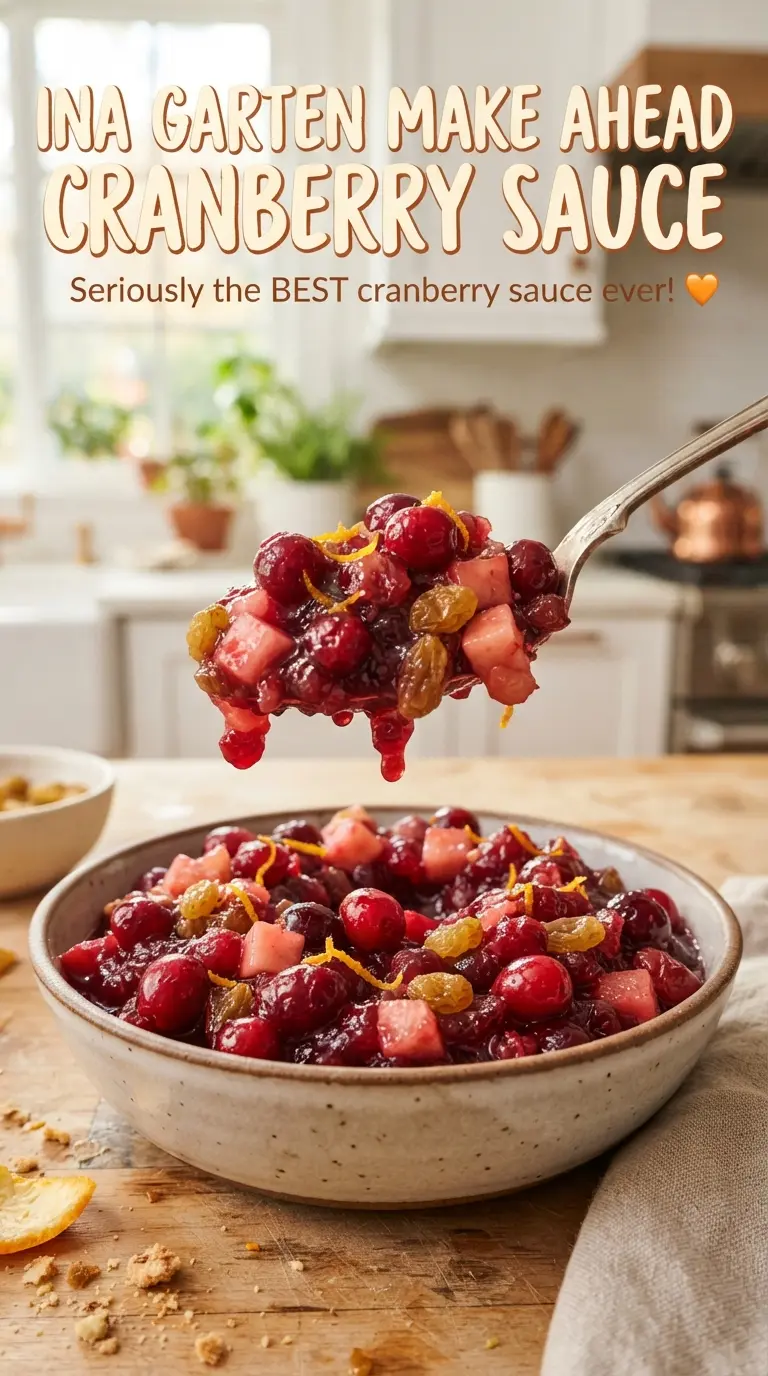
- Fresh cranberries — These are the backbone of the sauce. Frozen cranberries also work, and you don’t need to thaw them first, but fresh berries give the cleanest pop and the brightest color.
- Sugar — Cranberries need enough sweetness to balance their sharpness, but the sauce shouldn’t taste candied. The amount here is enough to round out the fruit without flattening it.
- Granny Smith apple — This adds body and a tart note that keeps the sauce from leaning cloying. A firm tart apple matters; soft apples melt too quickly and make the sauce loose.
- Orange and lemon zest and juice — The juice adds acidity and brightness, while the zest carries the strongest citrus aroma. If you skip the zest, the sauce tastes less vivid even if it still tastes good.
- Golden raisins — These soften in the warm sauce and add little bursts of sweetness. Regular raisins work in a pinch, but golden raisins stay a little lighter and blend better with the citrus.
- Walnuts or pecans — Toasting them first brings out their flavor and keeps them from tasting raw in the finished sauce. Pecans make it softer and sweeter; walnuts bring a slightly deeper, more tannic edge.
Building the Sauce in the Right Order
Starting with the Cranberries
Put the cranberries, sugar, and water in the saucepan and bring it to a real boil before dropping the heat to a simmer. You want the berries to start bursting and the liquid to turn glossy, not to evaporate away into a syrup. If the pan runs too hot, the sugar can concentrate before the berries soften, which gives you a sticky base instead of a loose, jammy one.
Adding the Apple and Citrus
Stir in the diced apple, zest, and juices once the cranberries have popped. The sauce should keep bubbling gently, with the apple pieces becoming tender at the edges while still holding their shape. If the heat is aggressive here, the apple can break down too fast and the whole mixture turns softer than it should.
Finishing Off the Heat
Take the pan off the burner before adding the raisins and nuts. That keeps the nuts crisp and lets the raisins plump without overcooking. Cool the sauce completely before covering it, because trapped steam will thin the texture and dull the bright citrus flavor you just built.
How to Adapt This Cranberry Sauce for Different Tables
Make it nut-free
Leave out the walnuts or pecans and the sauce still works beautifully. You’ll lose a little crunch and richness, but the fruit will still carry the dish, and the texture will read more cleanly against turkey or ham.
Use frozen cranberries
Frozen cranberries go straight into the pot with no thawing needed. Expect the mixture to take a minute or two longer to come back to a boil, but the finished sauce will still set up with the same bright flavor.
Reduce the sugar slightly
You can pull back a couple tablespoons if you like a sharper sauce, especially if your orange is very sweet. Don’t cut it too far, or the cranberries will taste aggressively tart and the sauce will lose its balanced, glossy finish.
Storage and Reheating
- Refrigerator: Store covered for up to 1 week. The sauce gets a little thicker as it chills, which is exactly what you want.
- Freezer: It freezes well for up to 2 months. Use an airtight container and leave a little space at the top for expansion.
- Reheating: Serve it cold, at room temperature, or warm it gently over low heat. Don’t boil it again or the fruit will break down and the nuts will lose their crunch.
Questions I Get Asked About This Cranberry Sauce
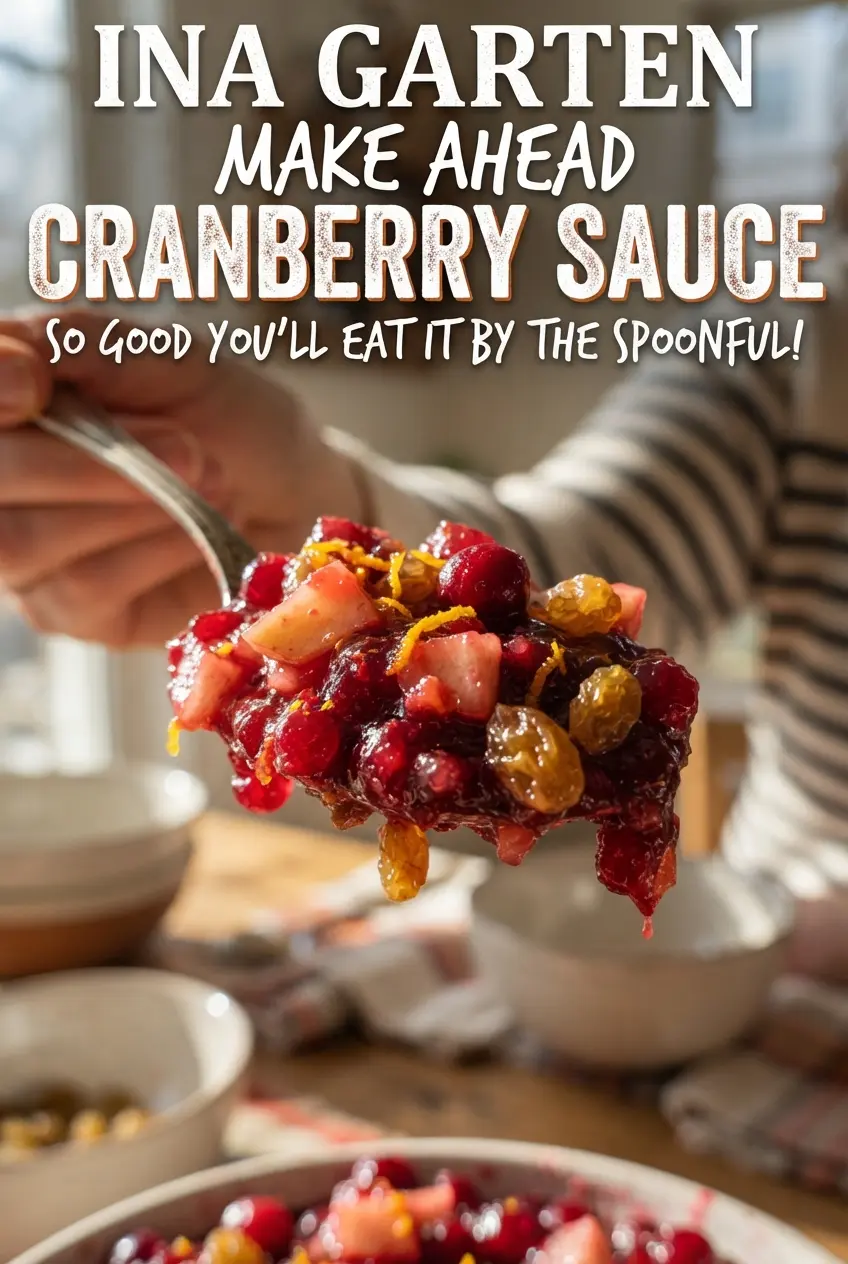
Make-Ahead Cranberry Sauce with Apple, Raisins, and Citrus
Ingredients
Equipment
Method
- Bring fresh cranberries, sugar, and water to a boil in a saucepan over medium-high heat, then simmer for 5 minutes until the skins pop, stirring occasionally.
- Add the diced Granny Smith apple, orange zest, orange juice, lemon zest, and lemon juice, then simmer for 15 minutes until the sauce thickens and the fruit is tender.
- Remove from the heat and stir in the golden raisins and toasted, chopped walnuts or pecans.
- Cool completely, then cover and refrigerate up to 1 week.
- Serve chilled or at room temperature.