Glossy whole berry cranberry sauce that seals cleanly in jars has a way of making the whole kitchen feel more organized. The berries burst just enough to thicken the syrupy base, but they still hold some shape, which gives each spoonful a bright pop instead of turning everything into a smooth jam. The orange juice and zest round out the sharp cranberry edge, and the bottled lemon juice keeps the acidity where it needs to be for safe water bath canning.
The trick here is starting with the sugar, water, and orange juice already boiling so the cranberries hit a hot base and cook evenly. That keeps the sauce moving toward the right consistency without scorching on the bottom of the pot. A lot of cranberry sauces look done before they’re actually thick enough for canning, so I watch for a sauce that coats the spoon and leaves a clear trail when stirred.
If you’ve only ever made cranberry sauce for the table, this version is worth knowing because it keeps beautifully on the pantry shelf. Below, I’ve also included the details that matter most for safe processing, plus the one thing that helps the jars seal without trouble.
The sauce thickened up beautifully in the pot and the jars sealed on the first try. I loved that the orange zest stayed bright and the berries were still whole after canning.
Like this glossy whole berry cranberry sauce? Save it to Pinterest for the jars you want to line the pantry shelf with all year.
The Part Where Cranberries Go from Soupy to Seal-Ready
The biggest mistake in canned cranberry sauce is pulling it off the heat too soon because it still looks loose in the pot. Cranberries keep releasing pectin as they cook, and the mixture thickens a little more once the bubbles calm down. If you ladle it while it still looks like thin juice with berries floating in it, you’ll end up with a jar that sets up inconsistently later.
Heat matters here, but not in the way people usually think. A steady boil is what dissolves the sugar and starts the sauce moving, then a gentle boil is enough to burst the berries without smashing them into mush. The sauce should look glossy and slightly syrupy, with bubbles that get slower and heavier toward the end.
- Boiling base first — Dissolving the sugar in the water and orange juice before the cranberries go in keeps the sauce smooth and helps prevent graininess.
- Whole cranberries — Fresh berries hold their shape better than frozen ones and give the finished jars that classic whole-berry texture.
- Bottled lemon juice — This isn’t the place for fresh-squeezed lemon. Bottled juice has the consistent acidity needed for safe canning.
- Orange zest — Add it at the end so the citrus stays bright instead of cooking off into the pot.
What Each Ingredient Is Doing in These Jars
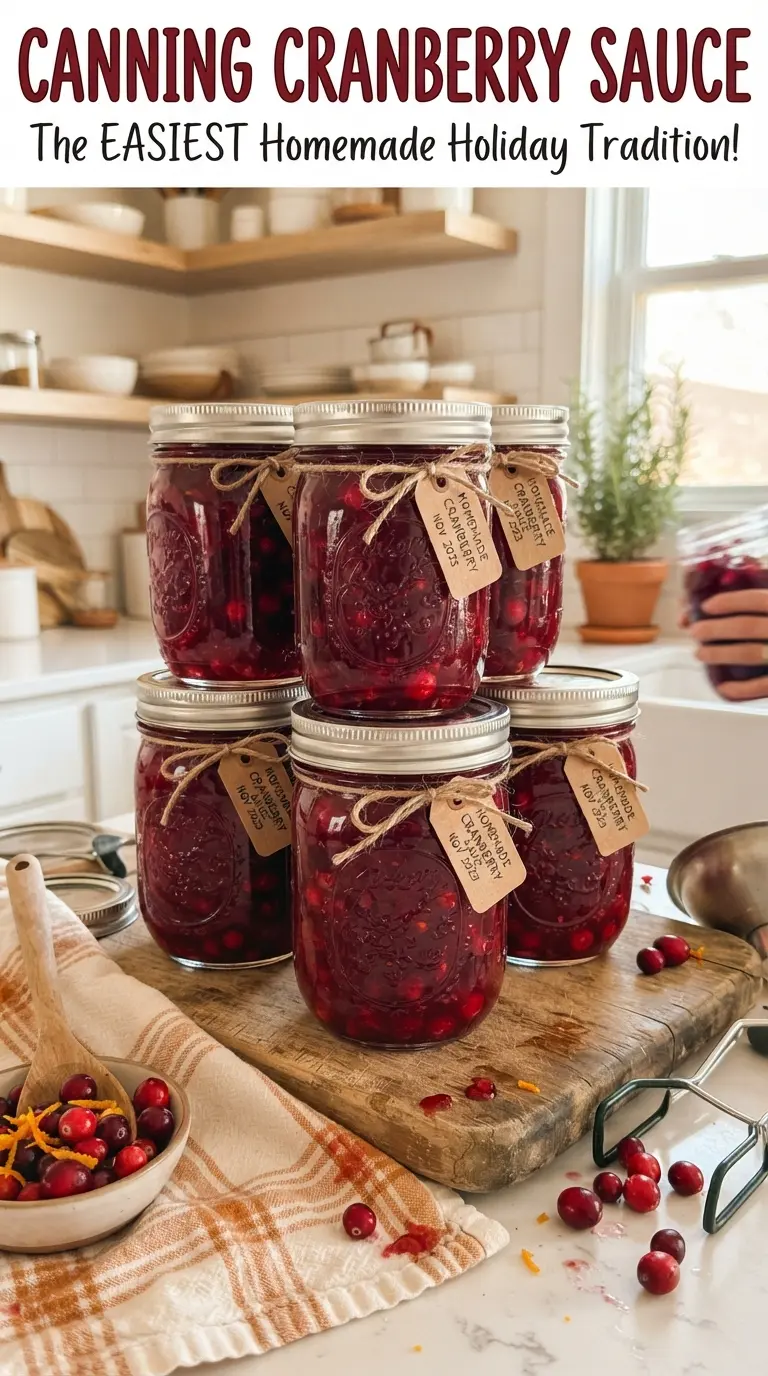
- Fresh cranberries — These are the body of the sauce. They burst enough to thicken the liquid, but enough stay intact that the sauce still feels like cranberry sauce instead of jam.
- Sugar — Cranberries are sharply tart, and the sugar balances that bite while also helping the sauce reach a canning-friendly consistency.
- Water and orange juice — Water gives the berries enough liquid to cook evenly, while orange juice adds sweetness and a rounder citrus note that fits cranberry better than water alone.
- Bottled lemon juice — This is the acid insurance in the recipe. It keeps the pH in safe territory for boiling water bath canning.
- Orange zest — Zest adds the bright citrus aroma you notice when you open a jar months later. Stir it in after cooking so it stays fragrant.
Building the Sauce, Filling the Jars, and Getting a Clean Seal
Heating the Base
Bring the sugar, water, and orange juice to a full boil and stir until the sugar disappears. If you skip this part or rush it, the sauce can feel sandy instead of glossy. Once the base is boiling, add the cranberries and lemon juice and let the pot stay at a gentle boil so the berries burst evenly rather than splitting all at once.
Watching for the Right Thickness
Cook the sauce for 10 to 12 minutes, stirring now and then so nothing catches on the bottom. You’re looking for most of the berries to pop and the liquid to turn thick and shiny. If it still looks loose when you drag a spoon through it, give it another minute or two; that extra time matters because the sauce needs to be thick before it goes into jars.
Jarring and Headspace
Ladle the hot sauce into hot half-pint jars and leave 1/4 inch of headspace. That small gap gives the contents room to expand in the canner without forcing sauce under the lid. Wipe the rims carefully, because even a smear of cranberry on the glass can keep a jar from sealing, then tighten the bands fingertip tight so air can escape during processing.
Processing and Cooling
Process the jars in a boiling water bath for 15 minutes, adjusting for altitude if needed. When the timer is done, turn off the heat and let the jars rest in the canner for 5 minutes before lifting them out. Set them on a towel and leave them alone for 24 hours; moving them early can break the seal before it sets.
Ways to Adjust the Flavor, the Batch Size, or the Pantry Shelf Plan
Make It Brighter with Extra Citrus
If you want a sharper citrus note, add a little more orange zest at the end rather than extra juice. More juice thins the sauce and can soften the cranberry flavor, while zest gives you aroma without changing the texture.
Use Frozen Cranberries When Fresh Aren’t Available
Frozen cranberries work in the same amount straight from the freezer. Don’t thaw them first, or they’ll release extra water and cook down unevenly; just expect the sauce to need a minute or two more before it thickens.
Cut the Batch in Half for a Small Canning Day
This recipe scales down cleanly if you only want a few jars. Keep the lemon juice and processing time proportional to the smaller batch, but don’t shortcut the headspace or the canning process; those are what keep the jars safe and sealed.
Storage and Reheating
- Refrigerator: Once opened, keep the jar refrigerated and use it within 2 to 3 weeks. The sauce may firm up a little more after chilling, which is normal.
- Freezer: Unopened, sealed jars are meant for pantry storage rather than freezing. If you want to freeze leftover sauce, transfer it to a freezer-safe container with room for expansion.
- Reheating: Warm only what you need in a small saucepan over low heat or in short bursts in the microwave. High heat can cause the sauce to splatter and can make the texture look broken instead of glossy.
Answers to the Questions Worth Asking
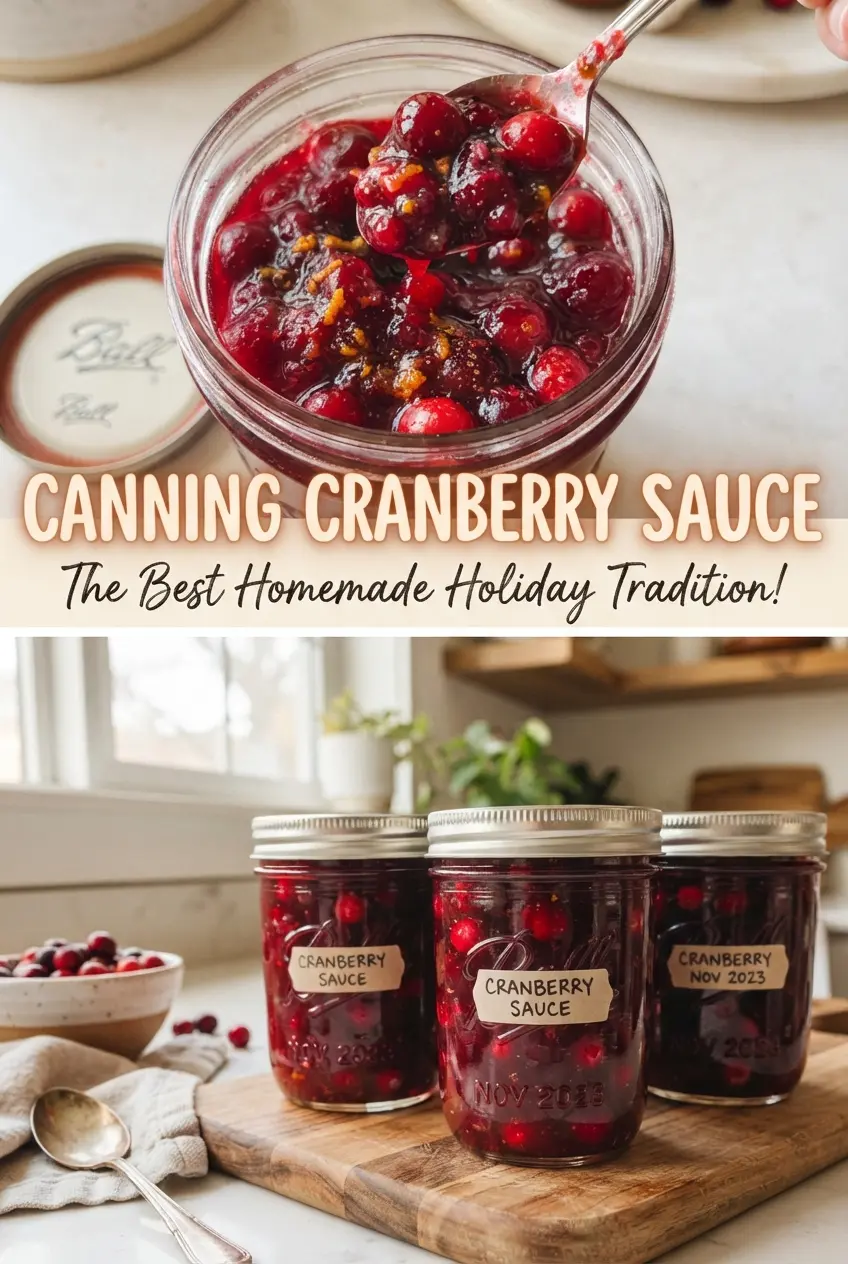
Canning Cranberry Sauce
Ingredients
Equipment
Method
- Wash 12 half-pint mason jars, lids, and bands, and keep the jars hot in simmering water to prevent temperature shock.
- Bring sugar, water, and orange juice to a boil in a large pot, stirring until the sugar fully dissolves.
- Add fresh cranberries and bottled lemon juice, then boil gently for 10-12 minutes until the berries burst and the sauce thickens.
- Stir in orange zest after the boil so the zest stays bright.
- Ladle the hot cranberry sauce into the hot jars, leaving 1/4-inch headspace.
- Wipe the jar rims clean, then apply lids and bands fingertip tight.
- Process the filled jars in a boiling water bath canner for 15 minutes, adjusting the time for altitude.
- Turn off the heat and let the jars rest in the canner for 5 minutes before lifting them out.
- Cool the jars undisturbed for 24 hours to ensure proper sealing.
- Check that the lids have sealed, then store sealed jars in a cool dark place for up to 1 year.