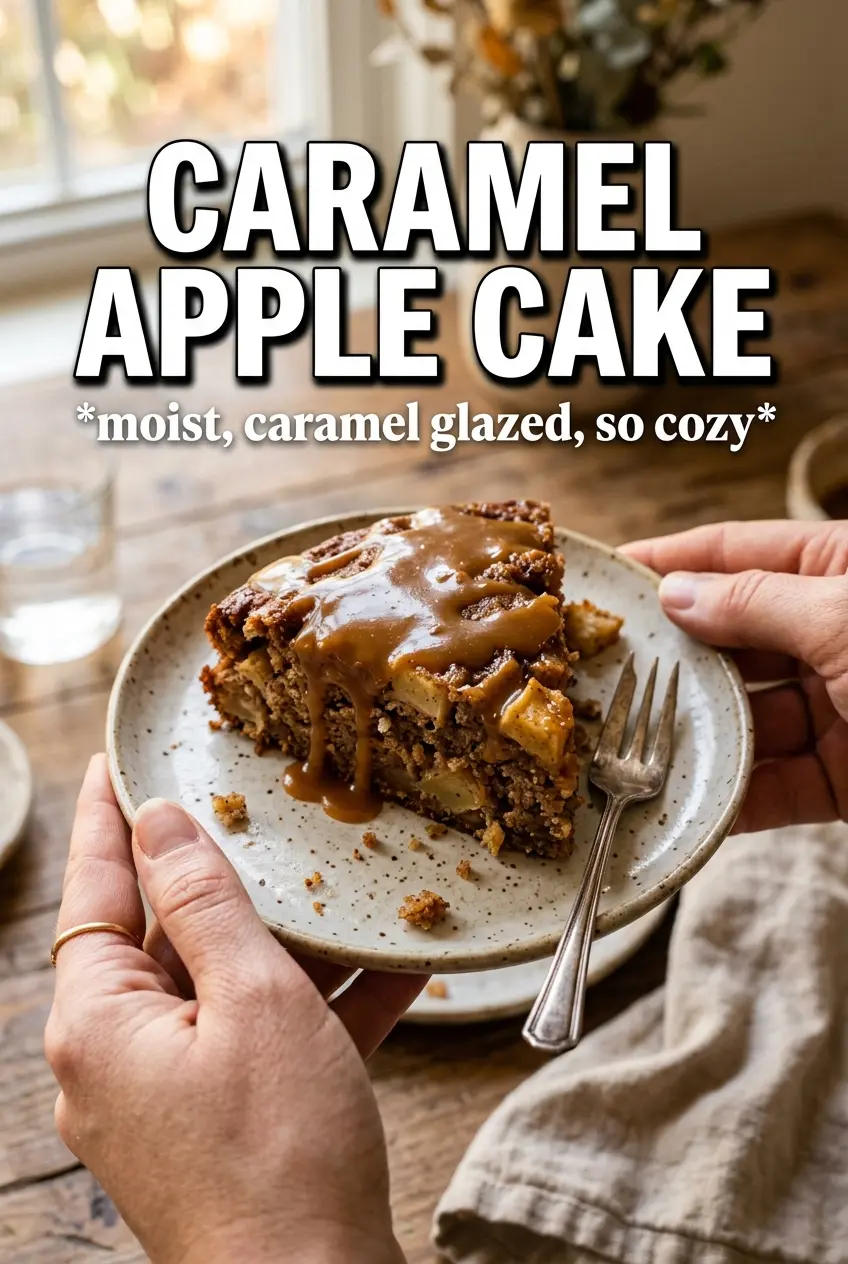
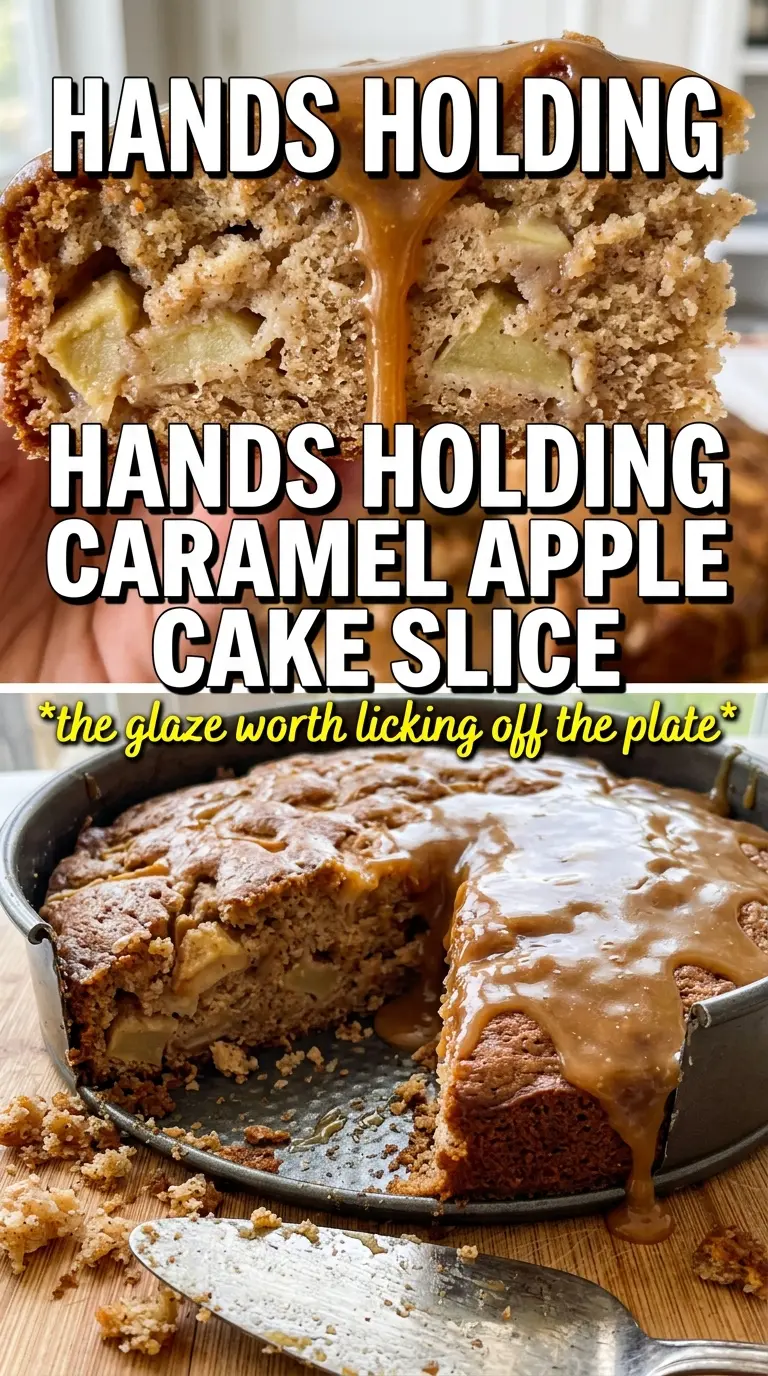
Caramel Apple Cake lands with the kind of soft crumb and sticky-sweet finish that makes a plain frosted cake feel unnecessary. The layers stay moist from the sour cream and diced apples, and the caramel cream cheese frosting gives every slice a tangy, buttery edge that keeps the sweetness in check. It’s the sort of cake that disappears fast at the table because each bite tastes like apple, spice, and caramel working together instead of competing for attention.
What makes this version hold together well is the balance of fat, acid, and fruit. Sour cream keeps the crumb tender without making it heavy, while the brown sugar brings a deeper molasses note that plays nicely with cinnamon and nutmeg. The apples are diced small so they soften into the batter instead of sinking, which means you get moisture and flavor in every forkful.
Below, I’ll walk through the part that matters most: how to keep the cake light even with fruit folded in, and how to frost it so the caramel drizzle actually stays where you want it.
The cake was insanely moist and the apple pieces stayed evenly spread out instead of sinking. I baked it for 52 minutes and the frosting set up beautifully once it cooled.
Save this Caramel Apple Cake for the next time you want a tender layer cake with spiced apples, caramel frosting, and a finish that looks bakery-made.
The Trick to Keeping Apples from Dragging Down the Layers
Apple cake can turn heavy fast if the fruit is too large or the batter gets overmixed after the flour goes in. Finely diced apples distribute through the batter instead of creating wet pockets, and that matters because those pockets are what make a cake feel dense in the center while the edges bake ahead of the middle. This batter should look thick but still spoonable, not loose or glossy like pancake batter.
The other mistake is rushing the creaming stage. Butter and brown sugar need to get pale and fluffy so they can trap air before the heavier ingredients go in. That lift matters here because sour cream and apples bring moisture, and without enough air at the start the cake bakes up tight instead of tender.
- Brown sugar — This gives the cake its deeper caramel-like backbone and helps the crumb stay soft. White sugar will work in a pinch, but the cake loses some of that warm molasses flavor that makes it taste like caramel apple instead of plain spice cake.
- Sour cream — It adds tang and keeps the layers moist for days. Full-fat sour cream gives the best texture, but plain Greek yogurt can stand in if that’s what you have.
- Finely diced apples — Small pieces soften during baking and stay suspended in the crumb. If the dice is too large, the apple can sink and leave tunnels in the cake.
- Caramel sauce — Use a thick sauce for the frosting so it doesn’t thin the cream cheese mixture too much. A runny ice cream topping-style caramel can make the frosting loose.
What Each Ingredient Is Actually Doing in This Recipe
- Primary ingredient (the star) — Quality matters most. Choose the best you can find.
- Cooking medium (oil, butter, or broth) — This carries flavors and prevents dryness.
- Seasonings (salt, pepper, spices, herbs) — Layer flavors so nothing overpowers. Build depth gradually.
- Aromatics (garlic, onion, herbs) — Cook with fat to bloom flavors. Become the foundation.
- Supporting ingredients — Complement the main ingredient without overpowering it.
- Sauce or liquid (if applicable) — Brings flavors together. Balance richness with acid.
- Acid (lemon, vinegar, wine, or other) — Brightens and prevents flat-tasting results.
- Final finish (garnish, glaze, or sauce) — Prevents one-dimensional taste and adds visual appeal.
Building the Batter Without Overworking It
Start with the dry mixture
Whisk the flour, baking powder, baking soda, cinnamon, nutmeg, and salt together first so the spices and leavening are evenly distributed. If you skip this, you can end up with pockets of baking soda or a cake that tastes more strongly spiced in one slice than another. The flour mixture should look completely uniform before it ever touches the butter.
Cream the butter and sugar until it looks airy
Beat the softened butter and packed brown sugar until the mixture turns noticeably lighter and fluffier. This is where the cake gets its lift, so stop only when the mixture looks almost whipped and no longer grainy. Add the eggs one at a time, then the vanilla, and scrape the bowl so the batter stays even instead of streaky.
Alternate the flour and sour cream
Add the dry ingredients in parts, alternating with the sour cream, and mix just until the flour disappears. Overmixing at this stage builds gluten and makes the crumb tough, especially once the apples go in. Fold in the diced apples by hand so they stay intact and the batter doesn’t turn overworked or gummy.
Bake until the center springs back
Divide the batter evenly between two greased 9-inch pans and bake until a toothpick comes out clean from the center, about 50 to 55 minutes. The cakes should pull slightly from the edges and feel set when you press the top lightly. If the tops brown too fast before the middle is done, tent them loosely with foil for the last part of baking.
Cool before frosting
Let the layers cool completely before you touch the frosting. Warm cake will melt the cream cheese frosting and send the caramel running right off the sides. If you want clean layers, chill the cakes briefly after cooling so they’re firm enough to stack.
How to Adjust This Cake for Different Kitchens and Timelines
Make it gluten-free
Use a good 1:1 gluten-free baking flour with xanthan gum already included. The cake will still be tender, but it may need the full bake time and a few extra minutes to set in the center because gluten-free batters often hold more moisture.
Swap the frosting for a lighter finish
If you want less richness, skip the caramel in the frosting and top the cake with a thinner vanilla cream cheese frosting plus a caramel drizzle. You’ll lose some of the deep caramel flavor in each bite, but the cake will taste a little fresher and less sweet.
Turn it into a sheet cake
Bake the batter in a greased 9×13-inch pan and start checking a little earlier, since a thinner layer usually finishes faster than round cakes. You’ll get less dramatic layers, but it becomes easier to frost and slice for a crowd.
Storage and Reheating
- Refrigerator: Store covered for up to 5 days. The frosting stays firm and the cake actually gets a little more flavorful on day two.
- Freezer: Freeze unfrosted layers tightly wrapped for up to 2 months. Thaw them in the refrigerator before frosting so the caramel topping doesn’t slide off.
- Reheating: This cake is best served at room temperature, not warmed. If it’s been refrigerated, let slices sit out for 20 to 30 minutes so the frosting softens and the crumb tastes tender again.