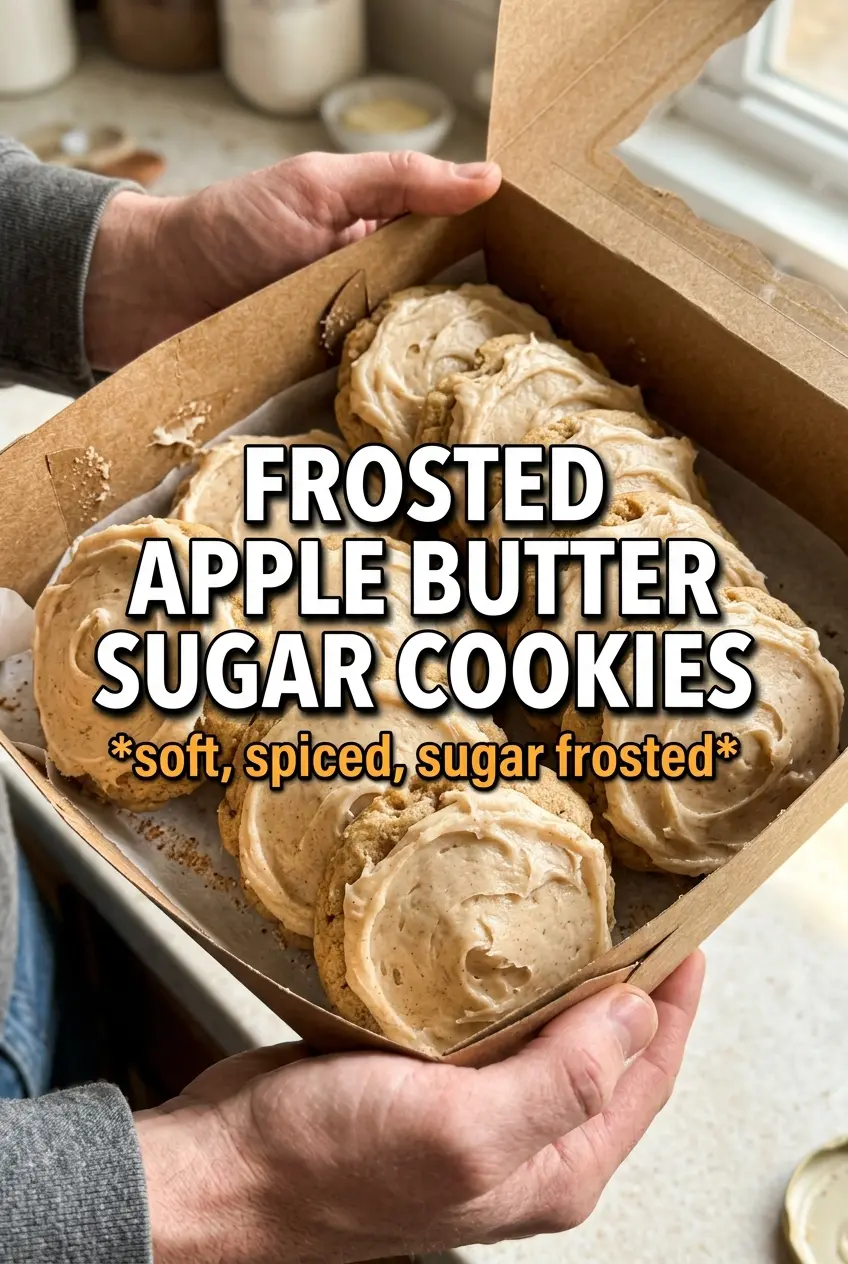
Soft sugar cookies with apple butter folded right into the dough bake up tender, lightly spiced, and sturdy enough to hold a thick swipe of frosting. The frosting brings that same apple butter note back in a cream cheese base, so every bite tastes layered instead of sweet for sweetness’ sake. The cinnamon sugar and caramel on top finish the cookies with just enough warmth and shine to make them feel special without turning them fussy.
What makes these work is balance. Apple butter adds moisture and a mellow cooked-apple flavor, but the dough still relies on a short chill so it rolls cleanly and keeps its shape in the oven. The cookies bake just until the edges set, which keeps the centers soft under the frosting instead of dry and crumbly. The frosting stays spreadable because the cream cheese and butter are beaten first before the powdered sugar goes in, which keeps it smooth instead of grainy.
Below you’ll find the little things that matter here: how thick to roll the dough, why the frosting should be fully cool before decorating, and how to swap the shape without losing that soft bakery-style result.
The cookies stayed soft even the next day, and the apple butter frosting set up enough that I could stack them without smearing. The cinnamon sugar on top gave just the right little crunch.
Save these frosted apple butter sugar cookies for the days when you want soft cut-outs, warm cinnamon, and a creamy frosting finish.
The Chill That Keeps the Cookies from Spreading Too Thin
These cookies need that hour in the fridge for a reason. The apple butter softens the dough a little more than a plain sugar cookie dough, and if you skip the chill, the cut-outs relax in the oven and the edges lose their clean shape. Chilling also gives the flour time to hydrate, which means a softer bake instead of a tough one.
Roll the dough to a true 1/4-inch thickness. Thinner cookies brown too fast and lose that plush center under the frosting; thicker ones bake up unevenly and can stay doughy in the middle. If the dough starts sticking as you cut it, dust the surface lightly with flour, but don’t work it in too aggressively or the cookies turn dry.
What Each Ingredient Is Actually Doing in This Recipe
- Primary ingredient (the star) — Quality matters most. Choose the best you can find.
- Cooking medium (oil, butter, or broth) — This carries flavors and prevents dryness.
- Seasonings (salt, pepper, spices, herbs) — Layer flavors so nothing overpowers. Build depth gradually.
- Aromatics (garlic, onion, herbs) — Cook with fat to bloom flavors. Become the foundation.
- Supporting ingredients — Complement the main ingredient without overpowering it.
- Sauce or liquid (if applicable) — Brings flavors together. Balance richness with acid.
- Acid (lemon, vinegar, wine, or other) — Brightens and prevents flat-tasting results.
- Final finish (garnish, glaze, or sauce) — Prevents one-dimensional taste and adds visual appeal.
What the Apple Butter Is Doing in Both the Cookie and the Frosting
- Apple butter — This is the ingredient that makes the whole recipe taste like more than cinnamon sugar. In the dough, it brings moisture and a cooked-apple depth without adding chunks or extra liquid. In the frosting, it carries the same flavor right to the finish so the cookie and topping taste connected.
- Cream cheese — This gives the frosting enough tang to keep the sweetness in check and enough body to hold its shape. Full-fat cream cheese works best; lower-fat versions can loosen the frosting and make it harder to spread cleanly.
- Unsalted butter — Use softened butter in both parts of the recipe so it creams smoothly. If it’s too warm, the dough gets greasy and the frosting turns loose; too cold, and neither one will whip properly.
- Powdered sugar — This thickens the frosting without adding grit. Add it gradually so the frosting stays smooth instead of turning into a cloud of dry sugar that won’t fully blend.
- Cinnamon sugar and caramel — These are finishing touches, not decorations for the sake of decoration. The cinnamon sugar adds a little crunch over the soft frosting, and the caramel gives the top that bakery-style look and a deeper note that works with the apple butter.
Building the Dough, Baking the Centers Soft, and Finishing Cleanly
Creaming the Base
Beat the butter, sugar, and apple butter until the mixture looks fluffy and a little lighter in color, then add the egg and vanilla. That first step sets the texture of the cookie, so don’t rush it; you want the sugar to start dissolving into the fat before the dry ingredients go in. If the mixture looks separated after the egg, keep mixing for another few seconds until it comes back together.
Bringing in the Dry Ingredients
Fold in the flour, baking powder, salt, and cinnamon just until the last streaks disappear. Overmixing after the flour goes in develops too much gluten and makes the cookies bready instead of tender. The dough should be soft but not sticky enough to cling to your hands in a mess.
Rolling and Cutting
Roll the chilled dough on a lightly floured surface to 1/4-inch thick, then cut rounds or apple shapes. If the dough starts warming and tearing, slide it back into the fridge for 10 minutes instead of forcing it through the cutter. Clean edges matter here because these cookies are meant to look neat under the frosting.
Baking Just to Set
Bake at 350°F for 8 to 10 minutes, watching for edges that look set while the centers still look pale and soft. If they brown deeply, they’re overbaked and won’t have that tender bite under the frosting. Let them cool completely on the pan or a rack before you even think about frosting them, or the topping will melt and slide right off.
Frosting and Finishing
Beat the cream cheese, butter, apple butter, powdered sugar, cinnamon, and milk until smooth and spreadable, then add milk a tablespoon at a time until it moves easily but still holds a swipe. If it looks loose, the cream cheese or butter was too warm; chill it for a few minutes before spreading. Finish each cookie with a generous layer, a dusting of cinnamon sugar, and a thin drizzle of caramel so the topping stays pretty instead of becoming a sticky puddle.
Three Ways to Adjust These Cookies Without Losing the Apple Butter Character
Make them gluten-free
Use a 1:1 gluten-free flour blend that includes xanthan gum. The dough may feel a little softer after mixing, so chill it fully before rolling. The cookies will still bake up tender, though the edges may be slightly more delicate when you move them from the cutter to the pan.
Swap in a dairy-free topping
Use dairy-free butter and a plant-based cream cheese that spreads well. The frosting won’t have quite the same tang, but the apple butter still carries the flavor and the cinnamon helps fill in the gap. If the frosting seems loose, add a little more powdered sugar before adding extra milk.
Turn them into drop cookies
If you don’t want to roll and cut, scoop the dough into balls and flatten them slightly before baking. You’ll lose the crisp, polished cut-out look, but the cookies still bake soft and thick with the same apple butter flavor. This is the easiest route when you want the taste without the extra handling.
Storage and Reheating
- Refrigerator: Store frosted cookies in an airtight container for up to 4 days. Layer parchment between them if you need to stack them.
- Freezer: The unfrosted cookies freeze well for up to 2 months. Freeze them flat, then thaw at room temperature before frosting; frosted cookies can freeze, but the topping may lose some of its smooth finish.
- Reheating: These are best served at room temperature, not warmed. If they’ve been chilled, let them sit out for 15 to 20 minutes so the frosting softens again; heating them will melt the topping and make the caramel run.