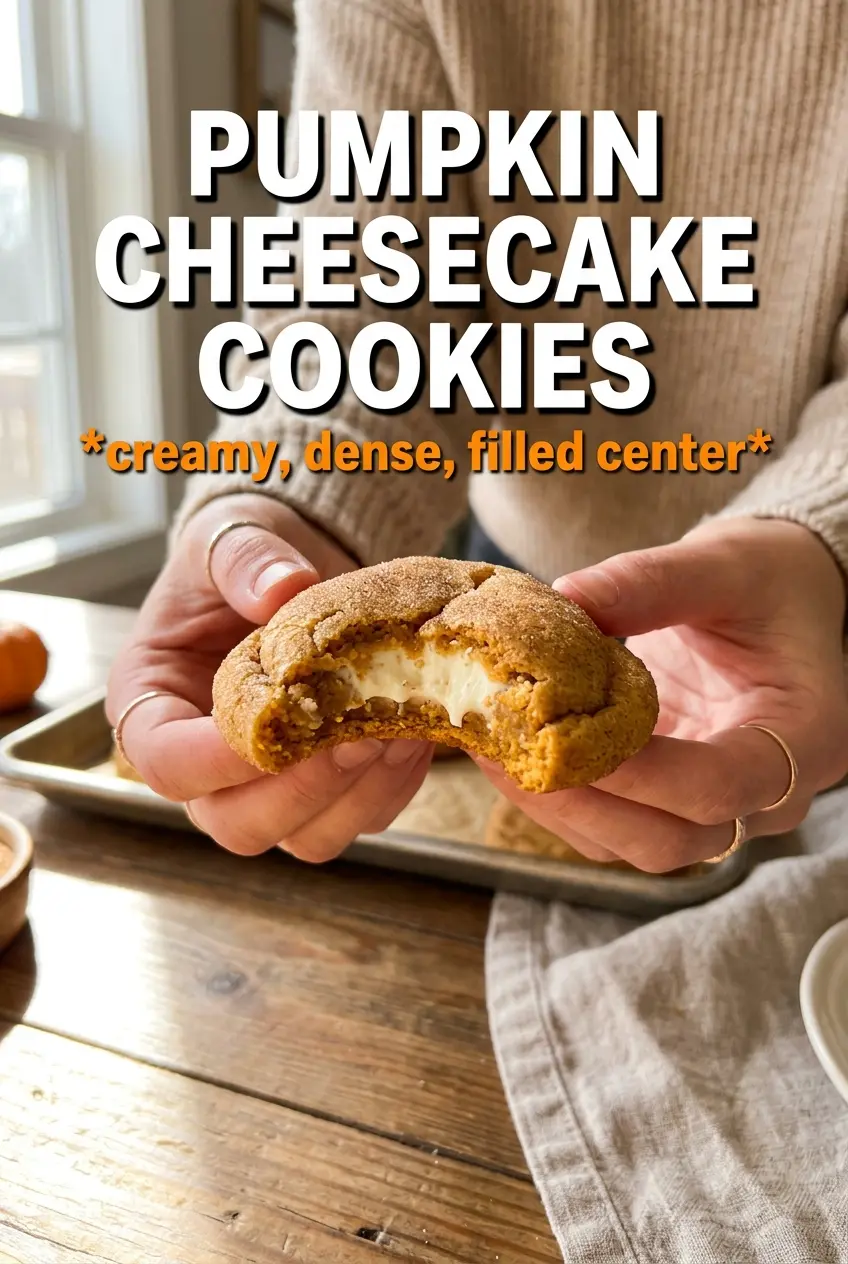
Pumpkin cheesecake cookies hit that sweet spot between soft-baked comfort and a bakery-style center that stays creamy after the cookies cool. The edges bake up lightly crisp and cinnamon-sugared, while the middle turns tender and rich with a cool, tangy cheesecake pocket. They taste like fall baking, but the kind you’d actually make again because the texture is worth the extra minute of assembly.
What makes this version work is the contrast. Blotted pumpkin puree keeps the dough from turning cakey or wet, and freezing the cheesecake filling first keeps it from leaking out before the cookies set. That frozen center matters more than people think; if you skip it, the filling softens too quickly and can disappear into the dough instead of staying distinct.
Below, I’ll walk you through the small details that keep the dough manageable, how to seal the filling without splitting the cookie, and the easiest way to keep the centers soft without underbaking the edges.
The cheesecake center stayed creamy after cooling, and the pumpkin dough was soft without being sticky. I was worried they’d spread too much, but the frozen filling held the shape perfectly.
Save these pumpkin cheesecake cookies for the days when you want soft pumpkin spice cookies with a creamy frozen center.
The Trick to Keeping the Cheesecake Center From Disappearing
The filling has to be frozen hard enough to handle like a candy center. If it’s only chilled, it softens the second it meets the cookie dough and starts blending into the dough instead of staying in the middle. That’s the difference between a neat cream cheese pocket and a pale, messy swirl that leaks.
The other place these cookies go wrong is moisture. Pumpkin puree carries a lot of water, and that extra liquid makes the dough sticky and the cookies puffy in the wrong way. Blotting the pumpkin first gives you a dough that holds together around the filling without turning gummy in the oven.
What Each Ingredient Is Actually Doing in These Cookies

- Pumpkin puree — Use plain canned pumpkin, not pumpkin pie filling. The puree adds flavor and color, but it also adds moisture, which is why blotting it dry is not optional here.
- Cream cheese — Full-fat cream cheese gives the center the best texture and tang. Low-fat versions tend to soften too fast and can turn a little watery after baking.
- Brown sugar — This keeps the cookies soft and gives the pumpkin a deeper, caramel-like note. Light or dark brown sugar both work; dark brown sugar will taste a little more molasses-forward.
- Pumpkin pie spice and cinnamon — The spice blend carries the pumpkin flavor, while the extra cinnamon sharpens the edges of the dough. If you only have pumpkin pie spice, you can use it for both and keep the cookies well balanced.
- All-purpose flour — This is the structure that keeps the cookies from collapsing around the filling. I wouldn’t swap in cake flour here; it’s too soft for a filled cookie like this.
Shaping and Baking the Cookies Without Losing the Filling
Make the cheesecake centers first
Beat the cream cheese filling until completely smooth, then portion it into 24 small balls and freeze them on parchment. They should feel firm enough to pick up without smearing. If the balls are misshapen, they’ll still work, but the more uniform they are, the easier it is to wrap the dough cleanly around them.
Build a dough that can wrap cleanly
Cream the butter and brown sugar until the mixture looks fluffy and a little lighter in color, then add the blotted pumpkin, egg, and vanilla. Stir in the dry ingredients just until the flour disappears. If you mix past that point, the dough gets tough, and the cookies bake up dense instead of soft.
Seal the filling completely
Flatten a scoop of dough in your palm, set a frozen cream cheese ball in the center, and fold the dough up and over it. Pinch the seam closed well; any gap becomes a leak in the oven. Rolling the dough in cinnamon sugar after sealing helps smooth the outside and gives the finished cookies that crackly, bakery-style edge.
Pull them when the tops still look soft
Bake until the edges are lightly golden and the tops look set but still a little soft in the middle. They finish on the baking sheet as they cool, and that carryover heat is what keeps the centers tender. If you wait until the cookies look fully firm in the oven, they’ll overbake by the time they cool.
Dairy-Free Version
Use a dairy-free cream cheese that’s firm when chilled, not a soft spread. The filling won’t be quite as tangy, but the frozen-center method still works and keeps the cookies from leaking.
Extra Pumpkin Spice Edge
Add a little more cinnamon sugar for rolling and a pinch of extra pumpkin pie spice to the dough. That gives the outside a stronger spice crust, but don’t push the spice too far or it will bury the cream cheese filling.
Smaller Party Batch
You can freeze the filling balls ahead and bake only what you need from a full batch. The dough also freezes well as stuffed, unbaked balls, so you can pull a few from the freezer and bake them straight from frozen with an extra minute or two in the oven.
Storage and Reheating
- Refrigerator: Store in an airtight container for up to 5 days. The filling firms up in the fridge, so the cookies taste best after sitting at room temperature for 15 to 20 minutes.
- Freezer: Freeze baked cookies in a single layer, then move them to a freezer bag for up to 2 months. You can also freeze the stuffed unbaked dough balls and bake from frozen.
- Reheating: Warm baked cookies for 8 to 10 seconds in the microwave or a few minutes in a low oven. Don’t overheat them, or the cheesecake center turns greasy instead of creamy.