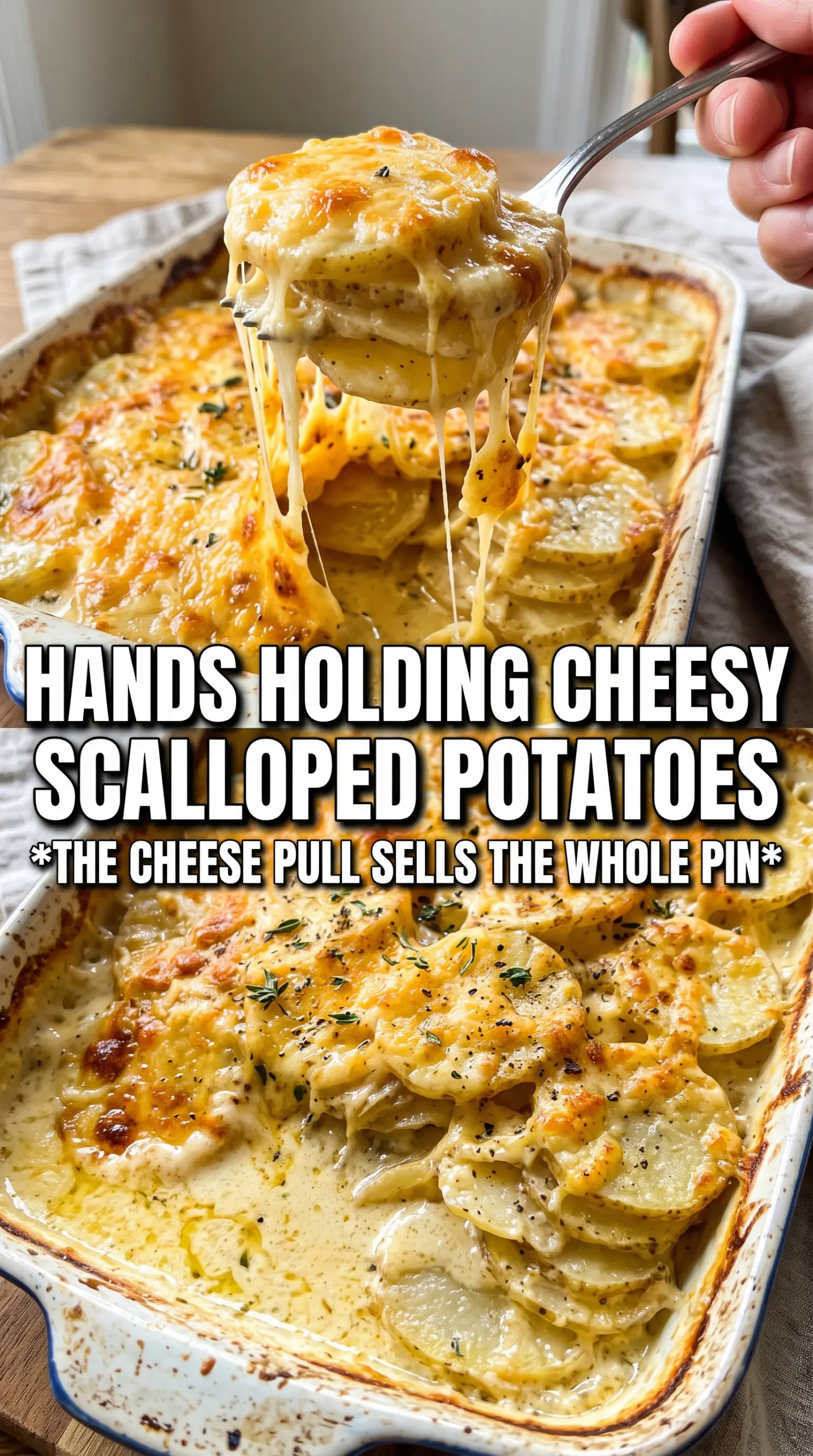
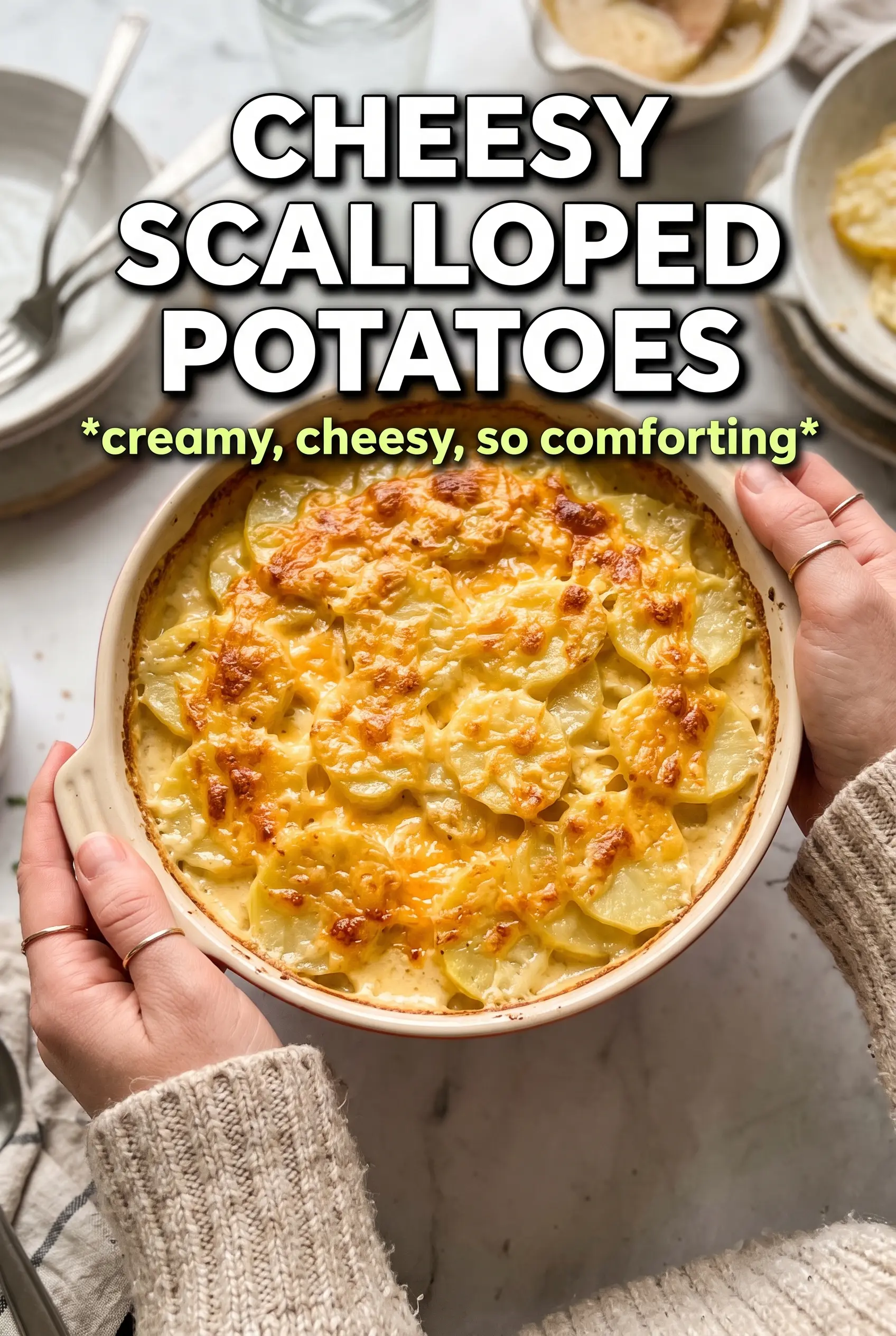
Cheesy scalloped potatoes earn their place at the table the minute you cut into them. The top turns deeply golden and bubbling, the cream settles into a silky sauce, and the potatoes underneath stay tender without collapsing into mush. Every spoonful pulls up a little of everything — nutty Gruyere, sharp cheddar, and thin layers of potato that hold their shape.
What makes this version work is the balance. Yukon gold potatoes bring enough starch to thicken the sauce naturally, so you don’t need a flour paste that can taste heavy or gluey. The garlic, Dijon, thyme, and nutmeg go straight into the cream mixture, which means the flavor runs all the way through the dish instead of sitting only on top. Covering the pan for most of the bake gives the potatoes time to soften in the sauce before the cheese browns.
Below you’ll find the part that matters most if your scalloped potatoes have ever come out watery, grainy, or stubborn in the middle. A few small choices make the difference between a pan that slices cleanly and one that slides apart on the plate.
The sauce thickened beautifully and the potatoes were tender all the way through without falling apart. I used the gruyere and cheddar combo and the top came out crisp and bubbly after exactly 20 minutes uncovered.
Save these cheesy scalloped potatoes for the kind of side dish that comes out creamy, layered, and golden every time.
The Reason These Potatoes Stay Creamy Instead of Drying Out
The biggest mistake in scalloped potatoes is treating the dish like a casserole that can be rushed. Thin slices need time in the cream mixture so the starch can do its work before the cheese goes on top. If the potatoes are too thick, the top will brown before the center turns tender, and you’ll end up with a pan that looks done but eats chalky in the middle.
Covering the dish tightly for the first part of the bake is what keeps the sauce from reducing too early. That trapped heat softens the potatoes gently and lets the cream thicken around them. When you uncover the pan, you’re finishing the dish, not cooking it from scratch. That’s why the top browns cleanly instead of drying out.
- Thin slicing matters more than almost anything else — aim for slices thin enough that they bend slightly, not rigid coins. A mandoline helps, but a sharp knife works if you keep the cuts consistent.
- Yukon golds give you a built-in creamy texture — russets can work, but they’ll soften more aggressively and can make the sauce feel looser.
- Resting is part of the recipe — the sauce settles and thickens as the dish sits. Cut in too soon and it will look runnier than it really is.
What Each Ingredient Is Actually Doing in the Baking Dish
- Yukon gold potatoes — these hold their shape while still turning tender and buttery. If you substitute russets, the dish gets starchier and softer, which can be nice, but the layers won’t stay as distinct.
- Heavy cream and whole milk — the cream carries richness, while the milk keeps the sauce from feeling too dense. Using all cream makes the dish heavier; using only milk makes it thinner and less satisfying.
- Gruyere and sharp cheddar — Gruyere melts smoothly and brings a nutty depth, while cheddar gives the browned top its familiar sharpness. Pre-shredded cheese works in a pinch, but freshly shredded melts cleaner and avoids a grainy finish.
- Dijon, thyme, and nutmeg — these seasonings keep the dish from tasting flat. Dijon doesn’t make it taste mustardy; it sharpens the cream and makes the cheese taste fuller.
- Garlic — minced garlic infuses the cream as it bakes, so every layer tastes seasoned. If you use garlic powder, the flavor won’t spread as naturally through the sauce.
- Butter — this is for the dish itself, not the sauce, and it helps the edges stay from sticking while adding a little richness to the bottom layer.
Building the Layers So the Center Cooks Before the Top Burns
Season the Cream First
Whisk the cream, milk, garlic, Dijon, thyme, nutmeg, salt, and pepper together before it ever touches the potatoes. That keeps the seasoning evenly distributed, which matters because the potatoes underneath will absorb the liquid as they bake. If you pour in plain dairy and try to season later, the top ends up salty and the middle tastes flat.
Stack the Potatoes in Overlapping Rows
Lay the potato slices in neat, slightly overlapping rows instead of dumping them in randomly. That arrangement helps the cream move through the pan evenly and gives you those clean layers when you serve it. Press the potatoes down once the liquid is in the dish so the upper slices don’t dry out above the sauce.
Cover Until the Potatoes Are Nearly Tender
The foil does the heavy lifting here. It traps steam, which softens the potatoes before the cheese has a chance to scorch. If the foil isn’t tight, the liquid evaporates too soon and the top dries out before the center catches up.
Finish with the Cheese at the End
Wait to add the Gruyere and cheddar until the potatoes are mostly tender. If the cheese goes on too early, it can brown before the potatoes are done and turn oily around the edges. Once uncovered, the top should bubble, color, and form a glossy crust while the sauce underneath stays silky.
How to Adapt These Scalloped Potatoes Without Losing the Creamy Finish
Make Them Gluten-Free Without Changing the Texture
This recipe is naturally gluten-free as written, so there isn’t anything to swap. Just check your Dijon and shredded cheese labels if you’re sensitive to cross-contact, since some processed versions can include additives that aren’t always obvious.
Use Half-and-Half for a Lighter Version
You can replace part of the heavy cream with half-and-half if you want something a little lighter, but the sauce will be less rich and won’t thicken quite as luxuriously. Keep the bake time the same and rest the dish fully so the sauce has time to settle.
Swap the Gruyere for Swiss or Fontina
Swiss cheese gives you a similar nutty melt, while Fontina turns the sauce extra smooth. Both work, but neither has quite the same depth as Gruyere, so the finished dish will taste a little milder.
Add Ham or Onions for a Heartier Side
A thin layer of diced ham or very soft caramelized onions works well between the potato layers. Ham adds salt and turns the dish into something closer to a main-course bake, while onions bring sweetness and a little extra moisture.
Storage and Reheating
- Refrigerator: Store covered for up to 4 days. The sauce will thicken as it chills, which is normal.
- Freezer: It freezes, but the cream sauce can separate a little when thawed. If you freeze it, wrap it tightly and thaw overnight in the refrigerator before reheating.
- Reheating: Warm covered in a 325F oven until hot in the center. The common mistake is blasting it at high heat, which dries out the top before the middle warms through. Add a loose foil cover for most of the reheating time, then uncover briefly if you want the top to crisp again.
Questions I Get Asked About This Recipe
Cheesy Scalloped Potatoes
Ingredients
Equipment
Method
- Preheat the oven to 375°F and butter a 9x13 baking dish.
- Whisk heavy cream, whole milk, garlic, Dijon mustard, fresh thyme, nutmeg, 1-1/2 teaspoons salt, and pepper until smooth.
- Layer the Yukon gold potatoes in overlapping rows in the dish, then pour the cream mixture over them.
- Press the potatoes down to submerge, then cover tightly with foil.
- Bake for 50 minutes, keeping the foil on to hold moisture, until the sauce begins to look thick around the edges.
- Uncover and scatter Gruyere and sharp cheddar over the top to create an even cheesy layer.
- Bake 18-22 more minutes at 375°F until the top is golden, bubbling, and the potatoes are completely tender.
- Rest the scalloped potatoes for 10 minutes before serving so the layers set and the sauce clings to each slice.