
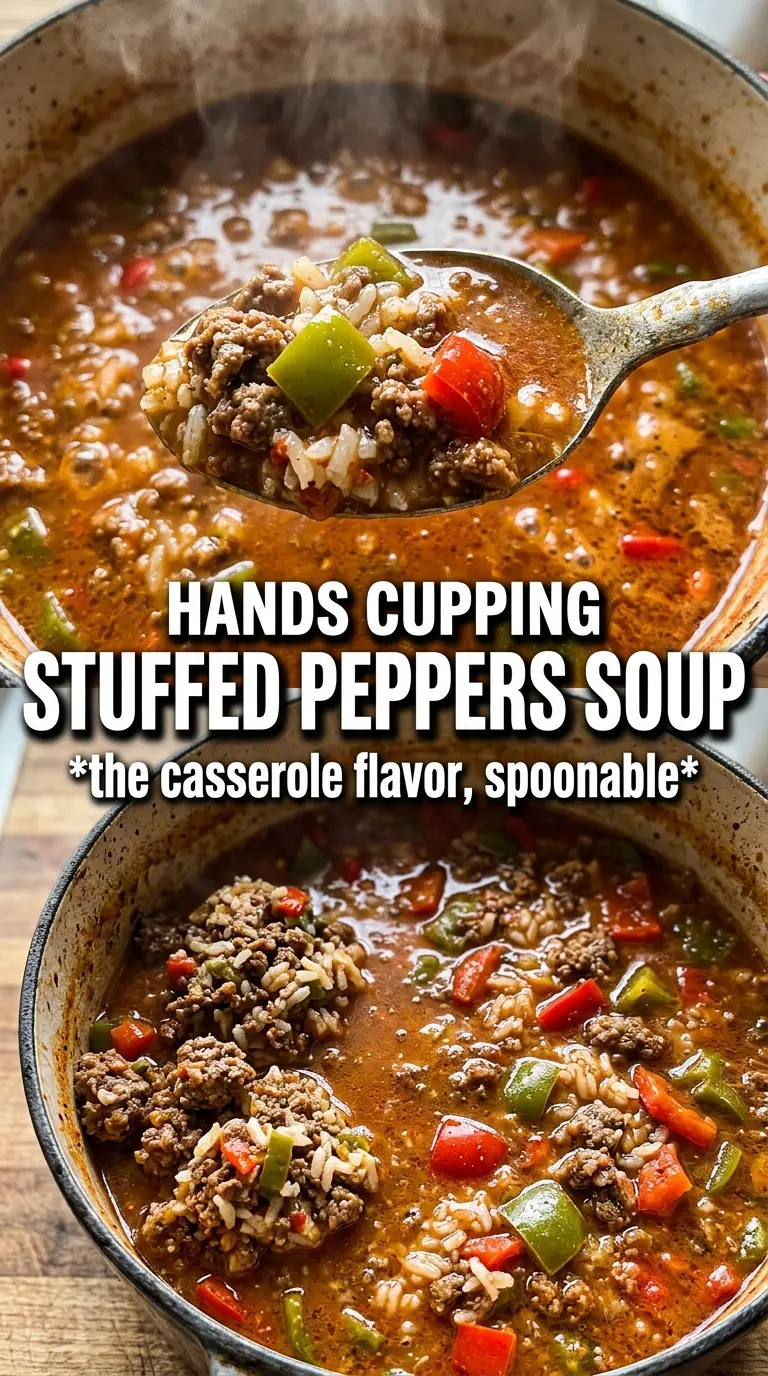
Stuffed peppers soup gives you everything people love about classic stuffed peppers without the fussy assembly. The broth turns rich and tomatoey, the peppers stay tender but still taste fresh, and the rice makes each bowl feel hearty enough to count as dinner. Topped with melted cheddar and a little parsley, it lands somewhere between cozy soup and a one-pot main dish, which is exactly why it keeps ending up back on the menu.
What makes this version work is the order of the cooking. Browning the beef first builds a deeper base, then the tomato paste gets a quick minute or two in the hot pot so it loses that raw, tinny taste. The rice goes in uncooked and finishes right in the broth, which saves a pot and lets the soup thicken naturally as it simmers. The result is brothy enough to ladle, but substantial enough that you won’t need bread unless you want it.
Below you’ll find the small details that keep the rice from turning mushy and the broth from tasting flat. I also added a few smart swaps for making it dairy-free or using what you already have in the pantry.
The rice cooked right in the soup without getting gummy, and the peppers still had some bite. I added the cheddar at the table and everyone went back for seconds.
Save this stuffed peppers soup for a one-pot dinner with beef, rice, and melted cheddar in every spoonful.
The Part Most Stuffed Pepper Soups Get Wrong
The biggest mistake with stuffed peppers soup is treating it like a dump-and-simmer recipe from the start. If you skip browning the beef properly, the soup tastes flat. If you rush the tomato paste, it stays sharp instead of deep and savory. And if you let the rice overcook, the whole pot turns thick and soft in a way that reads more like porridge than soup.
The fix is to build in layers. Brown the meat until you get some real color on the bottom of the pot, then cook the onions and peppers until they soften and pick up a little sweetness. The tomato paste should go in after the garlic and cook just long enough to darken slightly. That short step is what gives the broth the round, slow-cooked taste people expect from stuffed peppers.
- Ground beef — Use 80/20 if you can. It has enough fat for flavor, but not so much that the soup turns greasy after you drain the excess.
- Bell peppers — Green peppers give you that classic stuffed-pepper flavor. The red pepper adds a little sweetness so the broth doesn’t taste harsh.
- Tomato paste — This is the base-builder. Let it cook in the hot pot for 1 to 2 minutes so it loses its raw edge and blends into the broth.
- Long grain white rice — Long grain rice holds up better than quick-cooking rice here. It stays separate instead of breaking down and thickening the soup too much.
What Each Ingredient Is Actually Doing Here
- Beef broth — This gives the soup its savory backbone. If you use a low-sodium version, you get better control over the final seasoning.
- Crushed tomatoes and diced tomatoes — The crushed tomatoes make the broth thick and smooth, while the diced tomatoes leave little tomato pieces that keep the texture interesting.
- Italian seasoning, garlic powder, and smoked paprika — This combination keeps the soup from tasting like plain tomato soup with beef. The smoked paprika adds a subtle warmth that fits the peppers and cheddar.
- Cheddar and parsley — The cheddar melts into the hot bowl and gives you that stuffed-pepper-and-cheese feeling. The parsley is there for freshness, not decoration.
Building the Soup So the Rice Stays Tender
Brown the Beef First
Put the beef in a large pot and cook it until it’s fully browned with some caramelized bits on the bottom. Those browned spots are flavor, so don’t chase a perfectly clean pot. Drain off the excess fat once the meat is cooked; leaving too much behind makes the broth feel heavy instead of rich.
Soften the Vegetables Before the Liquids Go In
Add the onion and bell peppers to the pot and cook them for 4 to 5 minutes, just until they start to soften and smell sweet. The goal isn’t to brown them hard. You want them tender enough to blend into the soup but still distinct in the bowl. Stir in the garlic and tomato paste next, and cook for about 2 minutes until the paste darkens a shade.
Let the Soup Simmer Before the Rice Joins In
Once the tomatoes, broth, and seasonings go in, bring the pot to a boil, then add the uncooked rice. Drop the heat to a steady simmer and cover the pot so the rice can cook evenly. If the boil is too hard, the liquid reduces too fast and the rice can catch on the bottom before it’s tender.
Finish When the Rice Is Tender, Not Split
After 18 to 20 minutes, check the rice. It should be cooked through but still hold its shape. Taste the broth and season with salt and pepper at the end, because the broth and tomatoes can vary a lot in saltiness. Serve it right away with cheddar and parsley so the cheese melts over the top instead of disappearing into the whole pot.
Use Ground Turkey Instead of Beef
Ground turkey works well if you want a lighter bowl. It won’t bring the same deep beefy flavor, so use a little more salt and don’t skip the tomato paste step. The soup still comes out hearty, but the flavor leans brighter and cleaner.
Make It Dairy-Free
Leave off the cheddar or use a dairy-free shredded topping that melts decently. The soup itself doesn’t rely on dairy, so you won’t lose structure. You still get the same tomato-rich, peppery base with a cleaner finish.
Swap the Rice If You Need Gluten-Free
White rice is naturally gluten-free, so the recipe already fits that need. If you’re using leftover cooked rice instead of uncooked, stir it in near the end and warm it through for just a few minutes so it doesn’t go soft and swollen.
Make It More Brothy or More Hearty
Use an extra cup of broth if you want a looser soup, especially if you know you’ll have leftovers. For a thicker, almost stew-like bowl, let it simmer uncovered for the last few minutes after the rice is tender. That’s the easiest way to control the final texture without changing the flavor.
Storage and Reheating
- Refrigerator: Store for up to 4 days. The rice keeps absorbing broth, so the soup will thicken as it sits.
- Freezer: It freezes, but the rice softens after thawing. For the best texture, freeze the soup before adding the rice, then cook fresh rice when you reheat it.
- Reheating: Warm it gently on the stove over medium-low heat with a splash of broth or water. High heat can make the rice mushy and push the soup toward scorching on the bottom.