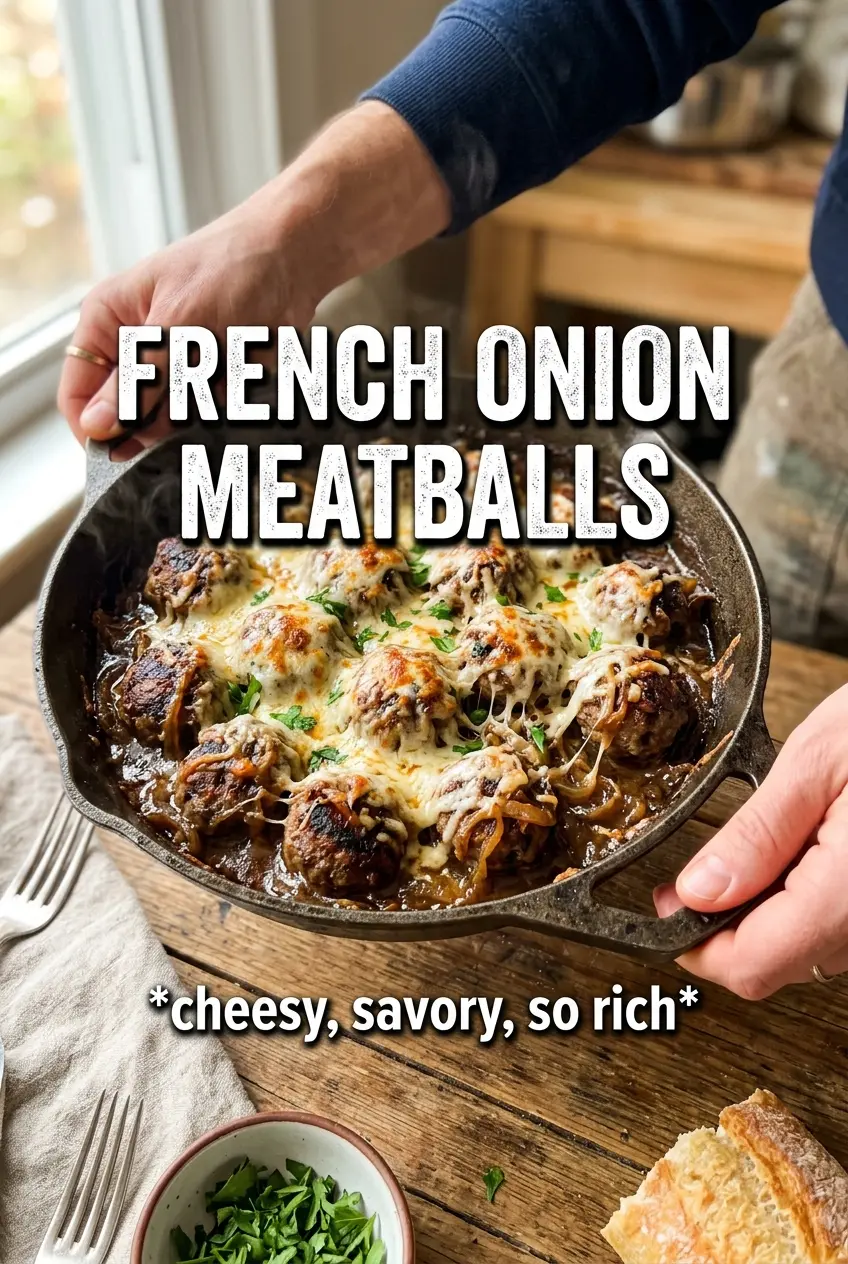
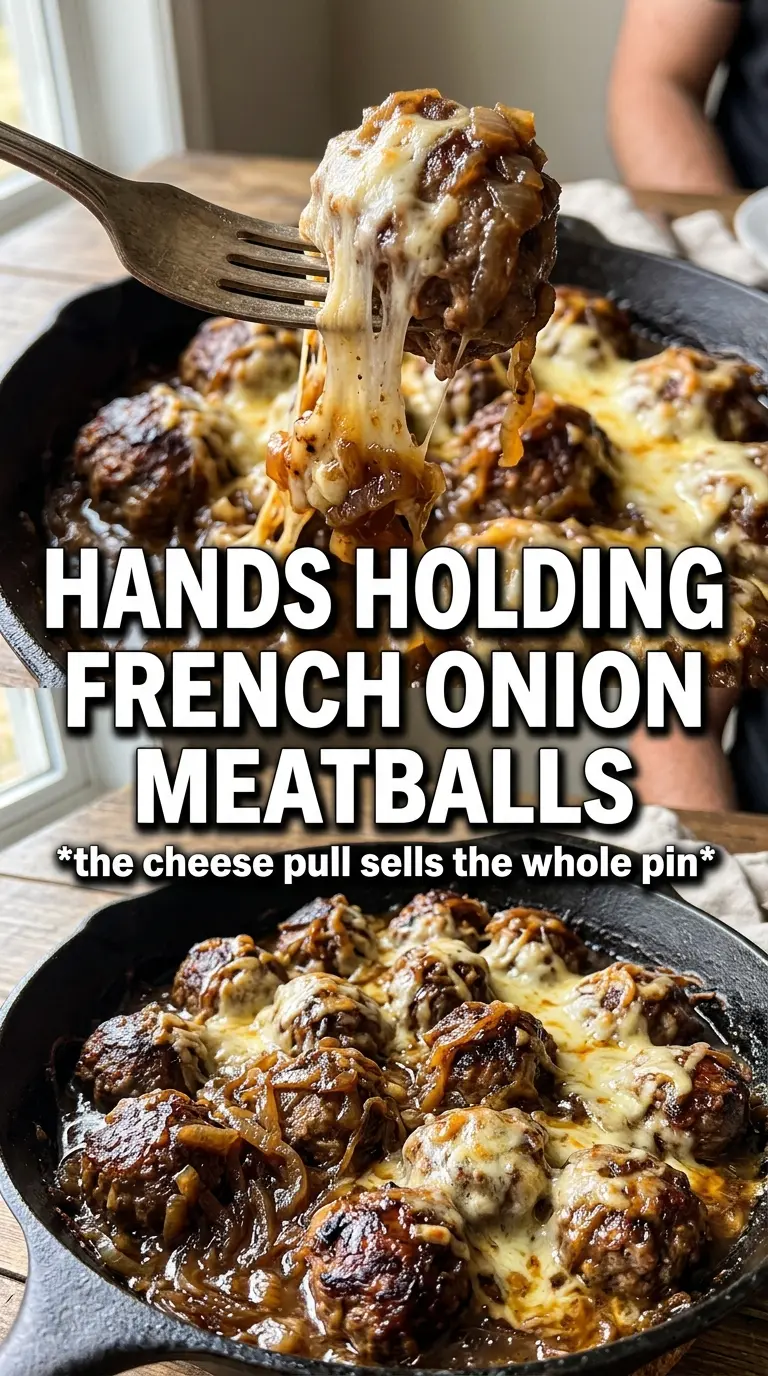
French onion meatballs bring everything people love about French onion soup and turn it into a proper main dish: deeply browned meatballs, sweet caramelized onions, and a blanket of molten Gruyere that bubbles into the broth at the edges. The sauce is rich without feeling heavy, and every bite gets a little bit of onion, a little bit of beef, and a lot of that savory, slow-cooked depth.
What makes this version work is patience in two places. The meatballs get browned first, which gives the sauce a better base than starting with pale meatballs simmering from raw. Then the onions cook low and slow until they’re soft, jammy, and deeply golden before the wine or broth goes in. That’s where the real flavor lives. Once the cheese goes under the broiler, the top turns bronzed and stretchy while the sauce stays spoonable underneath.
Below you’ll find the small details that keep the onions from scorching, the meatballs from turning dry, and the cheese from slipping off instead of melting into that beautiful crust.
The onions turned silky and sweet, and the cheese browned into the prettiest crust without getting greasy. I served it over mashed potatoes and the sauce soaked in perfectly.
Save these French onion meatballs for the night you want a braised-onion sauce and a bubbling cheese topping without making soup.
The part that keeps the onions from tasting flat
Caramelized onions can’t be rushed here, and that’s not a decorative instruction. If the heat is too high, they’ll brown on the outside before the moisture cooks off, which leaves you with harsh flavor instead of the mellow sweetness this dish needs. Medium-low heat gives the onions time to soften, collapse, and pick up that deep amber color in the pan.
The other thing people miss is that the sauce needs the browned bits from the meatballs. When you return the meatballs to the skillet, those drippings and bits of fond dissolve into the broth and give the whole dish its backbone. If the pan looks dry, the sauce will taste thin. If the onions are pale, the final bake will taste flat no matter how much cheese you add.
What Each Ingredient Is Actually Doing in This Recipe
- Primary ingredient (the star) — Quality matters most. Choose the best you can find.
- Cooking medium (oil, butter, or broth) — This carries flavors and prevents dryness.
- Seasonings (salt, pepper, spices, herbs) — Layer flavors so nothing overpowers. Build depth gradually.
- Aromatics (garlic, onion, herbs) — Cook with fat to bloom flavors. Become the foundation.
- Supporting ingredients — Complement the main ingredient without overpowering it.
- Sauce or liquid (if applicable) — Brings flavors together. Balance richness with acid.
- Acid (lemon, vinegar, wine, or other) — Brightens and prevents flat-tasting results.
- Final finish (garnish, glaze, or sauce) — Prevents one-dimensional taste and adds visual appeal.
What each ingredient is actually doing in this dish
- Ground beef — A 80/20 blend gives you meatballs that stay juicy while they simmer. Leaner beef works, but the texture will be firmer and less forgiving.
- Breadcrumbs and egg — These bind the meatballs just enough to keep them tender. Without them, the meatballs can tighten up and lose that soft bite once they hit the sauce.
- Worcestershire — This is doing quiet heavy lifting in both the meatballs and the sauce. It adds savory depth that helps the whole dish taste cooked all the way through, even before the cheese goes on.
- Onions — Use three large ones, sliced thin, so they melt down evenly. Thick slices take longer and can leave you with uneven sweet spots and sharp pieces.
- Dry white wine or beef broth — Wine gives the sauce a little brightness and helps loosen the fond; beef broth makes the dish fuller and more straightforward. If you skip the wine, use a good broth so the sauce still tastes layered.
- Gruyere or provolone — Gruyere gives you the classic nutty finish, while provolone melts more easily and makes a softer top. Pre-shredded cheese works in a pinch, but freshly shredded melts into a smoother crust.
Building the onion sauce without breaking the texture
Browning the meatballs first
Roll the meatballs into even 1.5-inch balls so they cook at the same pace, then brown them in butter until the outside takes on real color. You’re not cooking them through at this stage; you’re building flavor and helping them hold together in the sauce. If you crowd the pan, they’ll steam instead of brown, and that steals a lot from the final dish. Set them aside once they’ve developed a good crust.
Coaxing the onions to sweetness
Add the onions to the same skillet with more butter and cook them over medium-low heat, stirring often and scraping the bottom as they soften. They should go from sharp and raw to soft, then to golden brown, then to deeply caramelized and jammy over about 30 to 35 minutes. If they start sticking hard or turning dark too fast, the heat is too high. Slow is what gets you the sweet onion base that tastes like French onion soup instead of sautéed onions.
Deglazing and simmering
Pour in the wine or broth and stir until the browned bits release from the skillet. That’s the flavor source, so don’t leave them stuck behind. Add the beef broth, Worcestershire, and thyme, then return the meatballs to the pan and simmer until they’re cooked through and the sauce has picked up body. The liquid should stay brothy, not reduce all the way to gravy.
Melting the cheese under the broiler
Transfer everything to a baking dish if your skillet isn’t oven-safe, then scatter the cheese over the top in an even layer. Broil just until the cheese is melted, bubbling, and spotted with golden brown patches. Watch it closely, because broilers move fast and the line between bronzed and burnt is short. Let it sit for a few minutes before serving so the sauce settles and doesn’t run off the spoon.
Three ways to make these meatballs work for your kitchen
Make it gluten-free
Swap the breadcrumbs for a certified gluten-free breadcrumb or crushed gluten-free crackers. The meatballs will still bind well, but choose a fine crumb so they stay tender instead of crumbly. Also check your Worcestershire, since some brands contain gluten.
Use provolone for a softer, milder finish
Provolone melts into a smooth, stretchy top and keeps the dish a little less sharp than Gruyere. You lose some of the nutty French onion character, but the result is friendlier for people who want a gentler cheese flavor. A blend of half provolone and half Gruyere is a good middle ground.
Make it lighter with ground turkey
Ground turkey works, but it needs a little help because it doesn’t bring the same fat or flavor as beef. Add a touch more Worcestershire and don’t overcook the meatballs during the browning stage. The sauce will carry the dish, but the meatballs will be more delicate and less rich.
Storage and Reheating
- Refrigerator: Store leftovers in an airtight container for up to 4 days. The onions will thicken a bit as they chill, which is normal.
- Freezer: This freezes well, especially before the cheese goes on. Freeze the meatballs and sauce in a covered container for up to 2 months, then thaw overnight before reheating and adding fresh cheese.
- Reheating: Warm gently on the stove over low heat or covered in the oven until hot. Don’t blast it in the microwave on high, or the meatballs can turn rubbery and the cheese can separate.