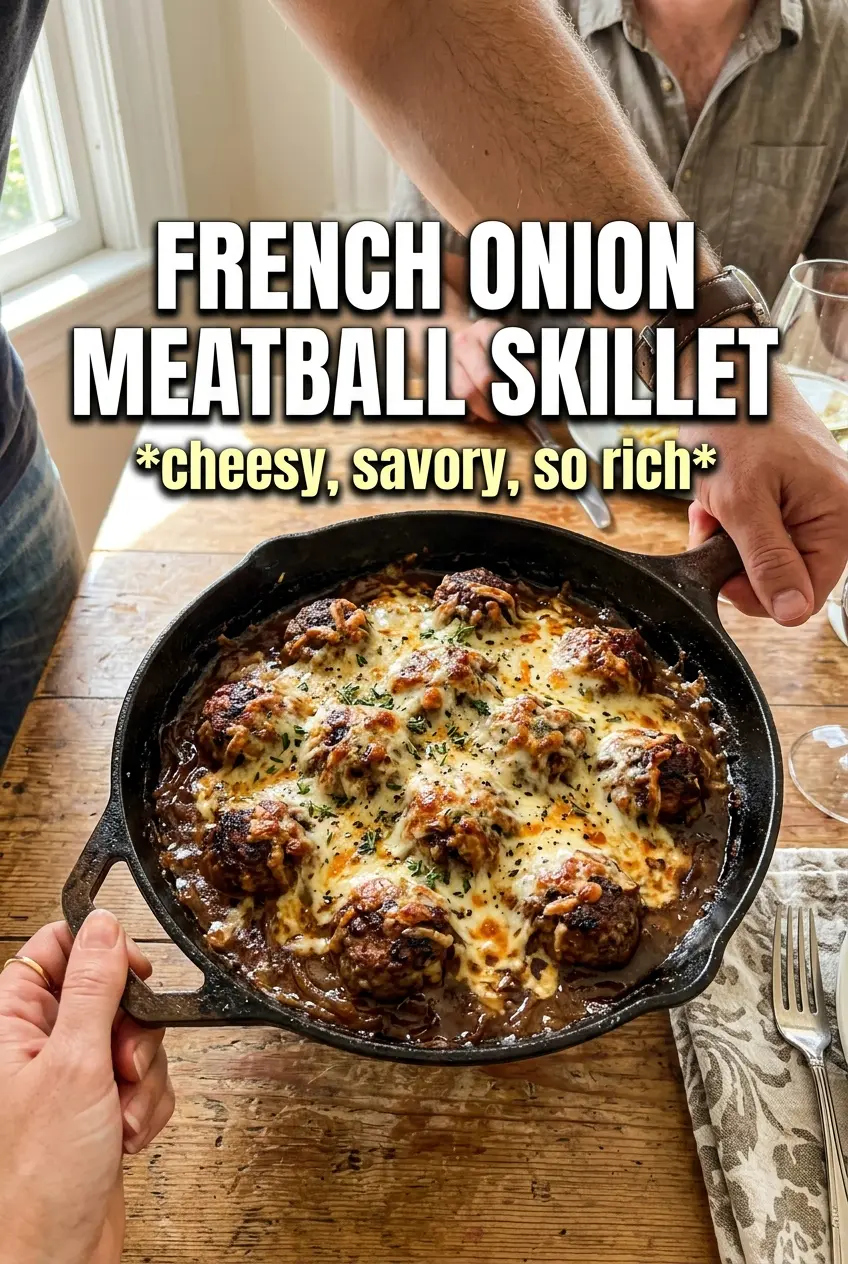
Deeply caramelized onions and browned meatballs turn into one skillet that tastes like French onion soup and a proper Sunday supper at the same time. The onions melt down into a glossy, savory broth, the meatballs stay tender, and the Gruyere blankets everything in a bubbling top that pulls into long, salty strands when you scoop it out.
The trick is giving the onions enough time to go from soft to mahogany without rushing them. That slow cook builds the sweet, savory base the broth alone can’t fake. Browning the meatballs first does two things: it gives you flavor in the pan, and it keeps them from overcooking while they finish in the onion sauce.
Below you’ll find the small details that matter here, including how to keep the onions from scorching, when to add the wine, and what to do if you want to make this a little lighter without losing that French onion feel.
The onions turned silky and sweet, and the Gruyere browned beautifully under the broiler without turning greasy. I served it with crusty bread and my husband went back for seconds before I even sat down.
Save this French Onion Meatball Skillet for the nights when you want caramelized onion sauce, melted Gruyere, and one-pan comfort.
The Onion Stage That Makes or Breaks the Skillet
The onions are the backbone of this dish, and they need time on medium-low heat to turn sweet and jammy instead of bitter and burnt. If you rush them, you get soft onions floating in broth. If you give them the full 30 to 35 minutes, they collapse into the pan and start tasting like the best part of French onion soup.
Use an oven-safe skillet with enough surface area for the onions to spread out. Crowding them traps steam, which slows browning and leaves you with pale onions that never develop depth. The pan should hold onto brown bits from the meatballs too; those are the base of the sauce once the wine hits the skillet.
- Onions — Three large onions might look excessive at the start, but they cook down to just enough for the sauce. Yellow onions are the best choice here because they balance sweetness and savoriness as they caramelize.
- Butter — Butter carries the onions through their long cook and helps pull color from the pan. If you use only oil, you lose some of the richness that makes this taste like French onion anything.
- Wine and broth — The wine lifts the browned bits from the skillet, and the broth builds the sauce volume. A dry white wine works best; anything sweet will push the whole dish in the wrong direction.
What Each Ingredient Is Actually Doing in This Recipe

- Primary ingredient (the star) — Quality matters most. Choose the best you can find.
- Cooking medium (oil, butter, or broth) — This carries flavors and prevents dryness.
- Seasonings (salt, pepper, spices, herbs) — Layer flavors so nothing overpowers. Build depth gradually.
- Aromatics (garlic, onion, herbs) — Cook with fat to bloom flavors. Become the foundation.
- Supporting ingredients — Complement the main ingredient without overpowering it.
- Sauce or liquid (if applicable) — Brings flavors together. Balance richness with acid.
- Acid (lemon, vinegar, wine, or other) — Brightens and prevents flat-tasting results.
- Final finish (garnish, glaze, or sauce) — Prevents one-dimensional taste and adds visual appeal.
What the Meatballs Need Before They Hit the Pan
Mix the meatball ingredients just until combined. Overworking the meat makes the texture tight instead of tender, and this dish needs meatballs that can soak up the sauce without turning dense. The Worcestershire sauce and garlic powder are doing the heavy lifting for flavor, so even though the ingredient list is short, the meatballs don’t taste plain.
A breadcrumb and egg mixture keeps them from falling apart when they simmer in the onion broth. If your mixture feels sticky, chill it for a few minutes before rolling. That short rest makes the meatballs easier to shape and helps them hold their form in the skillet.
- Ground beef — Use beef with enough fat to stay juicy, but not so much that the sauce turns greasy. An 80/20 blend gives the best balance.
- Breadcrumbs and egg — This is the binder that keeps the meatballs tender through browning and simmering. Fresh breadcrumbs can work, but dry breadcrumbs give a more consistent texture.
- Gruyere — Gruyere melts into that signature nutty blanket on top. Swiss cheese will work in a pinch, but it won’t have the same depth or the same silky pull.
Building the Sauce So It Stays Silky
Brown the Meatballs First
Brown the meatballs in butter in the oven-safe skillet until they have color on the outside, then remove them. You’re not cooking them through at this point; you’re building flavor and setting the shape. If they stick a little, leave them alone for another minute before turning them. They’ll release when the crust is ready.
Caramelize the Onions Slowly
Add the sliced onions to the same skillet and cook them over medium-low heat for 30 to 35 minutes, stirring often enough to keep the edges from scorching. They should go from watery and opaque to golden, then deep brown and soft enough to collapse. If the pan looks dry before the onions are done, a splash of water helps loosen the browned bits without stopping the caramelization.
Deglaze and Build the Broth
Stir in the garlic and thyme for a minute, then pour in the wine and scrape the skillet clean. That step matters because the browned bits under the onions and meatballs are pure flavor. Add the broth and Worcestershire once the wine has mostly cooked down; if you add the broth too early, the wine stays sharp instead of turning rounded and savory.
Finish Under the Broiler
Return the meatballs to the skillet and simmer them in the onion sauce for about 10 minutes, just until cooked through. Then scatter the Gruyere over the top and broil until melted, bubbly, and spotted with brown. Watch it closely in the last minute. Cheese can go from golden to scorched fast, and the broiler doesn’t give you a warning.
How to Adapt This Skillet When You Need a Different Path
Gluten-Free Version
Use gluten-free breadcrumbs in the meatballs and check that your Worcestershire sauce is certified gluten-free. The texture stays close to the original, but the binder may feel a little softer, so chill the meatball mixture for 10 minutes before shaping.
Dairy-Free Adjustment
Swap the butter for olive oil and skip the Gruyere, or use a dairy-free melting cheese if you have one you trust. The skillet will still have the French onion flavor, but you lose the rich, stretchy top that makes this version feel extra cozy.
Leaner Meatball Swap
Ground turkey works, but it needs help staying juicy. Add a tablespoon of olive oil to the meat mixture and keep a close eye on the simmer time so the meatballs don’t dry out before the cheese goes on.
Storage and Reheating
- Refrigerator: Store leftovers in an airtight container for up to 4 days. The onions will thicken and the cheese will set, which is normal.
- Freezer: Freeze the meatballs and onion sauce without the cheese topping for up to 2 months. Thaw overnight in the fridge before reheating, then add fresh Gruyere before broiling.
- Reheating: Reheat gently on the stove over low heat or in the oven at 325°F until hot. High heat can split the sauce and make the meatballs tough, so keep it slow and covered until the last few minutes.