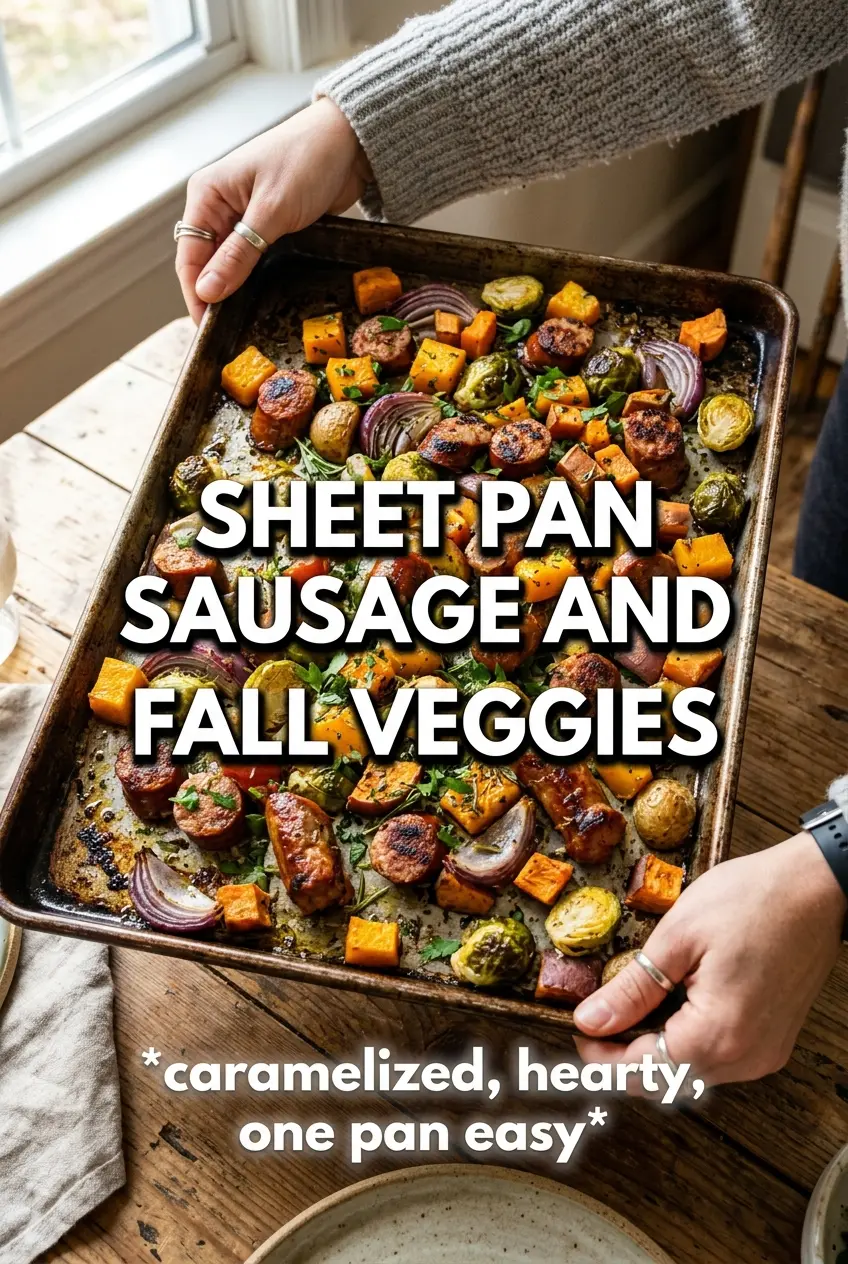
Caramelized sausage, tender squash, and browned Brussels sprouts make this sheet pan dinner feel a lot bigger than the effort it takes. The edges get crisp, the apple softens just enough to sweeten the pan, and the balsamic-maple glaze pulls everything together without turning sticky or heavy. It’s the kind of dinner that lands on the table looking abundant, with one pan to wash and no separate side dish needed.
What makes this version work is the balance between ingredients that roast at different speeds. The squash and Brussels sprouts need enough space and heat to brown instead of steam, while the sausage renders into the vegetables and seasons the whole pan as it cooks. The Dijon in the glaze keeps the maple from reading too sweet, and the rosemary gives the whole dish that woodsy, savory edge that fits fall produce.
Below, I’ve included the small adjustments that keep the vegetables from going limp and the sausage from drying out, plus a few swaps if you want to change the mix without losing the whole point of the dish.
The glaze browned beautifully and the sausage stayed juicy while the Brussels sprouts got those crispy edges. I was worried the apple would get mushy, but it held its shape and gave the whole pan a nice sweet finish.
Save this sheet pan sausage and fall veggies dinner for the nights when you want one pan, big caramelization, and a maple-balsamic glaze that coats everything just right.
The Part That Keeps the Pan Roasting Instead of Steaming
The biggest mistake with sheet pan dinners is crowding the pan. When the vegetables sit on top of each other, they trap moisture and soften before they ever brown. This recipe works because everything is spread into a real single layer, which gives the heat a chance to hit the edges and start caramelizing the natural sugars in the squash, onion, and apple.
The other piece that matters is when the glaze goes on. If you dump a sweet glaze onto the pan too early and drown everything in it, the vegetables can turn glossy and soft before they’ve had time to roast. A light coating before baking is enough here because the maple and balsamic concentrate in the oven, and the final broil gives you those dark, sticky spots without burning the whole tray.
- Space on the pan — Use the biggest rimmed sheet pan you have. If the ingredients touch too much, they steam. Two pans are better than one crowded pan.
- Apple slices — Slice them thick enough to hold their shape. Thin slices disappear into the pan before the vegetables are done.
- Broiling at the end — Those last 2 to 3 minutes are what deepen the edges. Watch closely, because the maple in the glaze can go from browned to burnt fast.
What Each Ingredient Is Actually Doing in This Dish
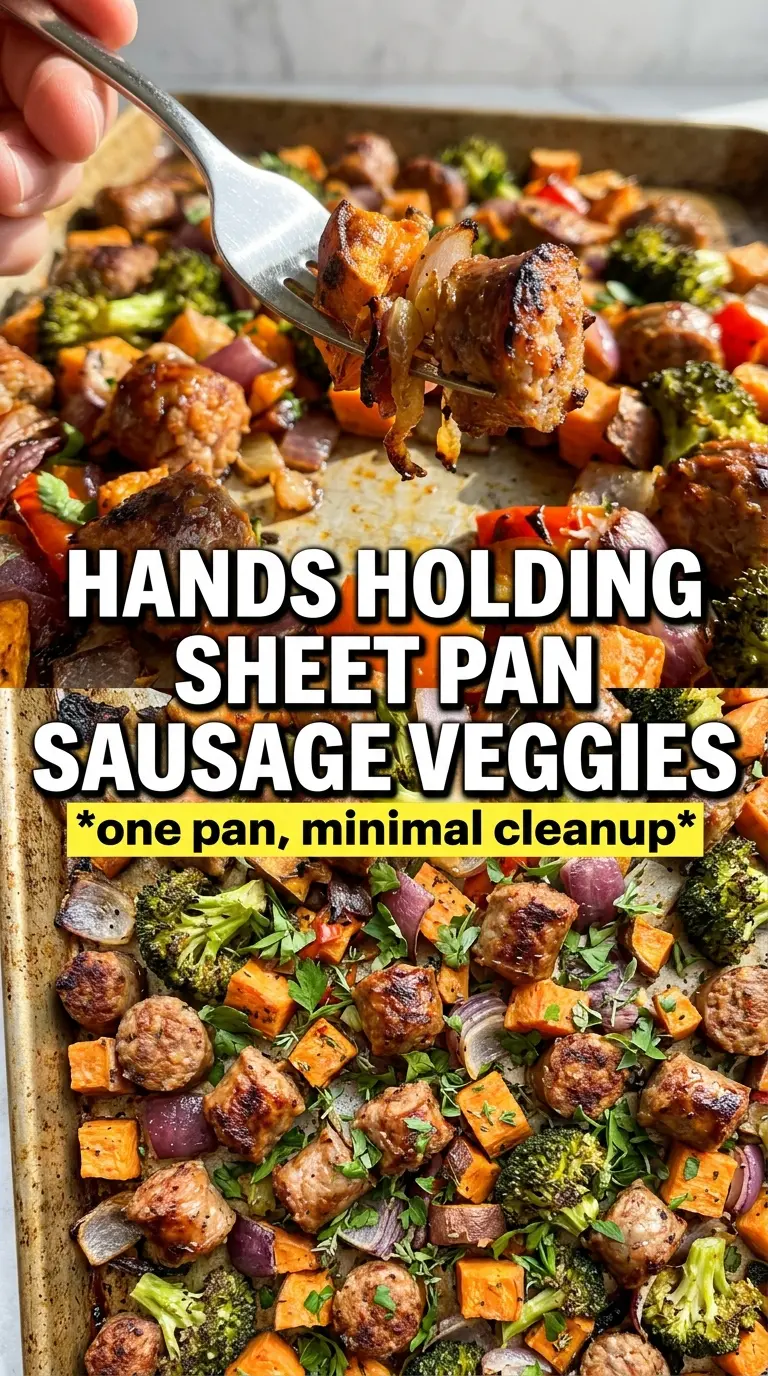
- Italian sausage links — These bring fat, salt, and built-in seasoning. Slice them into rounds so the browned edges catch on the pan and flavor the vegetables. Chicken or turkey sausage works too, but it won’t render as much richness.
- Butternut squash — This is the anchor vegetable because it caramelizes beautifully and stays tender without falling apart. Cut it into even cubes so it finishes at the same time as the Brussels sprouts.
- Brussels sprouts — Halving them gives you flat sides that brown well. If you leave them whole, they take longer and won’t pick up as much color.
- Balsamic vinegar, maple syrup, and Dijon — This is the glaze that ties the pan together. The vinegar sharpens, the maple rounds everything out, and Dijon keeps the sweetness from taking over. If you don’t have maple syrup, honey works, but the flavor will be a little less earthy.
- Fresh rosemary and garlic — Fresh rosemary gives the pan a piney, savory note that dried rosemary can’t quite match. Garlic should be minced fine so it perfumes the glaze instead of burning in big pieces.
- Apple — The apple adds a soft sweet bite that works especially well with the sausage. Use a firm apple like Honeycrisp or Fuji so it stays intact after roasting.
How to Get the Whole Pan Browned Without Overcooking the Sausage
Whisking the Glaze First
Mix the oil, balsamic, maple syrup, Dijon, garlic, rosemary, Italian seasoning, salt, and pepper before anything hits the pan. That way the seasoning gets distributed evenly instead of clumping on one corner. The glaze should look loose and emulsified, not separated. If the garlic is sitting in a puddle at the bottom, whisk again before you pour.
Arranging for Direct Heat
Spread the sausage, squash, Brussels sprouts, onion, peppers, and apple across the sheet pan with a little breathing room. The cut sides of the Brussels sprouts and the edges of the sausage should face up where possible, because that’s where the browning happens. If the pan looks overloaded, split it between two pans now instead of trying to save it halfway through. A crowded pan gives you soft vegetables and pale sausage.
Roasting Until the Edges Turn Deep Gold
Roast at 425°F for 30 to 35 minutes, stirring once halfway through. You’re looking for browned spots on the sausage, tender squash that still holds its shape, and Brussels sprouts with dark edges. If the vegetables are soft but pale, they need more time uncovered. The final broil is optional, but it’s the move that gives the pan those crisp, almost lacquered spots.
The Finish That Keeps It Juicy
Pull the pan as soon as the sausage is cooked through and the vegetables are caramelized. Let it sit for a minute or two before serving so the glaze settles onto the vegetables instead of running off immediately. If you broil, stay right there and watch the pan the entire time. A sugar-heavy glaze can go from perfect to scorched in a blink.
How to Adapt This for Different Pans, Proteins, and Diets
Make It Dairy-Free Without Changing the Texture
This recipe is naturally dairy-free as written, which is one reason it’s such an easy weeknight dinner. Keep the glaze and roasting method exactly the same. If you swap the sausage, choose a brand with enough fat to stay juicy, since leaner sausages can dry out on a hot sheet pan.
Use Chicken or Turkey Sausage for a Lighter Pan
Chicken or turkey sausage works well, but it gives you less pan drippings and a slightly leaner finish. To keep the tray from tasting dry, don’t reduce the oil in the glaze. The vegetables need that fat to roast instead of toast.
Swap the Apple When You Want Less Sweetness
If you want the pan more savory, skip the apple and add another handful of Brussels sprouts or extra onion. You’ll lose some of the sweet contrast, but the dish will feel more like a classic roasted sausage dinner. Pear works too, though it softens faster than apple.
Make It Gluten-Free and Keep the Same Flavor
This dish is gluten-free as long as your sausage and Dijon mustard are certified gluten-free. That’s worth checking, because some sausages use fillers and some mustards include unexpected additives. The roasting method doesn’t change at all.
Storage and Reheating
- Refrigerator: Store leftovers in an airtight container for up to 4 days. The vegetables soften a little, but the flavors hold up well.
- Freezer: It freezes, but the vegetables won’t stay crisp. Freeze only if you’re fine with a softer texture after thawing, and cool everything completely before packing it up.
- Reheating: Reheat on a sheet pan in a 375°F oven until hot. The oven brings the edges back better than the microwave, which tends to make the Brussels sprouts and squash mushy.