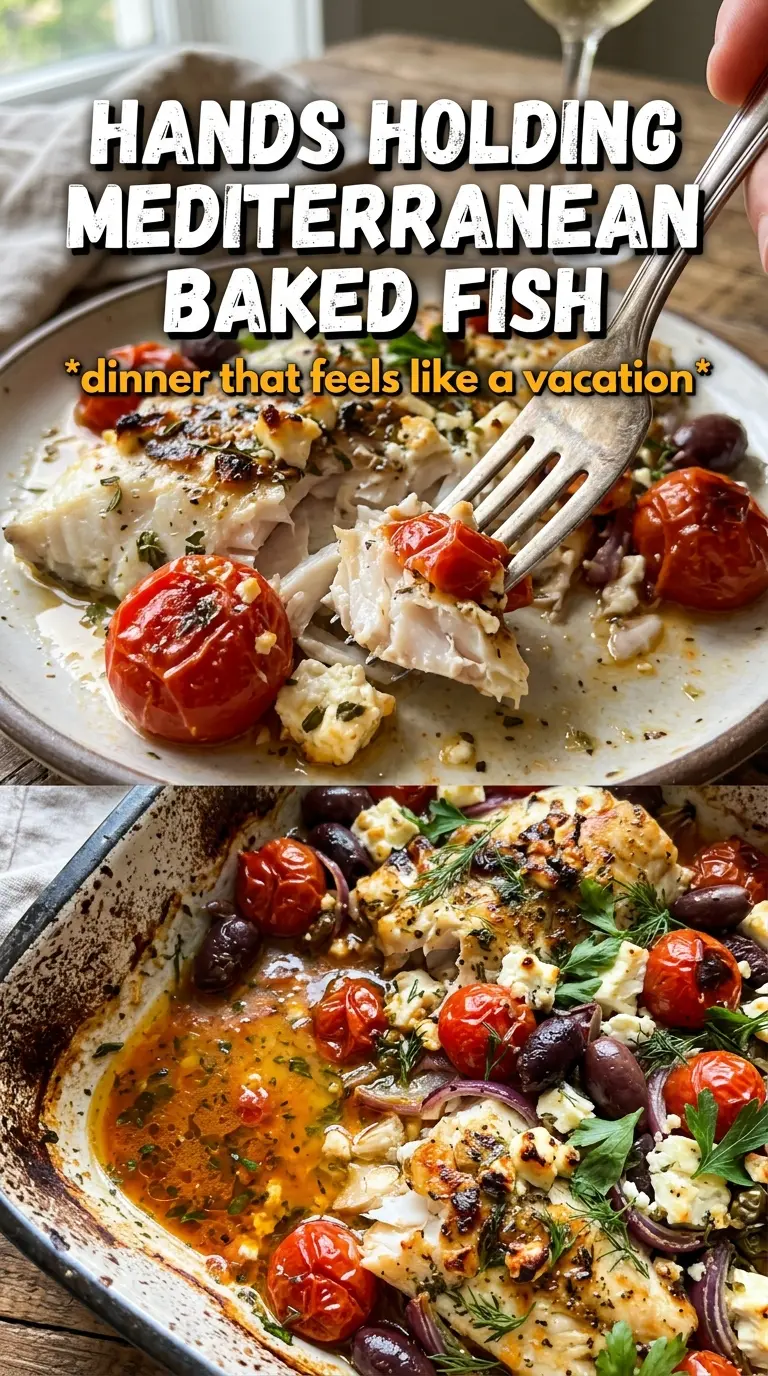
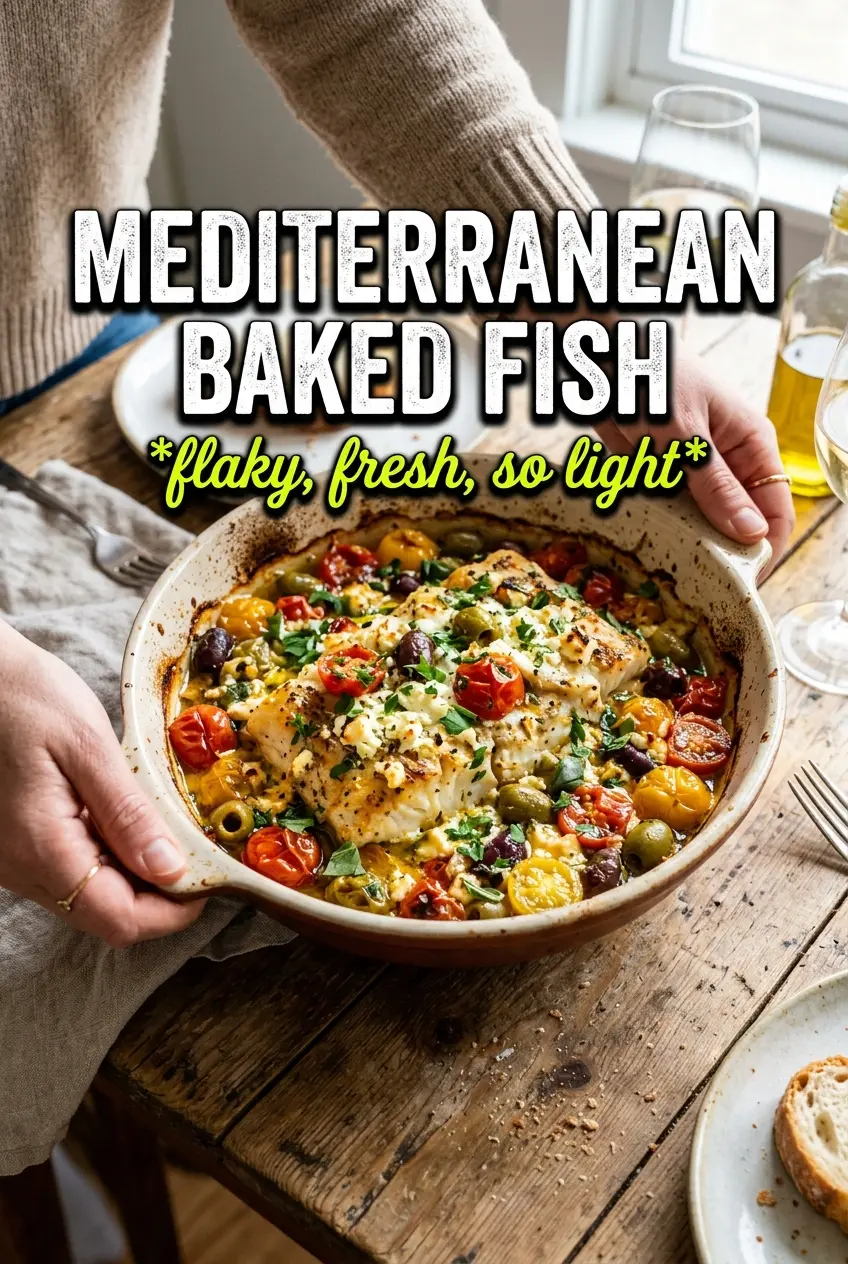
Flaky white fish, juicy tomatoes, briny olives, and capers turn into a pan sauce that tastes like it took a lot more effort than it did. The fish stays tender because it bakes right on top of the vegetables, soaking up the garlic, wine, and olive oil as everything roasts together. By the time it hits the table, the tomatoes have collapsed into a glossy sauce and the fish lifts apart in clean, moist pieces.
The key here is giving the vegetables a head start. Ten minutes in the oven softens the tomatoes and wakes up the garlic before the fish goes in, which keeps the fillets from overcooking while the sauce catches up. A dry white wine adds a little acidity and depth, but broth works if that’s what you have. Use a fish that bakes into firm flakes, not something delicate that falls apart before serving.
Below, I’ve added the small details that matter most: how to judge doneness, which substitutions hold up, and what to do if you want a milder or more pantry-friendly version.
The fish stayed perfectly flaky and the tomatoes broke down into this glossy sauce I kept spooning over rice. The 10-minute roast on the vegetables made all the difference.
Save this Mediterranean baked fish for a fast one-pan dinner with flaky cod, briny olives, and a bright tomato pan sauce.
The Step That Keeps the Fish from Going Dry
The biggest mistake with baked fish is treating the fillets like they need the same amount of time as the vegetables. They don’t. The vegetables need a head start so they can soften and release their juices, but the fish only needs enough time to turn opaque and flake at the thickest part. If you bake everything together from the start, the fish overcooks before the sauce is ready.
The other thing that matters is where the fillets sit in the pan. Nestle them into the vegetables instead of burying them. They should be in contact with the saucy mixture, but still visible on top so the heat can move around them evenly.
- Tomatoes — Halving them helps them collapse into the sauce faster. Grape tomatoes work too if that’s what you have.
- Kalamata olives and capers — These bring the salty, briny punch that keeps the dish from tasting flat. If you use a milder olive, add a few extra capers.
- Roasted red peppers — Jarred peppers are perfect here because they’re already soft and sweet. Fresh peppers need more time than this recipe gives them.
- White fish — Cod is the most forgiving choice. Halibut and sea bass work too, but choose fillets that are close to the same thickness so they finish together.
What Each Ingredient Is Doing in the Pan
- Dry white wine or broth — This creates the small amount of liquid that becomes the sauce. Wine gives the pan more depth, while broth keeps it family-friendly and still works well.
- Olive oil — Don’t skimp here. It carries the garlic and oregano and helps the tomatoes roast instead of dry out.
- Garlic — Thin slices soften in the oven and mellow into the sauce. Minced garlic can scorch faster, so slices are the safer choice for this bake.
- Red pepper flakes — They don’t make the dish spicy-hot; they just keep the tomato and olive base from tasting one-note. Use less if your olives are already very salty.
How to Roast It So the Sauce and Fish Finish Together
Building the Tomato Base
Combine the tomatoes, olives, capers, roasted red peppers, garlic, wine, olive oil, oregano, and red pepper flakes in the baking dish, then roast that mixture for 10 minutes. You’re looking for the tomatoes to start blistering and the garlic to soften at the edges. If the pan looks dry, add another spoonful of oil or a splash more broth before the fish goes in.
Adding the Fish at the Right Moment
Season the fillets with salt and pepper, then nestle them into the hot vegetable mixture. Put the thicker pieces toward the outside of the dish where the heat is strongest if your fillets vary in size. The fish should sit on top of the sauce, not be submerged, or the texture turns soft and muddy instead of tender.
Finishing Without Overcooking
Bake for 12 to 15 minutes more, just until the fish flakes easily with a fork and the center is opaque. Start checking at 12 minutes if your fillets are thin. If you wait until the fish looks completely firm in the oven, it’s usually already past the sweet spot by the time it reaches the table.
The Lemon and Parsley Finish
Scatter fresh parsley over the top and serve with lemon wedges. The lemon cuts through the olives and capers and makes the whole dish taste brighter. Add it at the table, not before baking, or the fresh finish gets lost in the oven.
How to Adapt This for Different Fish, Diets, and Pantry Shortcuts
Gluten-Free and Naturally Light
This recipe is already gluten-free as written, which is one reason it’s such an easy weeknight main. Serve it with rice, potatoes, or crusty gluten-free bread to catch the sauce, and you won’t miss a thing.
No Wine, No Problem
Broth steps in cleanly if you don’t want to cook with wine. You lose a little acidity and depth, so a squeeze of lemon at the end matters even more.
Making It Milder
Use fewer capers and swap in green olives if Kalamatas are too strong for your table. The dish will still have that salty, Mediterranean edge, just with a softer finish.
Storage and Reheating
- Refrigerator: Store leftovers in an airtight container for up to 2 days. The fish will be a little firmer after chilling, but the sauce stays tasty.
- Freezer: I don’t recommend freezing the finished dish. Cooked fish turns chalky after thawing, and the tomatoes lose their best texture.
- Reheating: Warm gently in a covered skillet over low heat or in a 300°F oven until just heated through. High heat dries the fish out fast, so keep the reheating slow and short.
Answers to the Questions Worth Asking
Mediterranean Baked Fish
Ingredients
Equipment
Method
- Preheat the oven to 400°F and grease a 9x13 baking dish (or lightly oil it).
- Combine cherry tomatoes, Kalamata olives, capers, roasted red peppers, garlic, dry white wine or broth, olive oil, dried oregano, and red pepper flakes in the baking dish.
- Roast the vegetable mixture for 10 minutes, until the tomatoes begin to soften and the garlic smells fragrant (visual cue: bubbling around the edges).
- Season the fish fillets with salt and pepper, then nestle them into the hot vegetable mixture.
- Bake for 12 to 15 minutes more, until the fish flakes easily with a fork (visual cue: opaque flakes forming at the thickest part).
- Garnish with fresh parsley and serve with lemon wedges.