Honey mustard potatoes come out with crisp edges, soft centers, and a glaze that turns glossy and deeply browned in the oven. The combination of Dijon, whole grain mustard, and honey gives you sharpness, sweetness, and little pops of texture all at once, so every bite tastes layered instead of one-note. These are the kind of potatoes that disappear off the pan before they ever make it to the serving bowl.
The trick is keeping the coating balanced enough to cling without drowning the potatoes. A little olive oil helps the glaze spread, while apple cider vinegar keeps the honey from tasting flat and gives the potatoes a brighter finish after roasting. Baby potatoes or Yukon golds both work well because they hold their shape and roast into tender, creamy centers instead of turning mealy.
Below, I’ll walk through the small details that keep the glaze from burning and the potatoes from steaming, plus a few swaps and storage notes if you want to make these ahead.
The potatoes got those caramelized edges without burning the honey, and the mustard stayed bold after roasting. I served them with grilled chicken and everybody went back for seconds.
Save these honey mustard potatoes for a crisp, caramelized side with just the right sweet-tangy bite.
The Part That Keeps the Glaze from Burning Before the Potatoes Finish
Honey is the ingredient that makes this dish sing, but it’s also the one that can get you into trouble if the pan is too crowded or the potatoes are cut too small. When the wedges overlap, they steam first and brown later, which leaves you with soft spots and a glaze that never gets a chance to caramelize. A single layer is non-negotiable here.
The other thing that matters is tossing halfway through the roast. That second toss brings the undersides back into contact with the hot pan and redistributes the glaze, so you get those sticky browned patches instead of one side drying out. If the potatoes look dark before they’re tender, your oven is running hot and the pieces are too small. Pull them when a knife slides in easily and the edges look lacquered, not scorched.
What Each Ingredient Is Actually Doing in This Dish
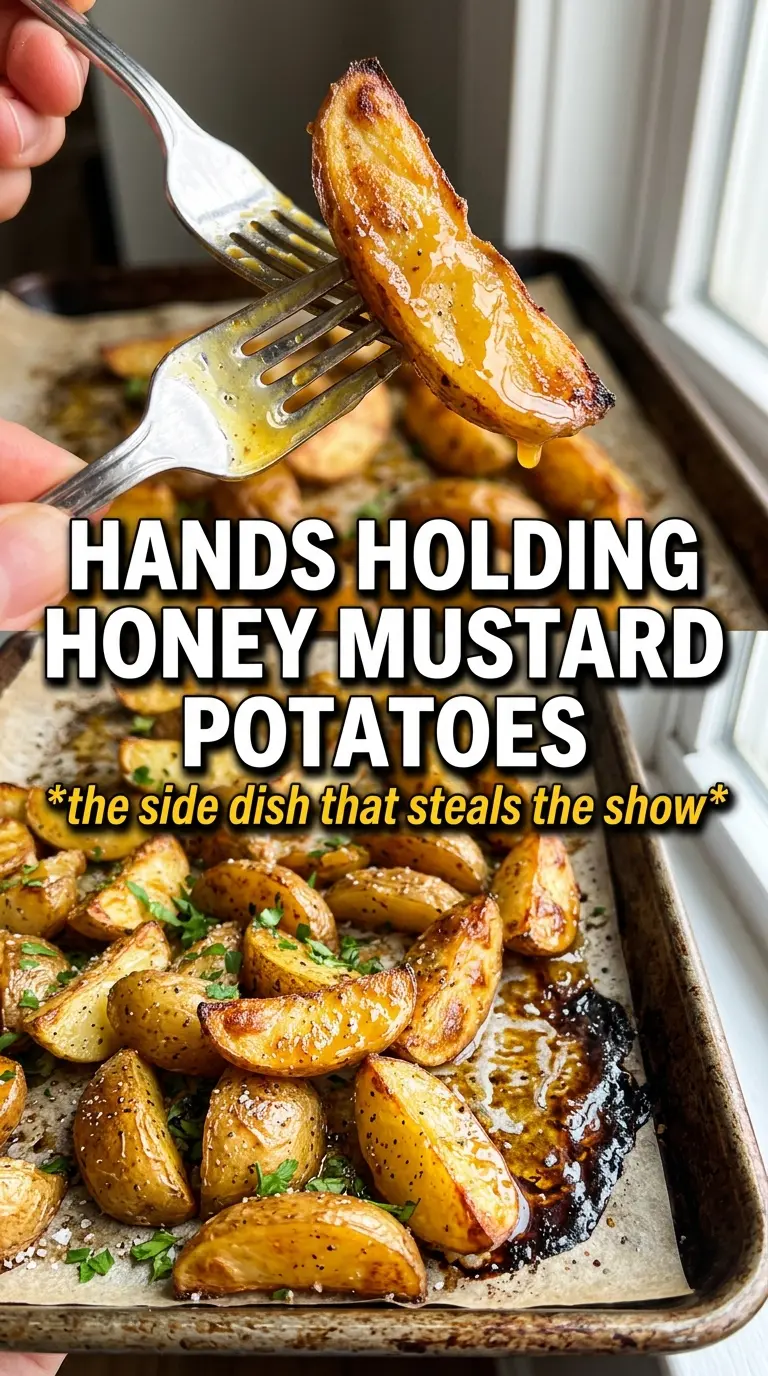
- Baby potatoes or Yukon golds — These are the best choices because they stay creamy inside while their cut sides brown. Red potatoes work in a pinch, but they’re a little waxier and won’t get quite as fluffy.
- Dijon mustard — This gives the glaze its backbone and keeps the honey from tasting flat. Don’t swap in yellow mustard here; it’s sharper in a different way and makes the sauce taste like a sandwich spread instead of a roasting glaze.
- Whole grain mustard — The seeds add texture and a slower, rounder mustard hit. If you only have Dijon, use it all the way through, but the finished potatoes will taste smoother and less rustic.
- Honey — This is what helps the potatoes caramelize into those sticky edges. Maple syrup can work, but it browns a little faster and changes the flavor toward maple-roast instead of honey mustard.
- Apple cider vinegar — It keeps the glaze bright and cuts through the sweetness. White wine vinegar works if that’s what you have, but it tastes a touch sharper.
- Fresh rosemary and garlic — Rosemary holds up to the oven and gives the potatoes an aromatic, savory edge. Garlic should be minced fine so it doesn’t burn on the pan.
Getting the Roast and the Glaze to Work Together
Build the coating first
Whisk the mustard, honey, oil, vinegar, garlic, rosemary, smoked paprika, salt, and pepper until the mixture looks smooth and emulsified. If the honey sits in streaks at the bottom of the bowl, it won’t coat evenly and you’ll get uneven browning on the pan. The mixture should look loose enough to pour but thick enough to cling to the potatoes.
Toss until every cut side is dressed
Add the halved potatoes and turn them until every surface has a thin sheen of glaze. The cut sides should look coated, not buried under sauce. If the potatoes are swimming in liquid, they’ll roast up dull and soft instead of developing color, so scrape in just enough of the bowl to coat them well.
Roast hot and give them space
Spread the potatoes on a lined baking sheet with the cut sides down where you can. Roast at 425°F until the bottoms are deep golden and the edges look sticky, then toss them once and finish roasting until tender. If they’re pale after 30 minutes, your pan was crowded or the potatoes were too cold from the fridge; give them a few more minutes and keep roasting until the sugar has browned, not just warmed.
Finish with salt after they come out
Fresh parsley and flaky salt go on at the end, not before. The parsley adds color and a clean finish, while the flaky salt wakes up the glaze and sharpens the sweet-savory balance. If you salt too heavily before roasting, the potatoes can taste muted once the honey browns.
How to Adapt These Honey Mustard Potatoes for Different Tables
Dairy-Free and Naturally Gluten-Free
This recipe already lands in both camps as written, which makes it an easy side for mixed diets. Just check your mustard label if you’re serving someone with strict gluten concerns, since a few brands use additives that aren’t obvious at first glance.
Make It More Savory Than Sweet
Cut the honey down to 2 tablespoons and add an extra pinch of smoked paprika or black pepper. You’ll lose a little of the sticky glaze, but the potatoes will skew more roast-dinner savory and pair well with chicken, pork, or salmon.
Use Small Fingerlings Instead
Fingerlings roast beautifully here, but because they’re smaller, they finish faster and brown more quickly at the tips. Start checking them around 22 to 25 minutes so the honey doesn’t over-darken before the centers go tender.
Storage and Reheating
- Refrigerator: Store in an airtight container for up to 4 days. The glaze will firm up a bit, but the flavor holds well.
- Freezer: They can be frozen, but the texture gets softer after thawing. For the best result, freeze only if you need to, and spread them on a tray first so they freeze separately before bagging.
- Reheating: Reheat on a baking sheet at 400°F until hot and the edges start to crisp again. The mistake people make is microwaving them until they turn limp; that softens the glaze and wipes out the roasted texture.
Questions I Get Asked About This Recipe
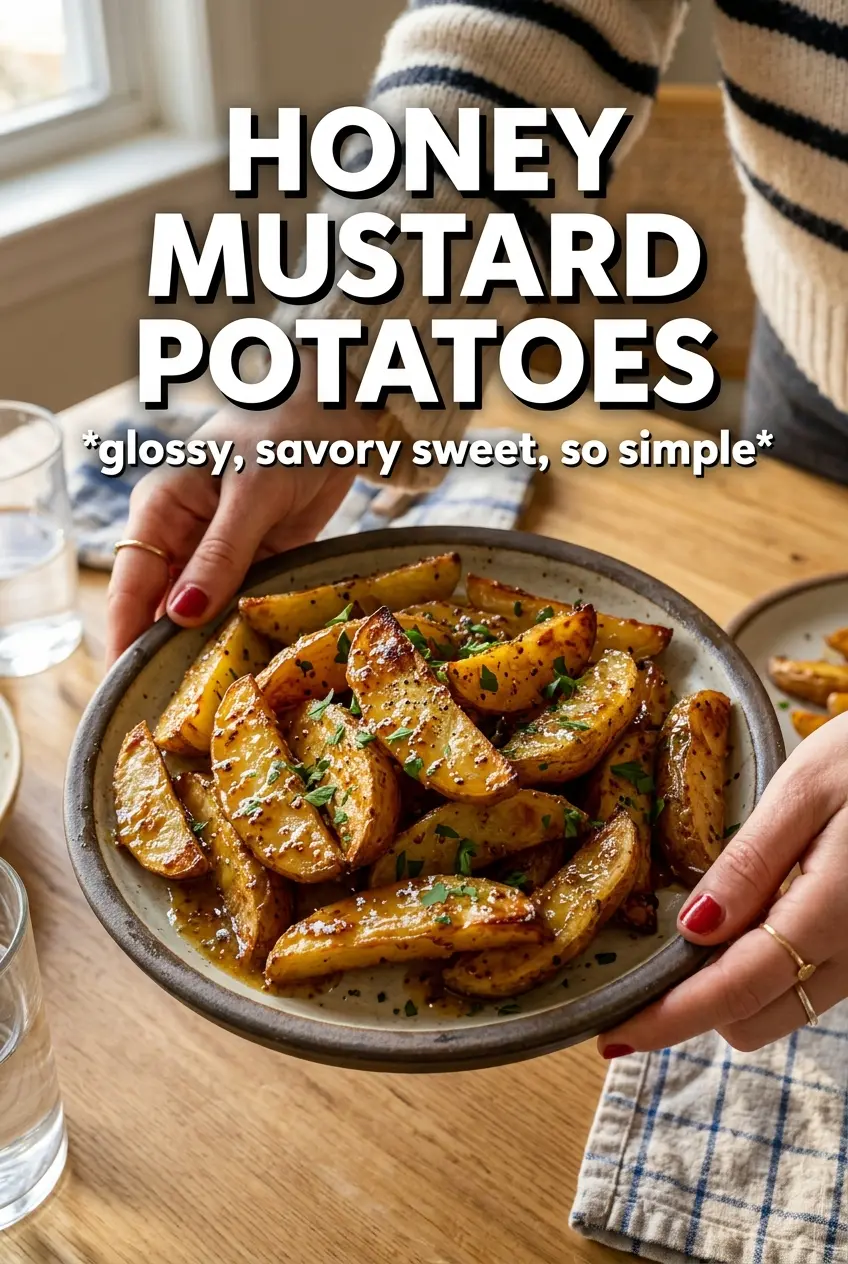
Honey Mustard Potatoes
Ingredients
Equipment
Method
- Preheat the oven to 425F and line a sheet pan so the potatoes roast on a hot surface.
- Whisk Dijon mustard, whole grain mustard, honey, olive oil, apple cider vinegar, garlic, fresh rosemary, smoked paprika, salt, and pepper until smooth and glossy.
- Toss the baby potatoes or Yukon golds with the honey mustard mixture until every cut side looks coated.
- Spread the potatoes in a single layer on the sheet pan and roast at 425F for 30-35 minutes, turning halfway, until caramelized and golden with visible browned edges.
- Sprinkle with fresh parsley and flaky salt right after roasting so they stay bright and lightly crisp.