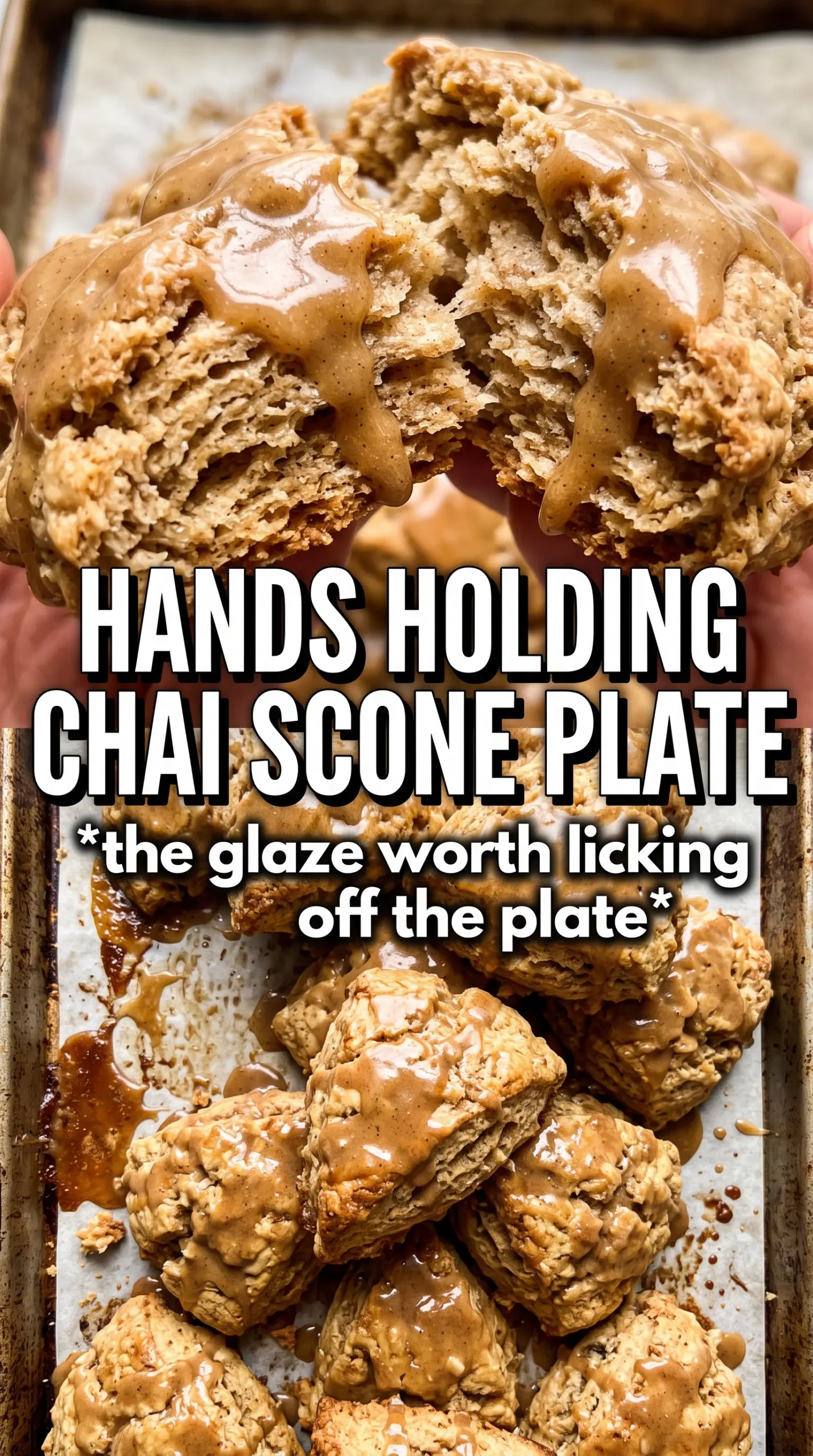
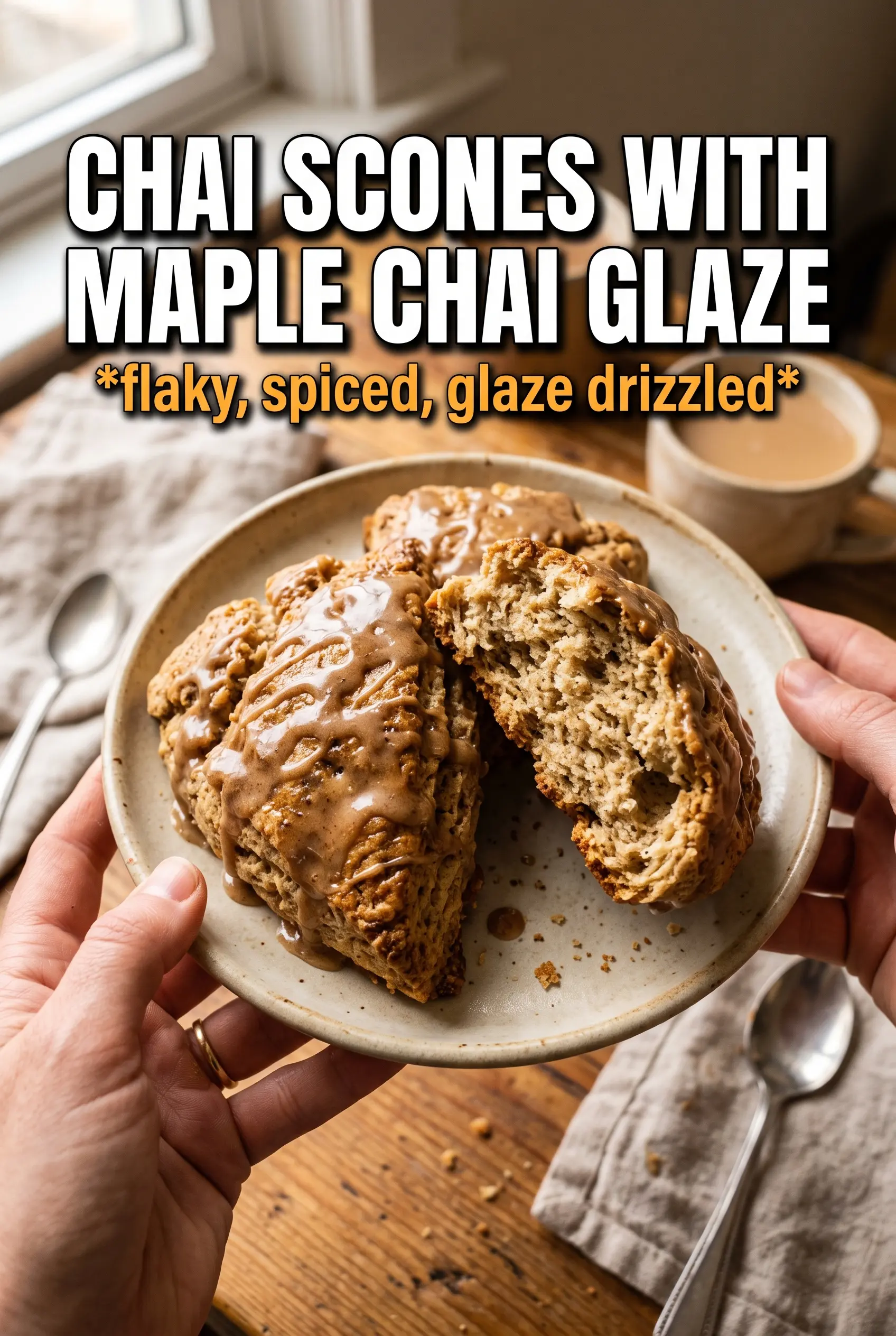
These chai scones bake up tender in the middle with crisp, buttery edges and a warm spice finish that tastes like it belongs next to a steaming mug. The maple chai glaze sets into thin ribbons over the top, so every bite gets a little extra sweetness without turning the scones heavy or soggy.
The texture comes down to two things: cold butter and a light hand once the wet ingredients go in. The butter needs to stay in little pieces so it can steam in the oven and create lift, while the dough itself should look a little rough before it goes onto the pan. If you work it until it looks smooth, the scones will bake up tougher and lose that tender crumb.
Below, I’ve included the small details that matter most, from the best way to cut the butter to how to glaze these so they keep their shape and still look bakery-worthy.
The scones came out flaky and the maple glaze set up beautifully instead of running off. I loved the cardamom in the dough — it made them taste bakery-fancy without being too sweet.
Save these chai scones with maple chai glaze for a bakery-style breakfast with flaky layers and a spiced drizzle.
The Butter Has to Stay Cold to Keep the Crumb Tender
Chai scones can go from light and flaky to dense in a hurry if the butter warms up before baking. Cold butter creates pockets in the dough, and those pockets turn into lift once the scones hit the oven. That’s why the dough should look crumbly after the butter is cut in, not sandy or paste-like.
The spices are strong enough here to stand up to the cream and maple, but they still need to be evenly distributed before the wet ingredients go in. If the cinnamon and cardamom clump in one spot, you’ll get one spicy bite and one flat one. Whisking them into the dry mix first keeps the flavor balanced all the way through.
- Cold unsalted butter — This is what gives the scones their layered, bakery-style texture. If it starts softening while you’re mixing, pop the bowl in the fridge for a few minutes before shaping.
- Heavy cream — Cream brings richness and helps the dough come together without making it wet. Whole milk can work in a pinch, but the scones won’t be as tender.
- Cardamom and cloves — These are the spices that make the chai flavor taste warm and distinct, not just cinnamon-heavy. Fresh spices matter here, especially cardamom, because old spices go flat fast.
- Strongly brewed chai tea — This is what makes the glaze taste like chai instead of just maple icing. Brew it strong so the flavor still shows up after it’s mixed with sugar.
What Each Ingredient Is Actually Doing in This Recipe
- Primary ingredient (the star) — Quality matters most. Choose the best you can find.
- Cooking medium (oil, butter, or broth) — This carries flavors and prevents dryness.
- Seasonings (salt, pepper, spices, herbs) — Layer flavors so nothing overpowers. Build depth gradually.
- Aromatics (garlic, onion, herbs) — Cook with fat to bloom flavors. Become the foundation.
- Supporting ingredients — Complement the main ingredient without overpowering it.
- Sauce or liquid (if applicable) — Brings flavors together. Balance richness with acid.
- Acid (lemon, vinegar, wine, or other) — Brightens and prevents flat-tasting results.
- Final finish (garnish, glaze, or sauce) — Prevents one-dimensional taste and adds visual appeal.
From Crumbly Dough to Bakery-Style Wedges
Cutting in the Butter
Work the cold butter into the dry ingredients until the mixture looks like coarse crumbs with some pea-sized pieces still visible. Those bigger bits are a good sign; they’re what create flaky pockets in the oven. If the butter disappears completely, the scones will bake up more like biscuits that have been overmixed than true scones.
Bringing the Dough Together
Whisk the cream, eggs, and vanilla together first, then stir them into the flour mixture just until the dough starts to hold. It should look shaggy and a little uneven, and there may still be a few dry streaks. That’s fine. If you keep stirring until it looks smooth, the gluten tightens up and the scones lose their tender bite.
Shaping and Cutting Cleanly
Pat the dough into an 8-inch circle on a lightly floured surface or parchment-lined pan, then cut it into 8 wedges with a sharp knife. Pressing instead of kneading keeps the dough from getting tough. If the edges drag or stick while you cut, dust the blade lightly with flour so the wedges stay neat.
Baking Until Set and Golden
Brush the tops with cream before baking so they brown evenly and get a little shine. Pull them when the edges are golden and the centers no longer look wet, usually at 18 to 20 minutes. If they go too far, they’ll dry out fast, so start checking early rather than waiting for deep color all over.
Drizzling the Glaze
Let the scones cool for about 10 minutes before adding the glaze so it clings instead of soaking straight in. Whisk the glaze until smooth and thick enough to ribbon off the spoon, then drizzle generously over each wedge. If it’s too thin, add more powdered sugar; if it’s too thick, a tiny splash more chai tea loosens it right away.
How to Adjust These Scones Without Losing the Chai Character
Dairy-Free Version
Use a cold plant-based butter and full-fat coconut cream in place of the heavy cream. The scones will still be tender, but they’ll lose a little of the classic dairy richness, so don’t skip the glaze — that’s where a lot of the payoff lives.
Gluten-Free Adaptation
A good 1:1 gluten-free baking blend can work here if it already includes xanthan gum. The dough may be a little more delicate, so handle it gently and skip extra flouring as much as possible to avoid drying it out.
Less Sweet, More Spiced
Cut the granulated sugar in the dough back by a few tablespoons if you want the chai spices to lead. The scones will still brown well because of the cream and eggs, and the maple glaze will balance the sharper spice notes.
Storage and Reheating
- Refrigerator: Store baked scones in an airtight container for up to 3 days. They’ll soften a little from the glaze, but the centers stay pleasant if you don’t stack them while warm.
- Freezer: These freeze well. Freeze unglazed scones tightly wrapped, then thaw and glaze after warming so the topping stays fresh and doesn’t melt off.
- Reheating: Warm in a 300°F oven for 8 to 10 minutes. The biggest mistake is using the microwave, which makes the crumb rubbery and the glaze sticky instead of set.
Questions I Get Asked About This Recipe
Chai Scones With Maple Chai Glaze
Ingredients
Equipment
Method
- Preheat oven to 400°F and line a sheet pan with parchment.
- Whisk all-purpose flour, granulated sugar, baking powder, cinnamon, cardamom, ginger, cloves, and salt together.
- Add cold unsalted butter cubes and cut in until the mixture looks crumbly.
- Whisk heavy cream, eggs, and vanilla extract, then stir into the flour mixture until just combined.
- Pat the dough into an 8-inch circle and cut into 8 wedges.
- Brush the tops with cream and bake 18-20 minutes until golden.
- Cool the scones for 10 minutes.
- Whisk powdered sugar, maple syrup, strongly brewed chai tea, cinnamon, and cardamom until smooth.
- Drizzle the glaze generously over each scone once slightly cooled.