Red wine braised short ribs turn into the kind of dinner that makes a quiet table go still for a minute. The meat comes off the bone with almost no pressure, the sauce turns deep and glossy, and every bite carries that slow-cooked mix of beef, wine, herbs, and sweet vegetables. Poured over mashed potatoes, it feels like a restaurant meal that happened to come out of one pot and a patient oven.
The trick is in the browning and the reduction. A hard sear builds the foundation, and the tomato paste gets cooked long enough to lose its raw edge before the wine goes in. That step matters more than people think; it keeps the sauce from tasting thin or sharp after hours in the oven. The ribs braise gently, with the liquid coming only halfway up the meat so the top stays exposed to dry heat and develops better flavor.
Below, I’ll walk you through the parts that matter most: how to get a real crust on the ribs, what to look for when the braising liquid is ready, and how to finish the sauce so it clings instead of pooling on the plate.
The ribs were fall-apart tender and the sauce reduced into that deep, glossy gravy I always hope for. I served it over mashed potatoes and my husband went back for seconds before I even sat down.
Save these Dutch oven red wine short ribs for a slow braise that turns inexpensive patience into a glossy, fall-off-the-bone dinner.
The Browning Step That Decides Whether the Sauce Tastes Deep or Flat
If the ribs go into the oven pale, the braising liquid has to do too much work to carry the flavor. A proper sear gives you browned bits in the pot, and those bits become the backbone of the sauce when the wine goes in. Don’t crowd the Dutch oven; the meat needs direct contact with the hot surface or it will steam and gray instead of crusting.
The other place people rush is the tomato paste. It needs a couple of minutes in the hot fat and vegetables until it darkens slightly and smells sweet, not raw. That short cook makes the finished sauce rounder and less acidic, which matters once the wine and tomatoes spend hours together. If the bottom looks stuck, that’s good. You want flavor there.
- Bone-in short ribs — The bones add flavor and help the meat stay juicy through the long braise. Boneless short ribs can work, but they won’t give you quite the same richness.
- Dry red wine — Cabernet or Merlot both hold up well here. Use a wine you’d drink, because the flavor concentrates instead of disappearing.
- Tomato paste — This is the quiet workhorse. It adds body and a little sweetness, but only after it’s cooked long enough to lose the tinny edge.
- Fresh thyme and rosemary — Dried herbs can step in in a pinch, but fresh sprigs give the braise a cleaner, more aromatic finish.
What Each Pot Staged Ingredient Is Doing While the Oven Does the Work
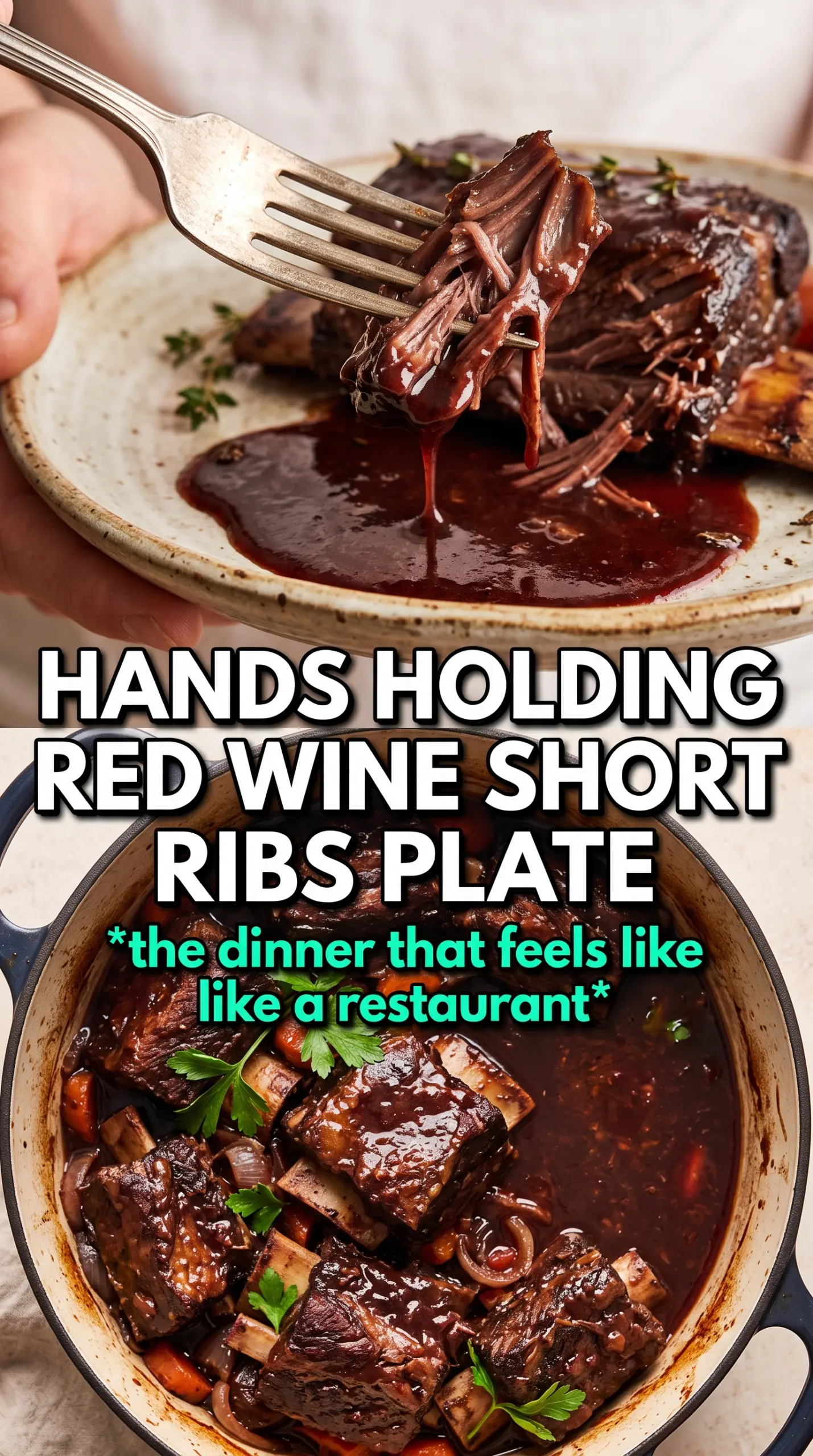
Every ingredient in this pot has a job, and the recipe works because they balance each other instead of competing. The beef broth keeps the sauce from becoming wine-heavy, while the tomatoes add body and a little brightness so the finished braise doesn’t taste muddy. The carrots, celery, and onion don’t just season the liquid; they help it taste complete after the long oven time.
If you need a substitution, swap the beef broth for a good unsalted stock if that’s what you have. Water works in an emergency, but the sauce loses depth fast, so season carefully if you go that route. For the wine, choose a dry bottle rather than anything sweet or heavily oaked. The wine reduces down, and any harshness will show up at the end.
- Beef broth — This gives the braising liquid more backbone than water alone. A low-sodium version is best because the sauce will reduce and the salt level can creep up fast.
- Diced tomatoes — They soften into the braise and help the final sauce feel fuller. Crushed tomatoes also work if that’s what’s in the pantry.
- Onion, carrots, and celery — This is the base that gives the sauce its savory sweetness. Chop them evenly so they soften at the same pace.
- Garlic — Smash it instead of mincing it. Larger pieces mellow during the braise and won’t disappear into bitterness the way finely minced garlic can.
Building the Braise So the Meat Turns Tender, Not Dry
Getting a Deep Sear
Heat the olive oil until it shimmers, then lay the ribs in without moving them for a few minutes. You’re looking for a dark brown crust that releases on its own when it’s ready; if the meat sticks, it needs more time. Turn the ribs and brown all sides, not just the broad ones. If the pan looks crowded, sear in batches, because a crowded pot drops in temperature and robs you of the crust that makes the sauce taste layered.
Softening the Vegetables and Toasting the Paste
Once the ribs come out, the onions, carrots, and celery go into the same pot. Cook them until the onion turns translucent and the edges start to pick up color, then stir in the garlic and tomato paste. The paste should darken a shade and smell sweet and concentrated after about two minutes. If it still smells sharp and raw, keep it moving in the pot a little longer before the wine goes in.
Deglazing and Setting Up the Oven
Pour in the wine and scrape every browned bit off the bottom of the Dutch oven. Those bits dissolve into the sauce and are worth every second of scraping. Add the broth, tomatoes, herbs, and bay leaves, then return the ribs with the liquid coming about halfway up the meat. That level matters: too much liquid and you boil the ribs instead of braising them; too little and the upper part dries out before the center turns tender.
The Slow Finish
Cover the pot tightly and braise at 325F until the meat slips from the bone and a fork slides in with almost no resistance. That usually takes 3 to 3 1/2 hours, depending on the size of the ribs. Pull the ribs out before reducing the sauce, because trying to reduce with the meat still in the pot can overcook it and turn the texture stringy. Strain if you want a smoother sauce, then simmer until it turns glossy and lightly coats the spoon.
Make It Dairy-Free Without Losing the Comfort
The braised ribs themselves are already dairy-free, so the only thing to watch is the side dish. Serve them over olive oil mashed potatoes or creamy polenta made with broth instead of butter and milk. You keep the same rich sauce and lose none of the coziness.
When You Want a Thicker, Silkier Sauce
Reduce the braising liquid a little farther than you think you need to, but keep the heat gentle. A hard boil can make the sauce taste sharp instead of rounded. If it still feels thin, a small knob of cold butter whisked in off the heat will give it a satin finish.
For a Lower-Carb Plate
Skip the mashed potatoes and serve the ribs over cauliflower mash or celery root puree. The braise is already naturally hearty, so you won’t miss the starch if the sauce is reduced properly. Keep the garnish simple with thyme or parsley so the dish still feels finished.
Storage and Reheating
- Refrigerator: Store the ribs and sauce in an airtight container for up to 4 days. The flavor deepens overnight, and the sauce will thicken as it chills.
- Freezer: Freeze the ribs with plenty of sauce for up to 3 months. Thaw overnight in the fridge so the meat reheats evenly instead of drying out at the edges.
- Reheating: Warm gently on the stovetop or in a covered oven dish at 300F until hot through. Don’t boil the sauce hard, or the meat can turn stringy and the reduction can taste salty.
Answers to the Questions Worth Asking
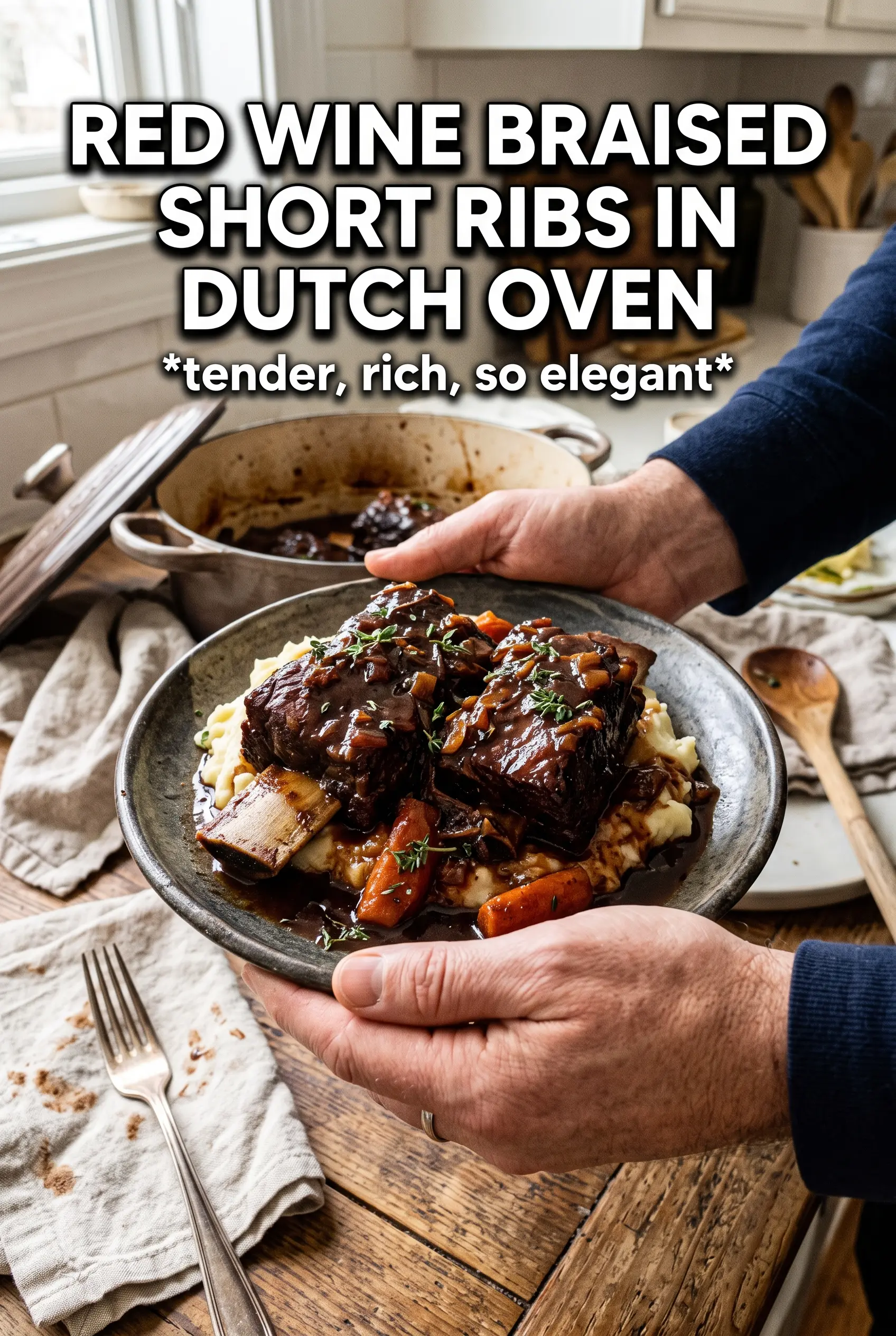
Red Wine Braised Short Ribs In Dutch Oven
Ingredients
Equipment
Method
- Preheat oven to 325°F, and season the bone-in beef short ribs generously with salt and pepper.
- Heat olive oil in a Dutch oven over high heat and sear the ribs until deeply browned on all sides, then remove them.
- Sauté the diced onion, carrots, and celery for 5 minutes in the Dutch oven.
- Add the smashed garlic and tomato paste, then cook for 2 minutes.
- Deglaze with the red wine, scraping the bottom of the pot to release browned bits.
- Add beef broth, diced tomatoes, bay leaves, thyme sprigs, and rosemary sprigs.
- Return the ribs to the pot so the liquid comes halfway up the ribs.
- Cover and braise in the oven for 3 to 3-1/2 hours at 325°F, until fall-off-the-bone tender.
- Remove the ribs, then strain and reduce the braising liquid until glossy.
- Serve the reduced braising sauce over mashed potatoes with the ribs.