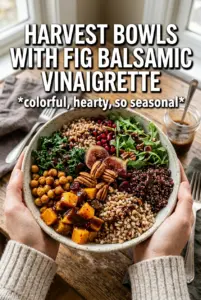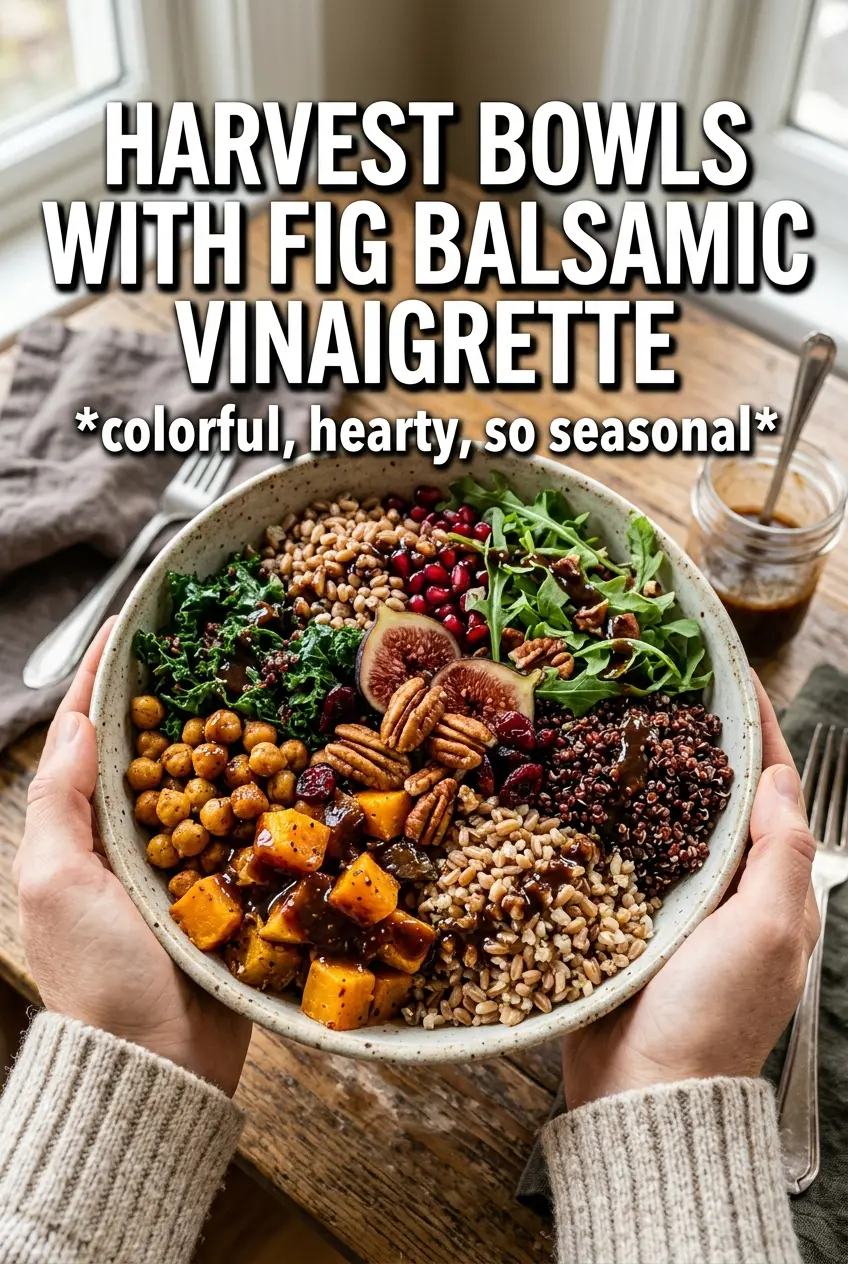
Roasted sweet potatoes, crispy chickpeas, shaved Brussels sprouts, and pomegranate seeds make these harvest bowls feel sturdy enough for dinner but bright enough that every bite stays interesting. The real payoff is the fig balsamic vinaigrette: it pulls the whole bowl together with a sweet-tart gloss that clings to the grains instead of pooling at the bottom of the bowl.
What makes this version work is the contrast. The sweet potatoes go in long enough to caramelize at the edges, while the chickpeas roast separately so they can crisp instead of steaming. Raw shaved Brussels sprouts keep a fresh, earthy crunch under all that warmth, and the goat cheese melts just enough when it hits the hot ingredients. You get creamy, crisp, juicy, and tangy in one bowl, which is why it never feels like “just a salad.”
Below, I’ll show you how to keep the chickpeas crisp, why the vinaigrette emulsifies better than most homemade dressings, and a few smart swaps if you need to work with what’s already in your pantry.
The sweet potatoes got those caramelized edges I was hoping for, and the fig balsamic thickened just enough to coat everything without making the bowls soggy. My husband said the chickpeas were the best part because they stayed crunchy under the dressing.
Love the sweet-savory crunch of these harvest bowls? Save this fig balsamic version for a fast dinner that eats like a full meal.
The Trick to Keeping the Bowls Crisp Instead of Soft
These bowls only work if the textures stay separate long enough to notice them. The most common mistake is tossing the hot components together too early, which turns the Brussels sprouts limp and softens the chickpeas before they reach the table. Build each layer with intention: grain first, then roasted vegetables, then the fresh crunch, then the cheese and dressing at the very end.
Roasting the sweet potatoes and chickpeas on separate pans matters more than it sounds. Chickpeas give off moisture as they cook, and if they share a crowded tray with the sweet potatoes, both ingredients end up softer than they should. Give them breathing room and a hot oven so the edges have time to dry out and brown.
What the Fig Vinaigrette Is Doing Here
- Fig jam — This is the backbone of the dressing. It gives the vinaigrette body and a rounded sweetness that plain sugar or honey doesn’t quite match. Use a smooth jam if you can, and if yours is thick, whisk it with the vinegar first so it dissolves before the oil goes in.
- Balsamic vinegar — The sharpness keeps the dressing from tasting like dessert. A decent balsamic matters here because it’s one of the main flavors you taste in every bite. If yours is especially syrupy, use a little less so the dressing doesn’t turn sticky.
- Dijon mustard — This is the emulsifier that helps the dressing hold together. Without it, the oil separates fast and the vinaigrette slips off the grains instead of coating them. Yellow mustard works in a pinch, but Dijon gives the cleanest bite.
- Goat cheese — Use a creamy, tangy log-style goat cheese, not the dry pre-crumbled kind if you can help it. The softer cheese melts slightly against the warm sweet potatoes and grains, which makes the bowl taste finished instead of assembled.
How to Roast, Whisk, and Assemble Without Losing the Crunch
Roasting the Sweet Potatoes Until They Caramelize
Toss the sweet potato cubes with a little oil and spread them out in a single layer on the pan. They need space to brown, not steam, so crowded edges are the first thing that go wrong here. Roast them at 425°F until the edges are deep golden and the centers are tender enough to pierce with a fork, about 25 minutes.
Turning Chickpeas Crisp Instead of Chewy
Drain the chickpeas well and dry them as much as you can before they hit the pan. If they go into the oven damp, the skins loosen before they crisp and you end up with a mealy texture instead of crunch. Roast them until they look dry, blistered in spots, and light enough to rattle around the pan when you shake it, usually 20 to 25 minutes.
Whisking the Dressing Until It Clings
Whisk the fig jam, balsamic vinegar, olive oil, Dijon, and garlic until the dressing looks smooth and slightly thickened. If you pour the oil in all at once, the dressing can break and separate before it reaches the bowl. Start by loosening the jam with the vinegar, then whisk in the oil in a slow stream so the mustard can pull everything together.
Building the Bowl at the Last Minute
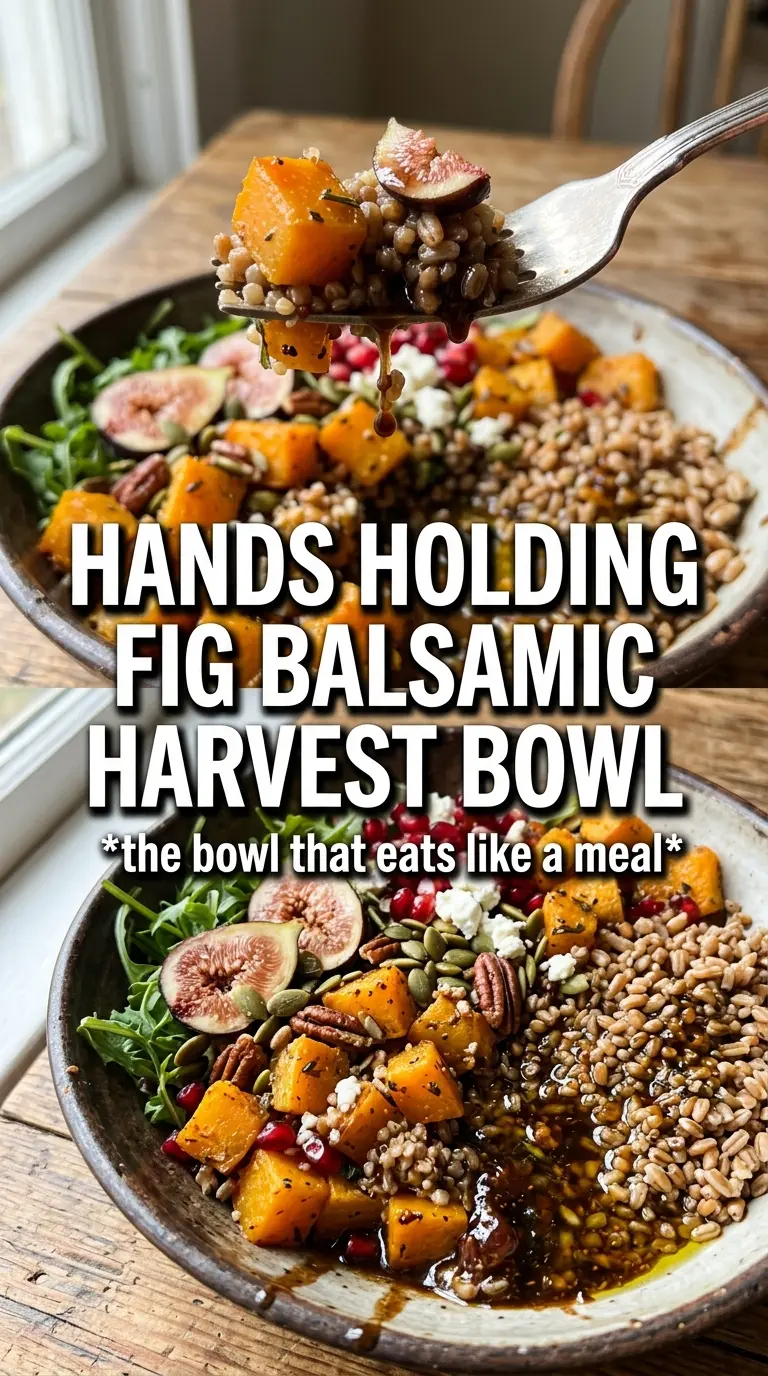
Start with the cooked farro or quinoa, then add the roasted vegetables, Brussels sprouts, pomegranate seeds, pecans, and goat cheese. Drizzle the vinaigrette over the top just before serving so the sprouts stay crisp and the pecans keep their snap. If you dress the bowl too early, the whole thing softens and loses the contrast that makes it worth making.
Make It Dairy-Free
Skip the goat cheese and add sliced avocado or a handful of toasted pumpkin seeds for richness. You lose the tangy creaminess, so add a tiny extra splash of balsamic to keep the bowl from tasting flat.
Make It Gluten-Free
Use quinoa instead of farro. Quinoa keeps the bowl light and fluffy, while farro brings a chewier, nuttier base, so this swap changes the texture more than the flavor.
Swap the Grains for What You Have
Brown rice or barley both work if that’s what’s in the pantry. Just keep the grain chewy enough to stand up to the dressing; overcooked rice turns the bowl soft fast.
Add Protein Without Changing the Bowl
Roasted chicken or cooked lentils both fit cleanly here. Chicken makes it heartier, while lentils keep the vegetarian balance and soak up the vinaigrette in a good way.
Storage and Reheating
- Refrigerator: Store the components separately for up to 4 days. The sprouts and pecans stay best when kept dry, and the grains may firm up a little after chilling.
- Freezer: The roasted sweet potatoes and grains freeze well for up to 2 months, but the fresh sprouts, pomegranate seeds, pecans, and cheese do not. Freeze only the cooked base components.
- Reheating: Warm the grains, sweet potatoes, and chickpeas in a skillet or microwave until just hot. Don’t overheat the chickpeas or they’ll turn hard instead of crisp, and add the fresh toppings and dressing after reheating.