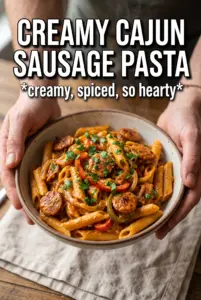
Silky Cajun cream sauce clings to every piece of penne, with smoky sausage, sweet peppers, and a little heat in every bite. This is the kind of pasta that disappears fast because the sauce stays glossy instead of turning heavy, and the sausage gives it enough backbone to feel like a full meal, not just a dressed-up noodle bowl.
The trick is building the sauce in the same skillet you used for the sausage. Those browned bits on the bottom carry a lot of the flavor, and the broth loosens them before the cream goes in. The other thing that matters is the pasta water. It helps the sauce settle into a smooth coating instead of pooling at the bottom of the pan.
Below, I’ll show you the small timing details that keep the cream sauce from getting grainy and how to adjust the heat if your Cajun seasoning runs salty or sharp. Those little choices make this dish feel restaurant-worthy without making it fussy.
The sauce thickened up exactly right, and the pasta held onto it instead of getting watery. I used smoked sausage and the whole pan was gone before I could even put the leftovers away.
Creamy Cajun Sausage Pasta with smoky sausage, tender penne, and that glossy orange-red sauce is one to keep handy for busy nights.
The Step That Keeps the Sauce from Turning Flat
A lot of creamy Cajun pastas taste fine at the stove and then fall apart on the plate. The usual problem is rushing the sauce or adding the dairy before the pan has been deglazed. Once the sausage is browned, those bits stuck to the skillet need to be lifted with broth before the cream goes in, or you lose the deepest flavor in the dish.
The second thing to watch is heat. Cream doesn’t need a hard boil to thicken, and high heat can make it feel greasy or slightly broken. A gentle simmer gives the broth time to reduce and lets the parmesan melt in smoothly at the end.
- Andouille or smoked sausage — Both work, but andouille brings more spice while smoked sausage leans milder and a little sweeter. If yours is very salty, hold back on extra salt until the end.
- Cajun seasoning — This is doing a lot of work here, so taste your blend if you can. Some are heavy on salt, and some are heavy on paprika, which changes how much seasoning you’ll want to add later.
- Heavy cream — This gives the sauce its body and protects it from splitting. Half-and-half can work in a pinch, but the sauce will be looser and needs a gentler simmer.
- Parmesan — Grate it fresh if possible. Pre-grated cheese often melts less cleanly, which can make the sauce grainy instead of glossy.
- Pasta water — Don’t skip it. The starch in that water helps the sauce cling to the penne and gives you a smoother finish than broth alone.
What Each Ingredient Is Actually Doing in This Recipe
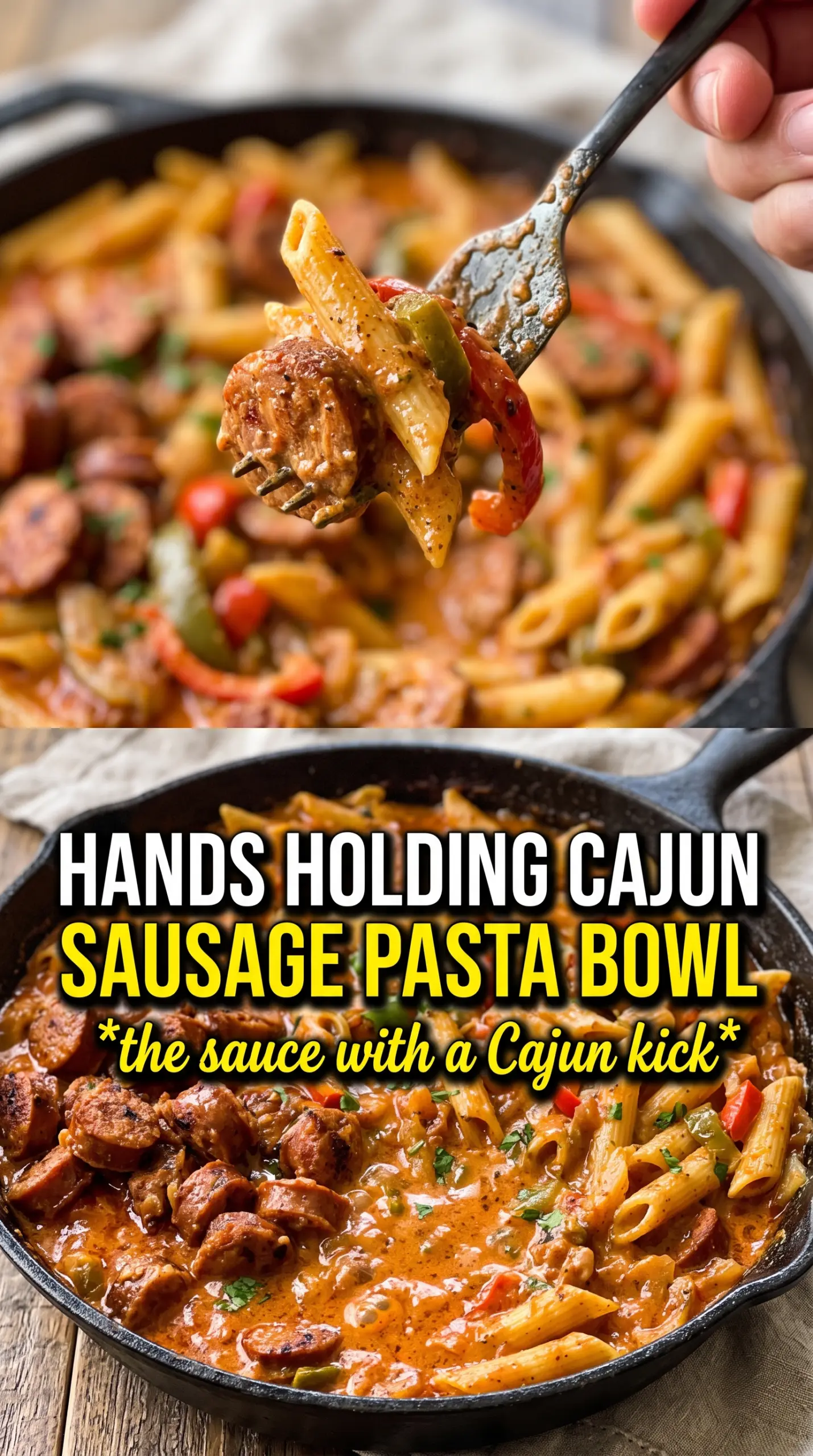
- Primary ingredient (the star) — Quality matters most. Choose the best you can find.
- Cooking medium (oil, butter, or broth) — This carries flavors and prevents dryness.
- Seasonings (salt, pepper, spices, herbs) — Layer flavors so nothing overpowers. Build depth gradually.
- Aromatics (garlic, onion, herbs) — Cook with fat to bloom flavors. Become the foundation.
- Supporting ingredients — Complement the main ingredient without overpowering it.
- Sauce or liquid (if applicable) — Brings flavors together. Balance richness with acid.
- Acid (lemon, vinegar, wine, or other) — Brightens and prevents flat-tasting results.
- Final finish (garnish, glaze, or sauce) — Prevents one-dimensional taste and adds visual appeal.
Building the Cream Sauce in the Right Order
Brown the Sausage First
Start by browning the sausage in butter until the edges are deeply caramelized, not just warmed through. You want color on the pan and a little rendered fat in the skillet because that’s what seasons the vegetables that follow. When the sausage is ready, move it to a plate so it doesn’t overcook while the sauce builds.
Cook the Vegetables Until They Lose Their Raw Bite
Onion and bell peppers need enough time to soften and take on a little sweetness, about 4 to 5 minutes. If you rush this stage, the vegetables stay crunchy and the final pasta tastes choppy instead of cohesive. Add the garlic and Cajun seasoning near the end of the sauté so the garlic doesn’t burn and the spices toast just long enough to bloom.
Simmer the Cream Gently
Pour in the broth first and scrape the pan well, then add the cream and let everything simmer until it lightly coats a spoon. You’re looking for small bubbles around the edge of the skillet, not a hard boil. If the sauce looks thin at this point, keep it moving for a couple more minutes; it should thicken a little before the pasta goes in, not after.
Finish with Pasta Water and Parmesan
Stir in the cooked penne with a splash of pasta water, then add the parmesan off the hottest part of the burner. This is the moment that makes the sauce glossy instead of clumpy. If it seems tight, add another spoonful of pasta water. If it looks loose, give it a minute to sit because the cheese and starch will settle it into place.
What to Change When You Need a Different Version
Gluten-Free Pasta Swap
Use a sturdy gluten-free penne and cook it just to al dente. Gluten-free pasta can soften fast once it hits the sauce, so pull it a minute early and finish it in the skillet with the cream mixture. Keep extra pasta water close by because it helps the sauce cling without turning gummy.
Make It Dairy-Free
Replace the cream with full-fat canned coconut milk or an unsweetened dairy-free cooking cream, and use a dairy-free parmesan substitute if you like. The sauce won’t taste identical, but it will still coat the pasta well if you keep the heat low. Coconut milk adds a faint sweetness, so a little extra Cajun seasoning helps balance it.
Turn Up or Dial Back the Heat
Use hot andouille plus a sharper Cajun blend if you want more kick, or use smoked sausage and start with less seasoning for a milder pan. The spice level is easy to control here because the cream softens the edges, but once the seasoning is in, it takes more dairy to calm it down than people expect.
Storage and Reheating
- Refrigerator: Store leftovers in an airtight container for up to 4 days. The sauce will thicken as it chills.
- Freezer: It freezes, but the cream sauce can separate a bit after thawing. For the best texture, freeze only if you don’t mind a slightly softer sauce after reheating.
- Reheating: Warm it slowly on the stove over low heat with a splash of broth or water. Microwave reheating tends to overcook the pasta and can make the sauce look oily, so go low and slow if you can.
Answers to the Questions Worth Asking
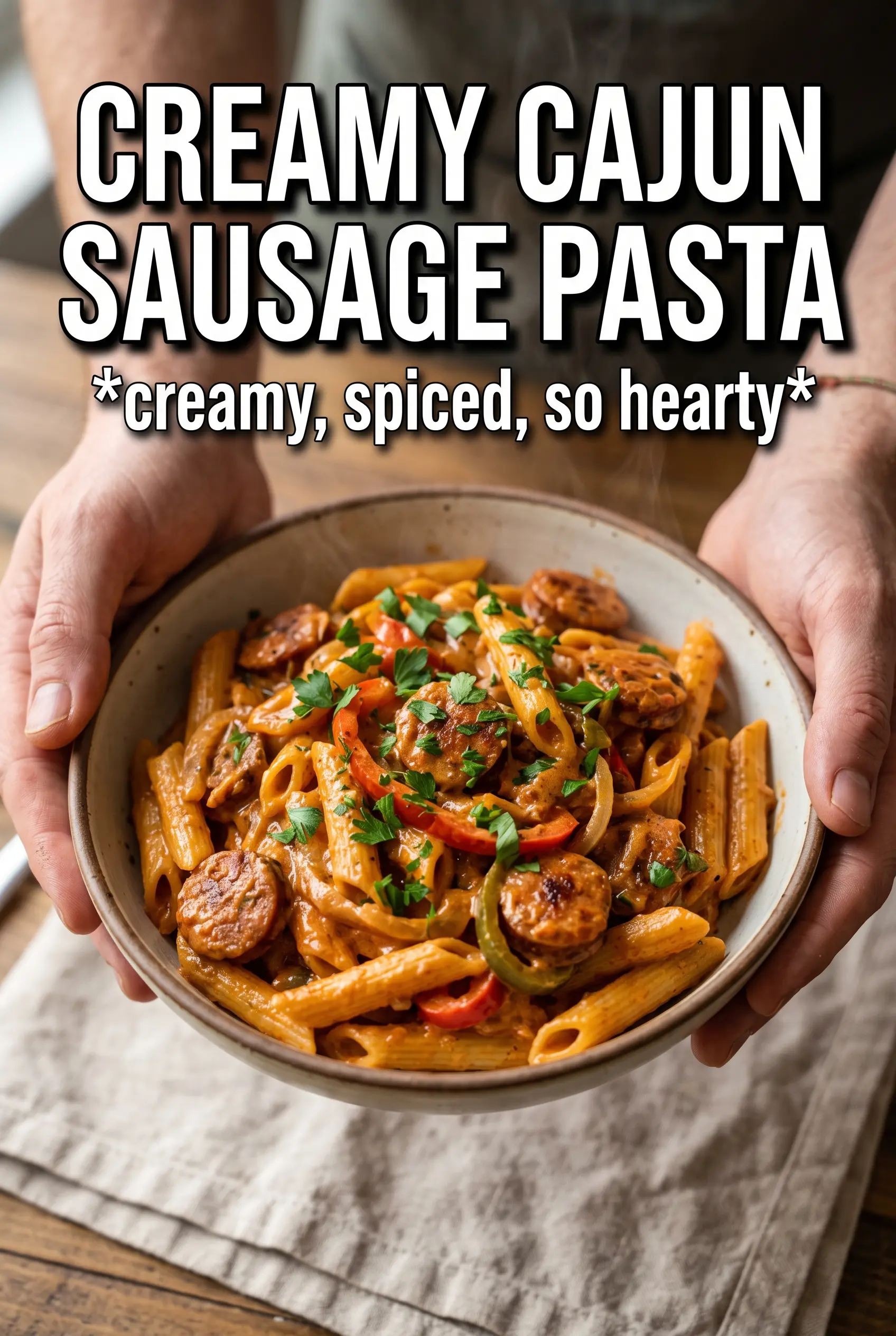
Creamy Cajun Sausage Pasta
Ingredients
Equipment
Method
- Bring a pot of salted water to a rolling boil, then cook penne pasta until al dente. Reserve 1/2 cup pasta water before draining (visual cue: pasta still has a slight bite).
- Heat butter in a large skillet over medium-high heat, then brown the sliced andouille or smoked sausage. Cook until browned on the edges (visual cue: caramelized spots), then remove and set aside.
- In the same skillet, sauté onion and bell peppers for 4-5 minutes. Stir often until softened (visual cue: glossy, slightly translucent vegetables).
- Add garlic and Cajun seasoning, then cook for 2 minutes. Stir until fragrant (visual cue: darkened seasoning and aroma bubbling), without letting garlic burn.
- Pour in chicken broth and heavy cream, then simmer for 5 minutes until slightly thickened. Reduce gently (visual cue: sauce coats the back of a spoon).
- Add the cooked penne pasta and 1/2 cup pasta water to the skillet, then toss well. Stir to loosen the sauce and cling to the pasta (visual cue: glossy coating).
- Stir in parmesan until melted and smooth. (Visual cue: sauce becomes creamy and uniform.)
- Return the browned sausage to the skillet and toss to coat. Season with salt to taste (visual cue: sausage evenly distributed and sauce looks cohesive).
- Top with green onions and parsley right before serving. (Visual cue: fresh green flecks on top.)