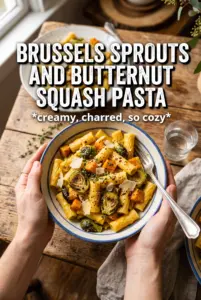
Roasted Brussels sprouts and butternut squash turn this pasta into something hearty enough for dinner but still bright at the table. The vegetables pick up crisp, caramelized edges in the oven, then get folded into brown butter with sage and garlic so every bite tastes nutty, savory, and just a little sweet. It’s the kind of pasta that eats like a full meal, not a side dish stretched too far.
The trick is giving the vegetables space and roasting them until their edges actually color. If they steam, the whole dish turns soft instead of deep and roasty. Brown butter does the rest of the heavy lifting, but it only works if you pull it at the right moment, while it’s amber and fragrant, not dark and bitter. A splash of pasta water brings everything together into a glossy sauce that coats rigatoni instead of pooling at the bottom of the bowl.
Below you’ll find the roasting detail that keeps the vegetables from going mushy, plus the easiest way to keep the sauce silky when you add the cheese.
The Brussels got those crispy edges and the squash stayed creamy, not mushy. The brown butter with sage made the whole pasta taste restaurant-worthy, and the hazelnuts gave it the best crunch.
Save this Brussels sprouts and butternut squash pasta for a dinner with caramelized vegetables, brown butter, and toasted nuts.
The Mistake That Makes Roasted Vegetable Pasta Taste Flat
The biggest failure point here isn’t the sauce. It’s the vegetables. Brussels sprouts and butternut squash both release moisture as they roast, and if they’re crowded together on one pan, they steam before they caramelize. You end up with soft cubes and pale sprouts that taste fine but never develop the deep roasted flavor this pasta depends on.
Roast them on separate pans if you can, or at least give each tray enough room that the pieces aren’t touching. The squash should be tender with browned edges, and the sprouts should have little dark, crisp leaves at the outside. That extra color matters because the brown butter is rich, and it needs something savory and slightly sweet to balance it.
- Brussels sprouts — Halving them gives you flat sides that can actually brown. Leave the loose outer leaves on the tray if they fall away; those turn into crisp little bits that add texture.
- Butternut squash — Cut the cubes evenly so they roast at the same speed. Bigger chunks stay firm in the center while the smaller pieces collapse early.
- Brown butter — This is the sauce base, not just a garnish. Watch for the milk solids to turn golden and smell nutty; once they go from golden to dark brown, the flavor turns sharp.
- Parmesan — Freshly grated cheese melts into the sauce much more smoothly than the pre-shredded stuff. The bagged version often clumps because of anti-caking agents.
What Each Ingredient Is Actually Doing In This Dish
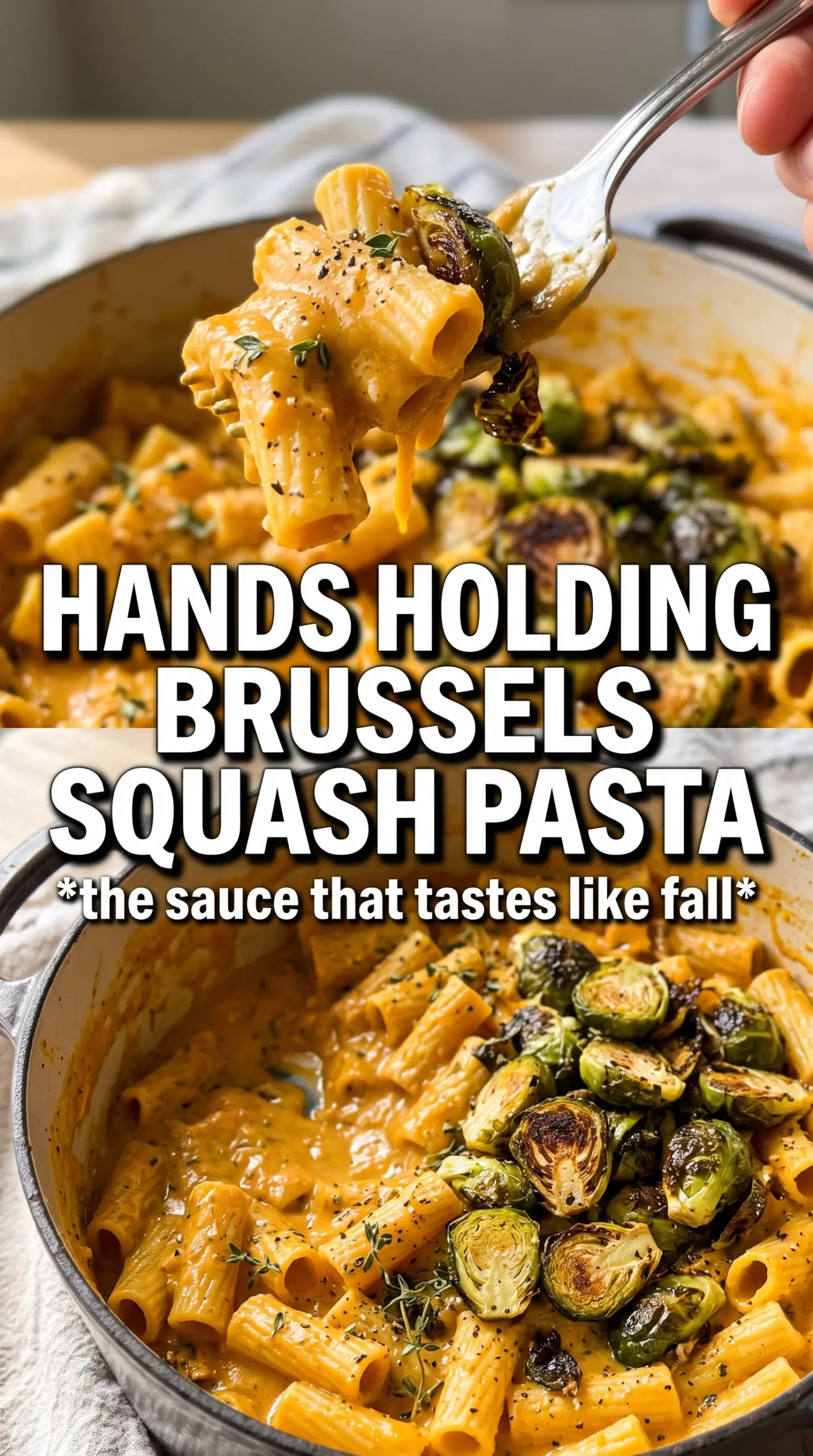
- Rigatoni or penne — A short pasta shape catches the sauce and the little bits of Parmesan. Long pasta works, but you lose some of that textured bite in each forkful.
- Butter — Unsalted butter gives you control over the seasoning. You want enough fat to carry the sauce, but the browning step is what builds the flavor.
- Garlic and sage — Garlic adds backbone, while sage brings that classic earthy note that makes brown butter taste finished. Add them after the butter starts browning so the garlic doesn’t burn before the sauce is ready.
- Hazelnuts or walnuts — Toasted nuts are the crunch this pasta needs. Hazelnuts taste a little sweeter and more pronounced, while walnuts are a good backup and easier to find.
- Pasta water — The starch in the water helps the butter and cheese cling to the noodles. Plain water won’t do the same job, so don’t drain the pasta dry and forget to save some first.
Getting The Sauce Glossy Before The Cheese Goes In
Roast the vegetables until they actually color
Toss the squash and Brussels sprouts with olive oil, salt, and pepper, then spread them out so air can circulate around each piece. Roast at 425°F until the edges are browned and the centers are tender when pierced with a fork. If they look pale, keep going; pale vegetables taste steamed, not roasted.
Brown the butter without walking away
Melt the butter in a wide pan over medium heat and keep it moving as the foam subsides. The color will shift from yellow to golden, then the milk solids at the bottom will turn amber and smell nutty. The second you see dark specks forming fast, pull the pan off the heat and add the garlic and sage, because brown butter can go from perfect to burnt in under a minute.
Emulsify the sauce with pasta water
Add the cooked pasta and a splash of pasta water to the pan, then toss until the butter looks silky and lightly thickened. This is where the sauce becomes glossy instead of greasy. Add the Parmesan off the heat or over very low heat, stirring until it melts into the noodles; too much heat at this stage can make the cheese seize and turn grainy.
Finish with texture on top
Fold in the roasted vegetables gently so they stay in pieces instead of getting mashed into the pasta. Taste for salt, then top with the toasted nuts right before serving. That last crunchy layer matters because the pasta itself is soft and rich, and the nuts keep the bowl from eating one-note.
How To Adapt This Pasta When You Need A Different Fit
Make it gluten-free
Use your favorite gluten-free short pasta and cook it just shy of fully tender. Gluten-free pasta softens fast once it hits the sauce, so undercooking by a minute keeps it from breaking apart when you toss everything together.
Make it dairy-free
Swap the butter for a good olive oil and finish with a dairy-free Parmesan-style topping or nutritional yeast. You’ll lose the nutty brown butter depth, but the roasted vegetables, sage, and nuts still carry the dish well.
Use only one vegetable
If you only have Brussels sprouts or only butternut squash, the recipe still works. With just sprouts, the dish gets more savory and less sweet; with just squash, it turns softer and richer, so add an extra pinch of salt to keep the flavor balanced.
Storage and Reheating
- Refrigerator: Store leftovers in an airtight container for up to 4 days. The pasta will absorb some of the sauce as it sits, so it gets a little less glossy by day two.
- Freezer: Freezing isn’t ideal because the roasted vegetables soften and the sauce can turn oily after thawing. If you do freeze it, cool it completely first and thaw overnight in the refrigerator.
- Reheating: Warm it gently in a skillet with a splash of water over low heat, stirring until the sauce loosens again. High heat dries out the pasta and can make the Parmesan separate.
Answers To The Questions Worth Asking
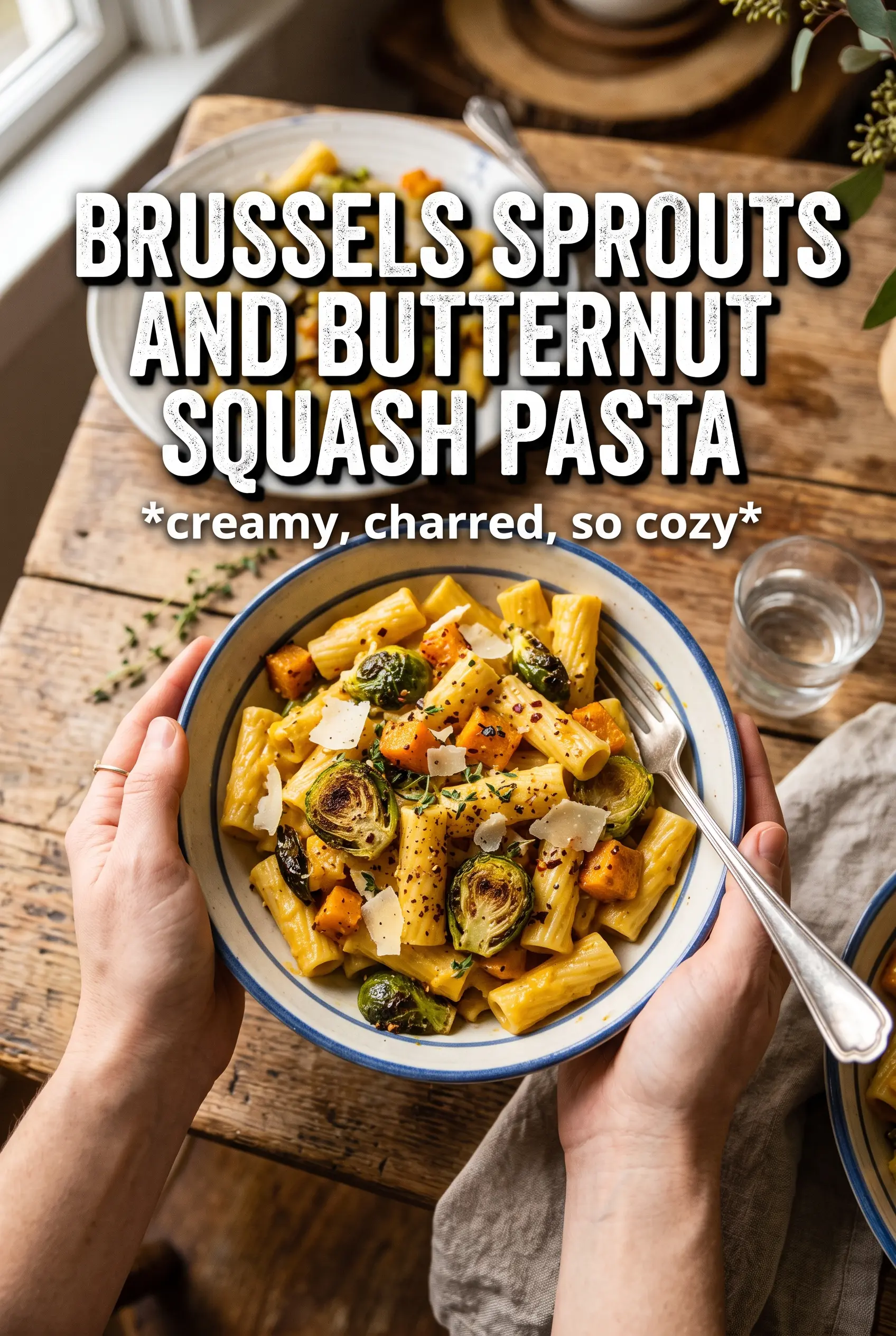
Brussels Sprouts And Butternut Squash Pasta
Ingredients
Equipment
Method
- Heat oven to 425F. Toss butternut squash cubes with 1 tablespoon olive oil, salt, and pepper, then spread on a sheet pan and roast for 25 minutes until caramelized, turning once if needed.
- Halve the Brussels sprouts and toss with another 1 tablespoon olive oil, salt, and pepper. Spread on a separate sheet pan and roast for 25 minutes until caramelized and browned at the edges.
- Cook rigatoni or penne in salted water until al dente. Reserve 1 cup pasta water before draining.
- Melt unsalted butter in a cast iron skillet over medium heat. Add minced garlic and chopped sage and cook until the butter turns golden and nutty, stirring so the garlic browns without burning.
- Add drained pasta to the cast iron skillet. Pour in pasta water a little at a time and toss until the sauce looks glossy and coats the pasta.
- Add roasted butternut squash and Brussels sprouts to the skillet. Toss to distribute the vegetables, then add grated parmesan and mix until it melts into the sauce.
- Season with additional salt and pepper to taste. Top with toasted hazelnuts or walnuts and serve right away.