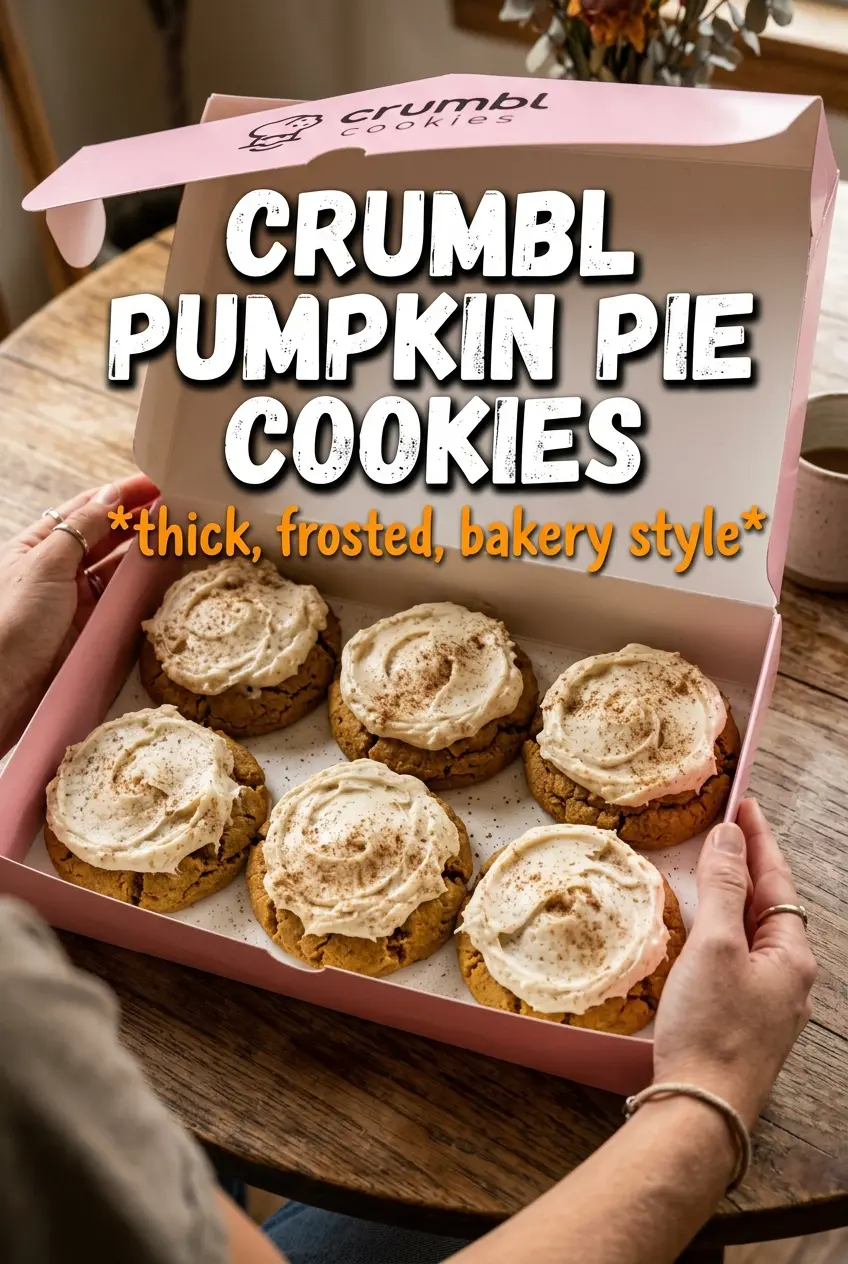
These Crumbl pumpkin pie cookies bake up thick and soft with that bakery-style center people remember after the first bite. The base has a gentle pumpkin warmth, a little lift from the baking soda and baking powder, and just enough sugar to keep the edges tender instead of dry. Finished with a tall swirl of cream cheese frosting and a dusting of cinnamon, they taste like a cross between a soft pumpkin cookie and a slice of pie, which is exactly why they disappear fast.
The part that makes this version work is the pumpkin prep. Pumpkin puree holds a lot of water, and if it goes into the dough straight from the can, the cookies can bake up cakey or spread in a weak way. Blotting it dry first keeps the dough thick and lets the butter and sugars do their job. The cookies also bake just until the edges are set and the centers still look a little underdone, because they finish setting as they cool.
Below you’ll find the trick that keeps the frosting smooth, the best way to portion oversized cookies evenly, and a few smart swaps if you want a slightly different finish.
I blotted the pumpkin first like you said, and the cookies came out thick instead of cakey. The frosting held its shape on top and the cinnamon made them taste just like the pumpkin pie filling from a bakery cookie.
Save these Crumbl Pumpkin Pie Cookies for the days when you want a thick pumpkin cookie with cream cheese frosting and a true bakery-style finish.
The Pumpkin Puree Trick That Keeps These Cookies Thick
Most pumpkin cookies fail in one of two ways: they spread too much, or they bake up with a bready, cakey crumb that tastes more like muffin top than cookie. The fix here is simple, but it matters. Blotting the pumpkin dry removes the extra moisture that would otherwise loosen the dough and throw off the structure.
You also want to stop mixing the second the flour disappears. Overmixing after the dry ingredients go in can tighten the cookies and make them tough once they cool. These are meant to be soft and tender in the middle, with just enough structure to hold a frosting swirl.
- Blotted pumpkin puree — This gives you pumpkin flavor without the wet, slack dough that causes flat cookies. Press it between paper towels until it feels thick and pasty.
- Both white and brown sugar — Granulated sugar helps the cookies spread just enough, while brown sugar adds a little chew and depth. The two together give a better texture than either one alone.
- Pumpkin pie spice — This is the warm background note that makes the cookies taste like pumpkin pie filling, not just sweet pumpkin dough.
- Large scoops — Big cookies stay softer in the center and give you that Crumbl-style height. Small scoops bake faster and lose the bakery look.
What Each Ingredient Is Actually Doing in the Dough and Frosting
- Butter — Softened butter creams with the sugars to trap air, which helps the cookies bake up thick instead of dense. Use true softened butter, not melted butter, or the dough will spread too much.
- Egg — The egg binds the dough and gives the cookies just enough lift to hold their shape. A second egg would make them more cake-like, which is not what you want here.
- Flour — All-purpose flour gives the base its structure. Spoon and level it if you can; packed flour makes these cookies dry and heavy.
- Cream cheese — Full-fat cream cheese is worth using for the frosting because it pipes smoothly and sets with that tangy bakery finish. Reduced-fat versions can turn loose or grainy.
- Powdered sugar — This sweetens and stiffens the frosting at the same time. If the frosting seems too soft, add a little more powdered sugar instead of chilling it immediately.
The Bake, Cool, and Frost Sequence That Gives Them Their Bakery Height
Building the Pumpkin Base
Start by beating the butter, both sugars, and the blotted pumpkin until the mixture looks light and a little fluffy. The pumpkin should disappear into the butter instead of sitting in wet streaks. Add the egg and vanilla next, then mix only until combined. If the dough looks slightly soft, that is normal; the flour will tighten it up.
Adding the Dry Ingredients Without Overworking Them
Whisk the flour, baking powder, baking soda, salt, and pumpkin pie spice together before adding them to the bowl. Fold them in just until you no longer see dry flour, then stop. If you beat the dough at this stage, the cookies can bake up tough and lose that soft, pillowy center. The finished dough should be thick enough to scoop cleanly.
Baking for a Soft Middle
Scoop the dough into large 3-tablespoon portions and press them slightly flat on a parchment-lined sheet. Bake at 350°F for 13 to 14 minutes, watching for edges that look set while the centers still seem a little underbaked. That underdone look is the cue to pull them; they finish on the pan. If you wait for the centers to look fully baked in the oven, the cookies will end up dry once cooled.
Cooling and Frosting the Right Way
Let the cookies cool completely before frosting. Warm cookies will melt the cream cheese frosting and cause it to slide right off, especially with a generous swirl. Beat the frosting until smooth, pipe it high, and finish with cinnamon while the frosting is still soft enough for the dusting to stick.
Three Ways to Adjust These Cookies Without Losing the Crumbl Feel
Make them gluten-free
Use a good 1:1 gluten-free baking flour in place of the all-purpose flour. The cookies will still be soft and thick, though the crumb may be a little more delicate. Let the dough rest for 10 to 15 minutes before scooping so the flour hydrates and the cookies hold together better.
Skip the cream cheese frosting
If you want a less rich finish, dust the cooled cookies with cinnamon and a little powdered sugar instead of frosting. You lose the tangy contrast, but the pumpkin spice flavor comes through more clearly and the cookies stay easier to stack and pack.
Use them as a make-ahead dessert
Bake the cookies a day ahead and frost them just before serving. The cookies stay soft overnight, but the frosting looks fresher and holds its swirl better if you pipe it after the cookies are fully cooled and you’re close to serving time.
Storage and Reheating
- Refrigerator: Store frosted cookies in an airtight container for up to 4 days. The frosting stays best chilled, though the cookie softens a little more by day two.
- Freezer: Freeze the unfrosted cookies for up to 2 months. Layer them with parchment and thaw at room temperature before frosting.
- Reheating: These don’t need reheating once frosted. If you want a just-baked feel, warm an unfrosted cookie for 8 to 10 seconds in the microwave, then frost after it cools slightly.