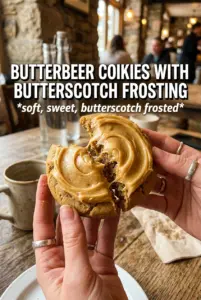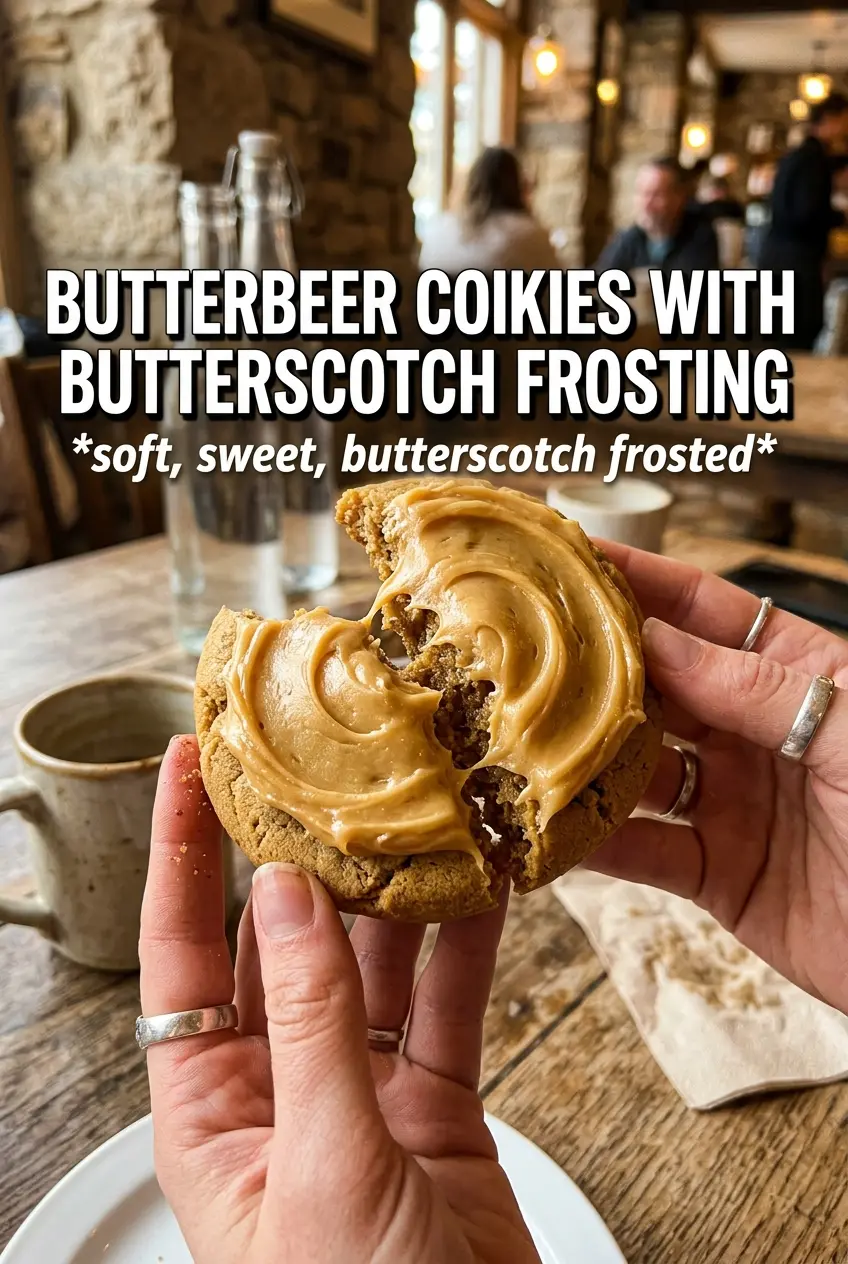
These butterbeer cookies bake up soft in the center with lightly crisp edges and that unmistakable butterscotch-vanilla flavor that makes them disappear fast. The frosting is thick, creamy, and just tangy enough to keep the sweetness in check, which matters here because these cookies already bring plenty of brown sugar richness and caramel notes on their own.
The trick is in the balance. Butter extract gives the dough that round, nostalgic flavor without making it taste flat, and the butterscotch chips melt into little pockets instead of turning the cookies heavy. A short bake keeps the centers tender, and cooling them completely before frosting keeps the swirl from sliding right off the top.
Below, I’ll walk you through the parts that matter most: how to keep the cookies soft, how to get the frosting thick enough to pipe, and what to change if you want a simpler finish or need a dairy-free swap.
The cookies stayed soft for days and the butterscotch frosting set up just enough that the caramel drizzle didn’t run everywhere. I used the butter extract and the flavor was spot on.
Love the soft butterbeer cookies and thick butterscotch frosting? Save this one for when you want a caramel-drizzled dessert with a little magic.
The Dough Needs a Short Bake, Not a Deep One
These cookies should come out when the edges look set and the centers still look a little underbaked. That’s the difference between a soft cookie and a dry one, and it matters even more here because the frosting adds its own richness. If you wait for full color across the top, the cookies will be past the point where they stay tender after cooling.
Brown sugar does most of the heavy lifting for chew, while the granulated sugar helps the edges develop a little structure. The butterscotch chips also matter: they melt just enough to soften the crumb without turning the dough greasy, but they need to be folded in at the very end so they stay distributed instead of sinking.
- Brown sugar — This gives the cookies their chewy center and deep caramel note. Packed brown sugar is the right move here; loose measuring will make the dough too dry.
- Butter extract — This is what pushes the flavor into butterbeer territory. Vanilla works in a pinch, but it won’t taste as specific.
- Butterscotch extract — A little goes a long way. It sharpens the butterscotch flavor without making the dough taste artificial.
- Butterscotch chips — Use the full cup. They melt into sweet pockets that keep each bite from tasting one-note.
What the Frosting Is Doing Beyond Sweetness
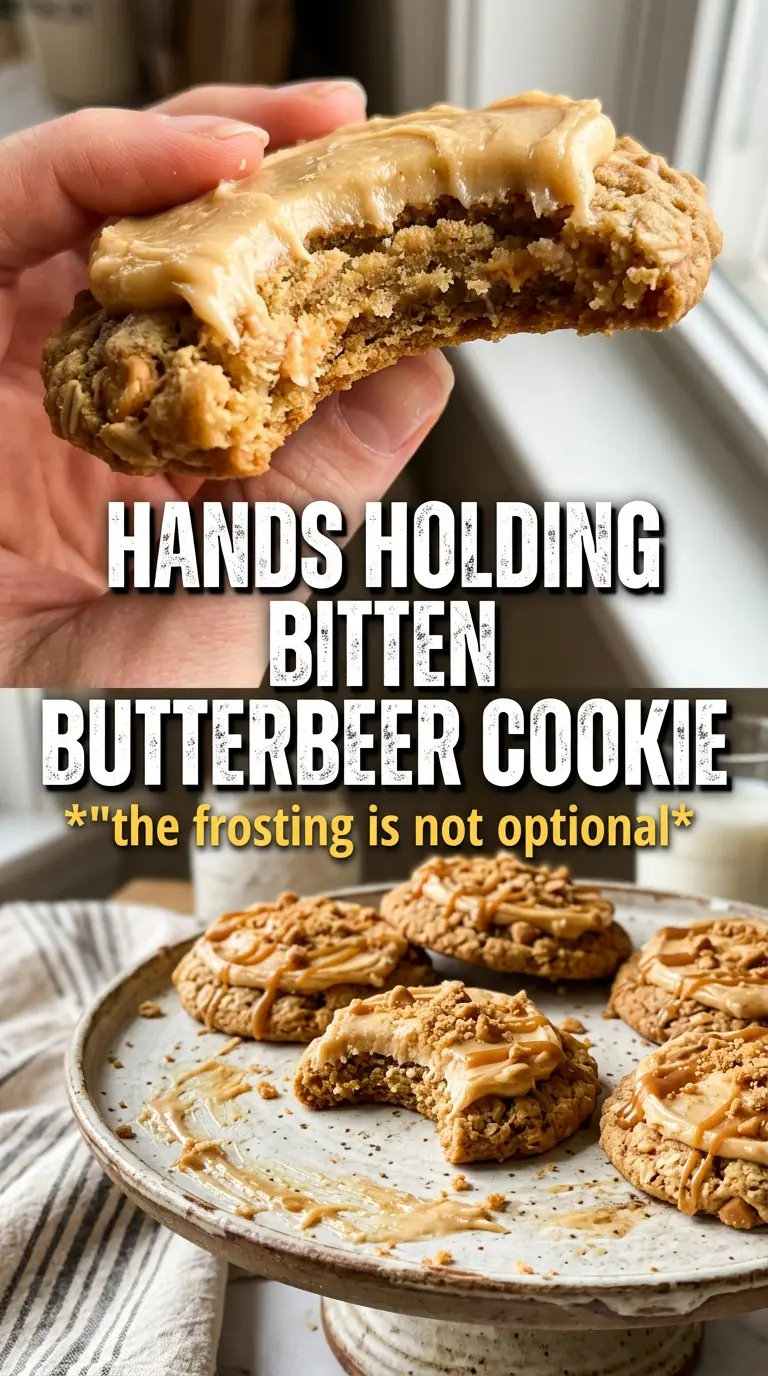
- Cream cheese — This is what keeps the frosting from tasting like pure sugar. It also gives enough body to pipe a thick swirl that holds its shape.
- Butterscotch sauce — Use a smooth sauce, not a thick candy-style topping. It blends into the frosting more cleanly and gives the right caramel-butterscotch finish.
- Powdered sugar — This sets the texture. Add it gradually so the frosting turns fluffy instead of grainy or overly stiff.
- Caramel drizzle — Add this at the end, after frosting. If it goes on warm cookies, it melts into the cream cheese layer instead of sitting in those nice glossy ribbons on top.
Cooling First, Then Frosting: The Part That Keeps These Pretty
Mix the dough until it just comes together
Beat the butter and sugars until the mixture looks fluffy and a little paler, then add the eggs and extracts. Once the flour goes in, stop as soon as you no longer see streaks. Overmixing at this stage builds too much structure, and these cookies need to stay tender, not bready.
Scoop for even baking
Use 2-tablespoon portions so every cookie bakes at the same rate. If some are larger than others, the smaller ones will dry out before the bigger ones are done. Keep a little space between them because these spread just enough to need room, but not so much that they flatten into thin discs.
Watch for the set edges
Bake until the edges look lightly golden and the centers still look soft and slightly puffed. That center will finish setting on the baking sheet as the cookies cool. If you move them too soon, they’ll tear; if you leave them on the hot pan too long, they’ll keep cooking and lose that soft middle.
Let the frosting chill into a pipeable texture
Beat the cream cheese, butter, butterscotch sauce, powdered sugar, and vanilla until smooth and thick. If it looks loose, add a bit more powdered sugar; if it seems too stiff, a tiny extra spoonful of butterscotch sauce loosens it fast. The frosting should hold a swirl without collapsing, and the cookies should be fully cool before you pipe it on.
How to Adapt These Cookies for Different Kitchens
Dairy-Free Version
Use plant-based butter in both the cookies and frosting, and swap in a dairy-free cream cheese that’s firm enough to whip. The flavor stays close, but the frosting may be a little softer, so chill it briefly before piping. Keep the butterscotch sauce dairy-free too, since that’s usually where hidden milk ingredients show up.
Skip the Butter Extract If You Only Have Vanilla
Vanilla will still give you a good cookie, just with a softer, less distinct butterbeer flavor. If you go this route, lean a little harder on the butterscotch chips and frosting so the cookies still taste intentional instead of just sweet.
Make Them Smaller for a Party Tray
Drop the dough in 1-tablespoon portions and start checking a minute or two earlier. Smaller cookies bake faster and end up a little less soft in the center, but they’re easier to serve when you need a platter of neat, one-bite desserts.
Storage and Reheating
- Refrigerator: Store frosted cookies in an airtight container for up to 4 days. The cookies stay soft, but the frosting firms up in the fridge.
- Freezer: Freeze the unfrosted cookies for up to 2 months. Frosted cookies can freeze, but the topping loses some of its smooth texture after thawing.
- Reheating: Let refrigerated cookies sit at room temperature for 20 to 30 minutes before serving. Don’t microwave frosted cookies or the cream cheese layer will soften too much and slide.