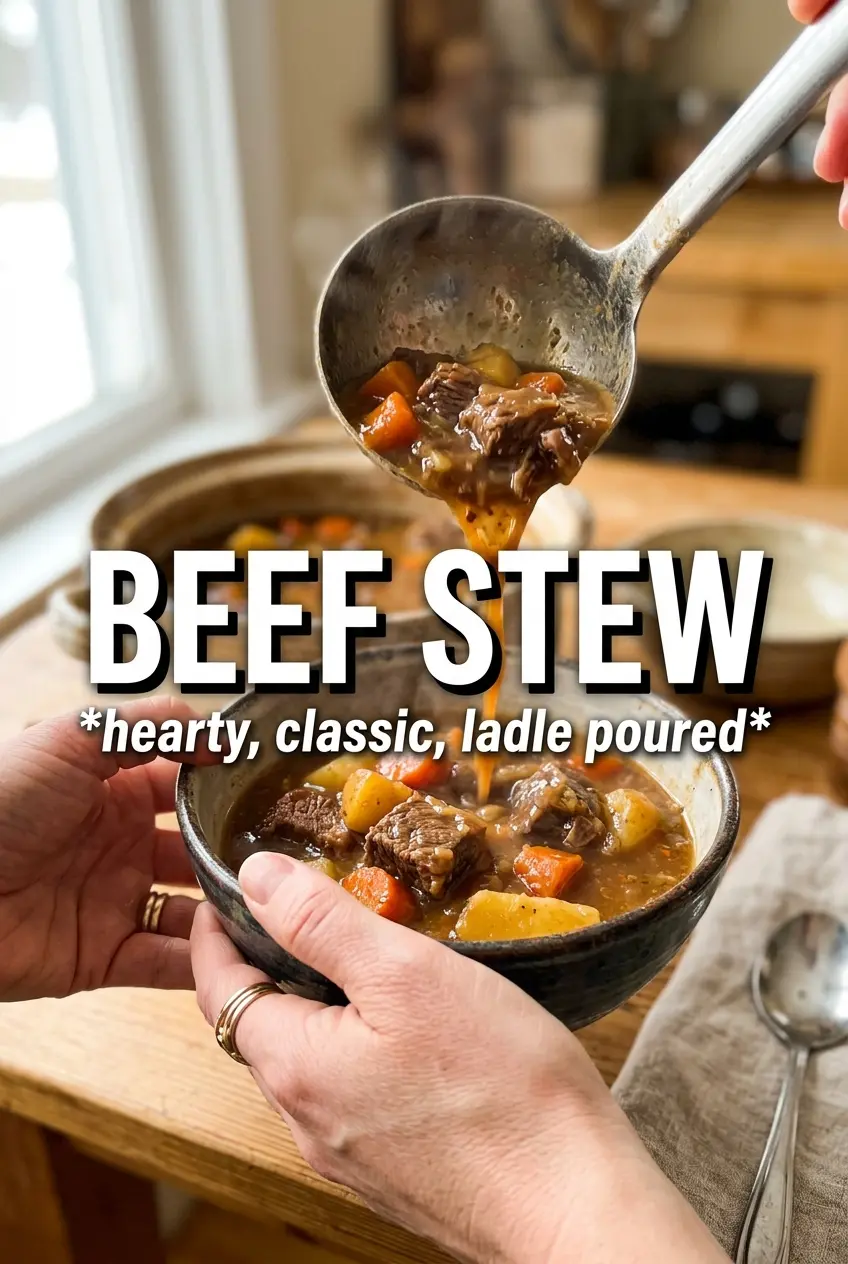
Deep, mahogany beef stew is what happens when you give a tough cut time, heat, and a little patience. The broth turns rich and savory, the beef softens until it pulls apart with a spoon, and the vegetables hold enough shape to feel like part of the meal instead of turning to mush. This version lands in that sweet spot where the gravy is thick enough to cling to bread but still loose enough to soak into every bite.
The flour on the beef does double duty here. It helps the meat brown well in the pan, then later gives the stew a little body without needing extra thickeners at the end. Red wine and tomato paste build depth, while Worcestershire adds the kind of background savoriness that makes the broth taste like it simmered all day, even though most of the work is hands-off.
Below, I’ll walk through the searing step that keeps the beef flavorful, the ingredient swaps that still give you a proper stew, and the few places where timing matters most.
The broth turned thick and glossy without tasting pasty, and the beef was fall-apart tender after just over an hour. My husband went back for seconds and asked if I could make it again next week.
Save this classic beef stew for the kind of night when you want deep gravy, tender beef, and crusty bread on the side.
The Sear Is What Gives This Stew Its Real Flavor
If the beef goes into the pot pale, the stew tastes flat no matter how long it simmers. The browned bits left behind after searing are the backbone of the broth, and they only happen if the meat hits a hot pan in batches. Crowding the pan traps steam, and steam is the enemy here because it keeps the beef from developing that dark crust.
The other place people go wrong is rushing the simmer. A hard boil tightens beef chuck instead of relaxing it, which is how you end up with meat that feels chewy long after the vegetables are done. Keep the heat low enough that the surface barely blips under the lid. That steady, gentle cook is what turns chuck into stew meat worth eating.
- Brown in batches. Give each cube room so it can sear instead of stew in its own moisture.
- Use the flour early. It helps the crust take color and gives the broth body later.
- Keep the simmer quiet. A lazy bubble protects the beef texture.
What Each Ingredient Is Actually Doing in This Pot
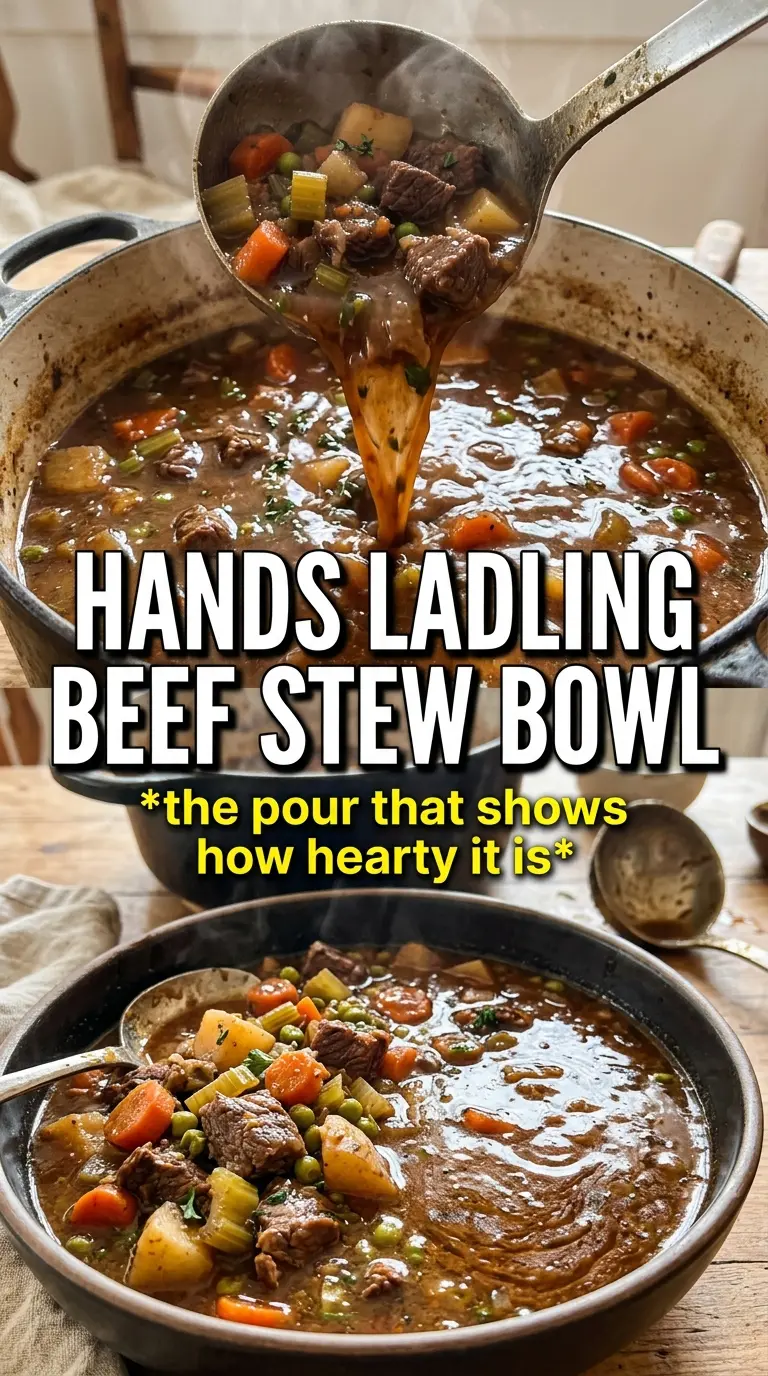
- Beef chuck — This is the cut that turns silky with time. Leaner cuts won’t give you the same tender result, and they tend to dry out before the broth has deepened.
- Yukon gold potatoes — They hold their shape better than russets and give the stew a creamy texture without falling apart. If you swap them, use another waxy potato.
- Red wine — It adds acidity and depth that water or extra broth can’t match. Use something dry and drinkable; harsh wine makes harsh stew.
- Tomato paste and diced tomatoes — These build body and bring a subtle sweetness that balances the rich beef. Cook the paste briefly so it loses that raw, tinny edge.
- Worcestershire — A small amount makes the broth taste more rounded and savory. It’s one of those ingredients you miss when it’s gone.
- Frozen peas — Add them at the very end so they stay bright and sweet. If they simmer too long, they turn dull and mushy.
The Simmer That Turns Chuck Into Spoon-Tender Beef
Building the Base
After the beef comes out, the onion, carrots, and celery go into the same pot. Stir them through the fat and browned drippings until the onion softens and the bottom of the pan starts looking clean again. Garlic and tomato paste go in after that, and you want the paste to darken slightly before the liquid goes in. That short cook gets rid of the raw taste and deepens the whole pot.
Deglazing Without Losing the Good Bits
Pour in the wine and scrape firmly across the bottom of the pot. Those stuck-on browned bits dissolve into the liquid and disappear into the broth, which is exactly what you want. Let the wine simmer for a minute so the sharp edge cooks off, then add the broth, tomatoes, Worcestershire, thyme, bay leaves, and browned beef. If the pot still looks dark and messy at this point, you’re on the right track.
The Long Gentle Simmer
Once the stew comes to a boil, drop the heat and cover it partially or fully depending on how fast your burner runs. You want the beef to simmer until a fork slides in with almost no resistance, usually 60 to 75 minutes. If the beef still feels tight, keep going; chuck often needs a little more time than the clock suggests. Resist the urge to crank up the heat, because a hard boil is what makes the meat seize up instead of soften.
Finishing With the Vegetables
Add the potatoes only after the beef is tender. If they go in too early, they break down before the meat is ready and turn the stew cloudy and overly thick. The peas go in at the end for a few minutes, just long enough to heat through and stay bright. Pull out the bay leaves before serving, then adjust the salt and pepper once the broth has reduced and the flavors have settled.
How to Adjust This Stew Without Losing the Comfort
Gluten-Free Version
Skip the all-purpose flour and dust the beef with a gluten-free flour blend or a little cornstarch instead. The stew will still thicken nicely, though the broth may finish a touch lighter unless you simmer it uncovered for the last few minutes.
No Wine, Still Deep Flavor
Replace the wine with more beef broth plus 1 tablespoon red wine vinegar or a splash of balsamic. You’ll lose some of the wine’s roundness, but the vinegar restores the little bit of brightness the stew needs so it doesn’t taste heavy.
Make It Dairy-Free and Hearty Without Changes
This stew is naturally dairy-free as written, so the only thing to watch is the broth. Use a full-flavored beef broth, not a thin or salty one, because there’s no cream or butter to hide a weak base.
Storage and Reheating
- Refrigerator: Keeps well for 4 days. The flavor deepens overnight, and the broth usually thickens a little as it chills.
- Freezer: Freezes well for up to 3 months. Cool it completely first, then portion it into airtight containers; the potatoes may soften slightly after thawing, but the stew still reheats beautifully.
- Reheating: Warm it gently on the stovetop over low heat with a splash of broth or water if needed. Don’t boil it hard, or the beef can tighten and the potatoes can start breaking down.