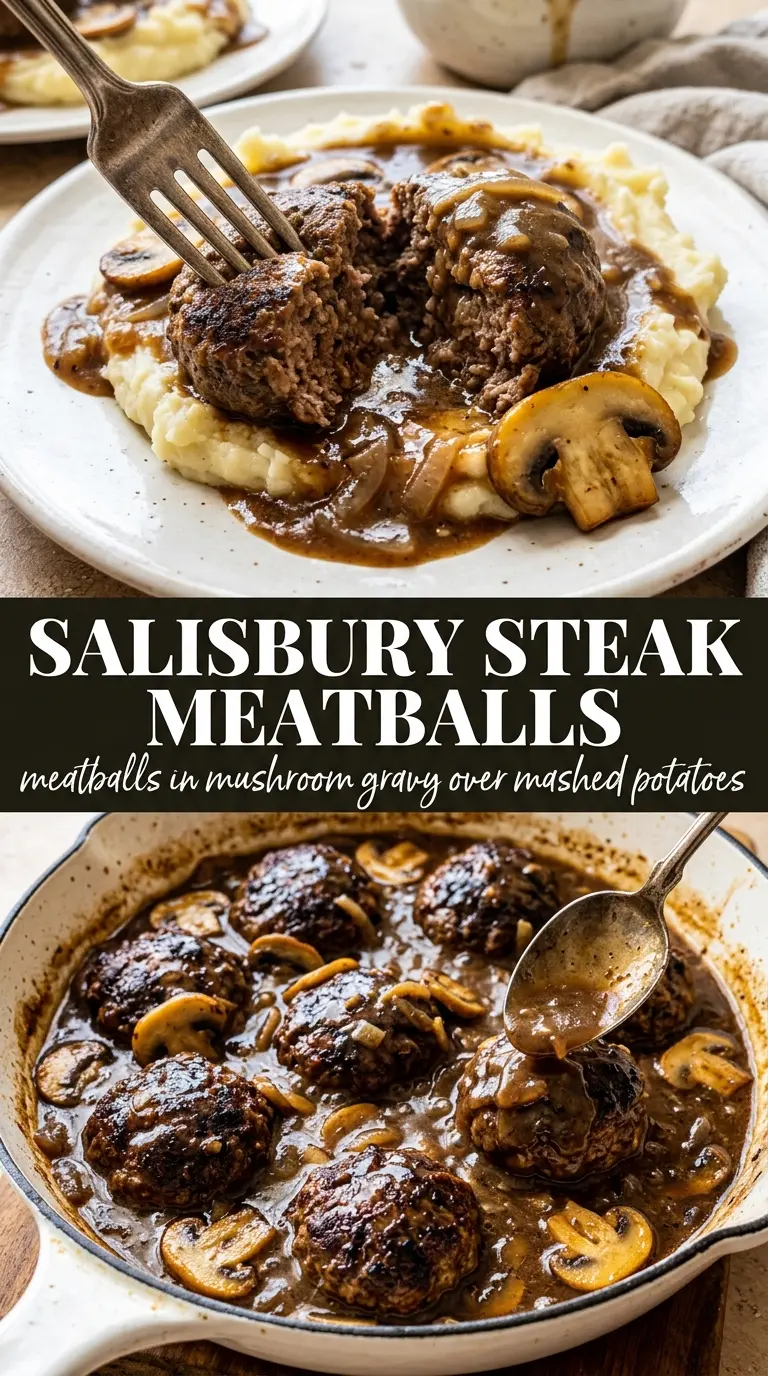
Dark mushroom onion gravy wrapped around tender beef meatballs is the kind of dinner that disappears fast, especially when it lands over fluffy garlic herb mashed potatoes. The meatballs stay juicy because they’re mixed just enough to hold together, then seared first so the pan keeps every bit of flavor for the gravy. That browned fond turns into the base of the sauce, which is what gives this dish that deep, savory taste you expect from Salisbury steak without having to shape full patties.
The potatoes matter just as much as the meatballs here. Yukon golds mash smooth and creamy without turning gluey, and warm cream keeps them light instead of heavy. Roasted garlic folds in softly, while chives cut through all that richness at the end. The whole plate tastes like classic comfort food, but the method stays practical and weeknight-friendly.
Below, I’ll walk through the part that makes the biggest difference: building a gravy that turns silky instead of thin, plus the little tweaks that help the meatballs stay tender all the way through.
The gravy thickened up perfectly and the meatballs stayed tender after simmering. I served it over the mashed potatoes and my husband went back for seconds before I even sat down.
Save these Salisbury steak meatballs with silky mushroom gravy and garlic herb mashed potatoes for the kind of night when you want a full comfort-food dinner in one pan.
The Browning Step That Makes the Gravy Taste Like It Simmered All Day
The biggest mistake with this kind of dinner is rushing past the sear. Those meatballs need actual color on the outside, not just enough heat to turn them opaque. When they hit the skillet, leave them alone until they release on their own and show a deep brown crust. That crust becomes part of the gravy, and if the pan looks a little messy afterward, that’s a good sign.
Another thing that keeps this recipe from turning heavy is the simmering time. The meatballs finish cooking gently in the gravy instead of drying out in the skillet. If you boil the sauce hard at the end, the texture tightens up and the meatballs can turn a little tough. A low simmer keeps everything tender and gives the gravy time to thicken around the onions and mushrooms.
- Don’t crowd the skillet — the meatballs need room to brown, not steam. If your pan is tight, sear in batches.
- Keep the simmer gentle — a fast boil can break the gravy’s smooth texture and overcook the beef.
- Use the same pan — the browned bits from the meatballs are the backbone of the sauce.
What Each Ingredient Is Actually Doing in This Dinner
- Ground beef — An 80/20 blend gives you enough fat for juicy meatballs and a rich gravy base. Leaner beef works, but the texture gets a little firmer and the flavor loses depth.
- Breadcrumbs and egg — These are the structure. They keep the meatballs tender and help them hold their shape during searing and simmering.
- Worcestershire and Dijon — Worcestershire adds that classic Salisbury steak backbone, while Dijon sharpens the gravy without making it taste mustardy. You can’t get the same savory edge from plain salt alone.
- Mushrooms and onion — They soften into the gravy and give it body. If you skip the mushrooms, the sauce still works, but it won’t have the same earthy, restaurant-style finish.
- Yukon gold potatoes — These mash into a creamy texture without turning gummy. Russets work in a pinch, but they’re drier and need a little more care when mashing.
- Warm cream and butter — Warm dairy blends in smoothly and keeps the potatoes fluffy. Cold cream can cool the potatoes too fast and make them feel dense.
- Roasted garlic and chives — The garlic gives the mash a mellow sweetness, and the chives keep the whole plate from tasting one-note.
Build the Gravy Before the Meatballs Go Back In
Sear the Meatballs Until They Lift Cleanly
Mix the beef just until the ingredients come together, then shape the meatballs into even balls so they cook at the same rate. In the skillet, let the first side brown before turning them. If they stick, they’re not ready yet. Once they release cleanly, the crust is set and the meatballs can finish without falling apart.
Cook the Potatoes While the Meatballs Rest
Boil the potatoes until a fork slides in without resistance, then drain them well. Wet potatoes turn slack and watery when you mash them. Return them to the warm pot for a minute if they seem steamy, then work in the butter, cream, garlic, and chives until they look fluffy instead of paste-like.
Develop the Onion and Mushroom Base
Cook the onion and mushrooms in the same skillet until they pick up color and the pan looks glossy, not dry. If the mushrooms release a lot of liquid, keep cooking until that moisture cooks off and the edges start to brown. This is where the gravy gets its depth, so don’t rush the vegetables just because they’re softened.
Thicken the Gravy Without a Raw Flour Taste
Sprinkle the flour over the vegetables and stir for a full minute before adding broth. That quick cook gets rid of the raw flour taste and helps the gravy thicken evenly. Whisk in the broth slowly so the sauce stays smooth, then let it simmer until it coats the back of a spoon.
Finish the Meatballs in the Sauce
Slide the meatballs back into the skillet and spoon the gravy over the top. The final simmer should be gentle; you want the centers cooked through and the gravy silky, not reduced into something stiff. If the sauce thickens too much, splash in a little broth and stir until it loosens again.
How to Adapt This for a Different Pantry or Diet
Make it gluten-free
Use gluten-free breadcrumbs in the meatballs and swap the flour for a cup-for-cup gluten-free flour blend in the gravy. The texture stays close to the original, though the sauce may need an extra minute or two to fully thicken.
Swap in ground turkey
Ground turkey works, but it needs help staying juicy. Use the same seasoning, sear it carefully, and don’t overcook the simmer at the end. The gravy gives it back some richness, but the meatballs will taste a little lighter and less beefy.
Go dairy-free for the potatoes
Use a good dairy-free butter and unsweetened oat or cashew milk instead of cream. The mash won’t be quite as rich, but roasted garlic and chives still give it plenty of character.
Use the gravy with rice or noodles
If you don’t want to make mashed potatoes, serve the meatballs over buttered egg noodles or rice. You’ll lose the full mashed-potato comfort factor, but the gravy still carries the whole dish.
Storage and Reheating
- Refrigerator: Store the meatballs, gravy, and mashed potatoes separately or together for up to 4 days. The gravy will thicken as it chills.
- Freezer: The meatballs and gravy freeze well for up to 2 months. The potatoes are best fresh, since mashed potatoes can turn grainy after freezing.
- Reheating: Warm the meatballs and gravy slowly on the stove with a splash of broth until the sauce loosens again. Reheat the potatoes over low heat with a little cream or butter; high heat makes them dry and stiff.
Questions I Get Asked About This Recipe

Salisbury Steak Meatballs with Garlic Herb Mashed Potatoes
Ingredients
Equipment
Method
- In a mixing bowl, combine ground beef with breadcrumbs, egg, Worcestershire, garlic powder, onion powder, and salt and pepper; form into 1.5-inch balls. Sear in a cast iron skillet over medium-high heat for 2–3 minutes per side until browned, then set aside.
- Boil Yukon gold potatoes until tender. Drain and mash with butter, warm cream, roasted garlic cloves, fresh chives, salt, and pepper until fluffy.
- In the same meatball skillet, melt butter and cook onion sliced and mushrooms sliced for 5 minutes until golden.
- Sprinkle in flour and cook for 1 minute, then whisk in beef broth, Worcestershire, and Dijon mustard. Simmer for 4–5 minutes until the gravy thickens and looks dark and silky.
- Return the browned meatballs to the gravy and simmer for 8–10 minutes until cooked through. Keep the surface at a gentle simmer and look for no pink in the center.
- Spoon garlic herb mashed potatoes onto plates and top with meatballs and dark mushroom gravy. Serve immediately while the gravy is hot and glossy.