Blush-pink watermelon sangria is the kind of pitcher drink that disappears fast because it tastes as fresh as it looks. The watermelon gives the wine a clean, juicy base instead of a heavy sweetness, and the citrus slices keep every sip bright. It lands right in that sweet spot between refreshing and festive, which is exactly why it earns a spot at summer gatherings and easy dinners alike.
The trick is starting with real watermelon juice, not just chunks floating in wine. Blending and straining part of the melon gives the sangria a deeper watermelon flavor without turning it pulpy, and the dry rosé or white wine keeps the whole thing crisp. Honey smooths out the edges, but it doesn’t make the pitcher syrupy, especially once the sparkling water goes in at the end.
Below, I’m walking through the small details that matter: when to add the bubbles, how to keep the fruit from going mushy, and which swap works best if you want it a little lighter or a little stronger.
The watermelon flavor came through clean and fresh, and adding the sparkling water right at the end kept it from going flat. I loved that the fruit stayed crisp after chilling for two hours.
Save this watermelon sangria for the next pitcher night when you want crisp rosé, fresh melon, and minty citrus in every glass.
Why the Watermelon Needs to Be Juiced First
The biggest mistake with sangria is letting all the fruit do the work on its own. Watermelon chunks will flavor the pitcher a little, but they won’t give you that deep blush color or the clean melon taste that makes this drink stand out. Blending half the fruit and straining it first turns the watermelon into the base instead of just a garnish.
That also helps the texture stay balanced. If you skip the straining step, the sangria can turn cloudy and pulpy, especially after it sits. The juice blends smoothly with the wine and spirits, and the remaining cubes give you fresh bites without muddying the drink.
- Fresh watermelon — Seeded watermelon gives the cleanest juice and the best texture in the finished pitcher. If your melon is extra watery, strain it for a minute longer so the sangria doesn’t get thin.
- Dry rosé or white wine — Pick a wine you’d happily sip on its own. A dry bottle keeps the drink crisp; an off-dry wine will make the final pitcher noticeably sweeter once the watermelon and honey go in.
- Watermelon vodka or plain vodka — Watermelon vodka leans into the fruit without overpowering it, but plain vodka works just fine if that’s what you have. Keep it at half a cup or the wine disappears.
- Triple sec — This adds orange-citrus depth that plain sugar can’t give you. It rounds out the watermelon and helps the lime and lemon taste brighter, not sharper.
What Each Ingredient Is Actually Doing in This Recipe
- Primary ingredient (the star) — Quality matters most. Choose the best you can find.
- Cooking medium (oil, butter, or broth) — This carries flavors and prevents dryness.
- Seasonings (salt, pepper, spices, herbs) — Layer flavors so nothing overpowers. Build depth gradually.
- Aromatics (garlic, onion, herbs) — Cook with fat to bloom flavors. Become the foundation.
- Supporting ingredients — Complement the main ingredient without overpowering it.
- Sauce or liquid (if applicable) — Brings flavors together. Balance richness with acid.
- Acid (lemon, vinegar, wine, or other) — Brightens and prevents flat-tasting results.
- Final finish (garnish, glaze, or sauce) — Prevents one-dimensional taste and adds visual appeal.
Building the Pitcher So the Bubbles Stay Fresh
Making the Watermelon Base
Blend two cups of the watermelon cubes until smooth, then strain the juice through a fine mesh sieve. Press it gently with a spoon, but don’t mash the pulp through or the sangria will pick up a gritty texture. You want about one cup of clear juice, and that concentrated flavor does more than a full blender of unstrained melon ever could.
Mixing the Wine and Spirits
Stir the watermelon juice, wine, vodka, triple sec, and honey in a large pitcher until the honey dissolves. If the honey clings to the bottom, your sangria will taste uneven from the first pour to the last, so stir for a full minute. The pitcher should smell like melon, citrus, and wine, not like raw alcohol.
Letting the Fruit Infuse
Add the remaining watermelon cubes, lime slices, and lemon slices, then cover and chill for at least two hours. That resting time matters because the citrus softens the sweetness and the melon gives up more of its juice into the wine. If you rush this and serve it immediately, the drink tastes separate instead of blended.
Adding the Sparkle at the End
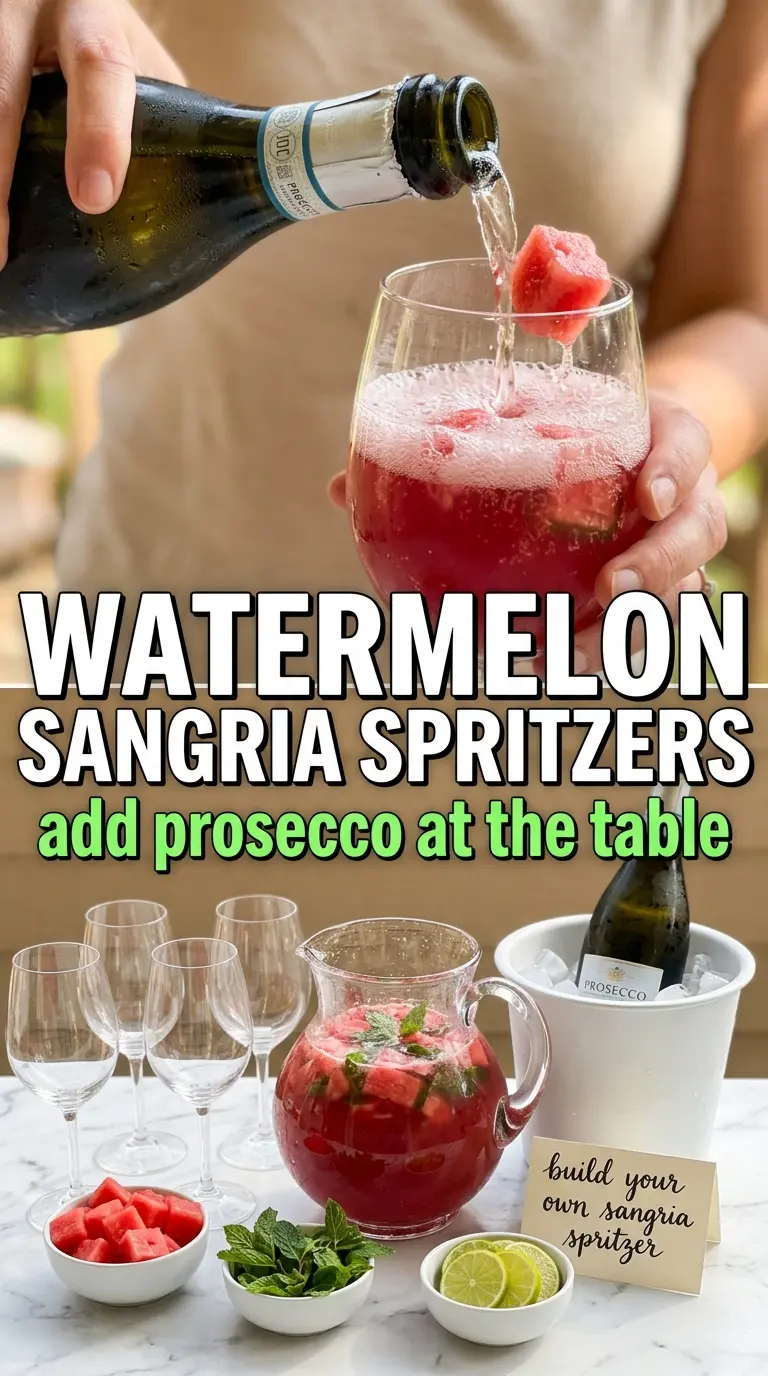
Pour in the sparkling water right before serving and stir gently once or twice. If you add it early, it loses its fizz in the fridge and the sangria drinks flat. Serve over ice with mint on top, because the cold glass and the fresh herb lift the whole pitcher.
How to Adapt This Pitcher for Different Crowds and Preferences
Make it lighter and less sweet
Use plain vodka, choose a very dry rosé, and start with just 1 tablespoon of honey. The watermelon already brings natural sweetness, so cutting back on the sweetener keeps the drink crisp instead of candy-like.
Turn it into a non-alcoholic watermelon spritz
Swap the wine, vodka, and triple sec for chilled white grape juice, a splash of orange juice, and a little extra sparkling water. You lose the wine’s dryness, so add a squeeze more lime to keep the drink from tasting flat.
Use peaches or strawberries with the watermelon
Add a handful of sliced strawberries or ripe peach chunks to the pitcher after chilling. They soak up the rosé beautifully and make the sangria feel a little fuller, but don’t add too many or the watermelon gets buried.
Make it ahead for a party
Mix everything except the sparkling water up to 8 hours ahead and keep it chilled. The fruit will soften a bit more over time, which helps the sangria taste more integrated, but hold the bubbles until the moment you set the pitcher on the table.
Storage and Reheating
- Refrigerator: Leftover sangria keeps for about 2 days, but the sparkling water will fade and the fruit will soften. Strain out the citrus if it starts to taste bitter.
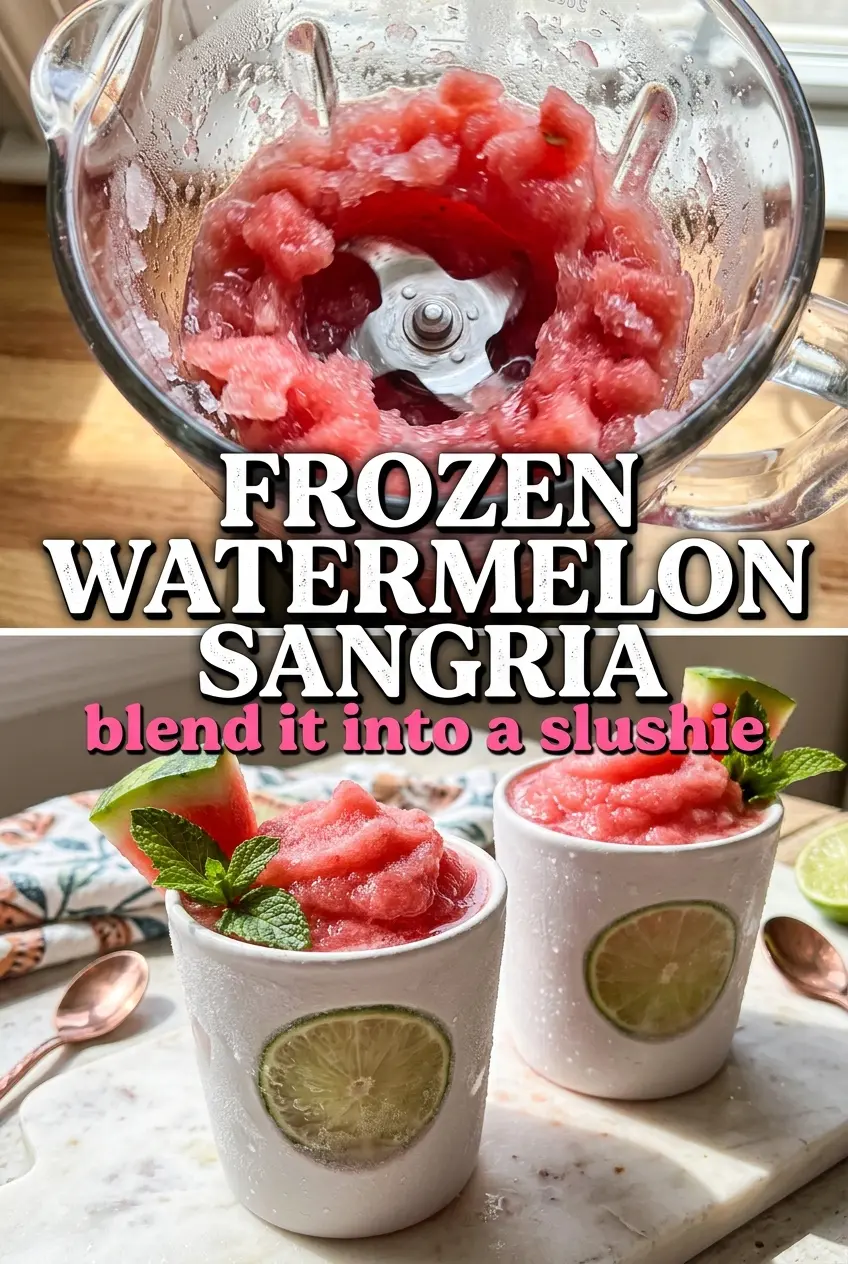
- Freezer: Don’t freeze the finished sangria; the wine and sparkling water won’t thaw with a good texture. If you want to plan ahead, freeze the watermelon cubes separately for a slushy-style variation.
- Reheating: This drink isn’t meant to be reheated. Stir it cold and add a fresh splash of sparkling water if it has been sitting open in the fridge.
Questions I Get Asked About This Recipe
Watermelon Sangria
Ingredients
Equipment
Method
- Blend 2 cups of the cubed, seeded watermelon until smooth, then strain through a fine mesh sieve to get 1 cup of fresh watermelon juice. You should end up with a smooth, pourable juice with no large chunks left.
- Combine the watermelon juice, rosé wine, vodka, triple sec, and honey in a large pitcher and stir to combine. The liquid should look evenly tinted and aromatic before adding fruit.
- Add the remaining watermelon cubes, lime slices, and lemon slices to the pitcher. Distribute the fruit so the pitcher looks full and colorful, with citrus slices visible throughout.
- Cover and refrigerate for at least 2 hours to chill and allow flavors to meld. The sangria should be cold and the fruit should taste more integrated into the wine base.
- Right before serving, top with sparkling water, stir gently, and pour into ice-filled glasses garnished with fresh mint. Serve for a lightly fizzy, refreshing watermelon cocktail with mint and citrus clearly visible.