Wide noodles coated in a slow-simmered beef ragu have a way of making dinner feel bigger than the effort it takes to get there. The sauce clings to every ribbon instead of sliding off the pasta, and the beef turns tender and deeply savory as the tomatoes cook down around it. It’s the kind of meal that tastes like it had all afternoon, even though most of the work is straightforward and hands-on.
The difference here is the order of things. Browning the beef first gives you the fond that carries the whole sauce, and cooking the tomato paste with the aromatics knocks the raw edge off before the wine goes in. That short red-wine simmer matters too; it concentrates the sauce and leaves behind the sharp alcohol note so what’s left is round and rich.
Below, I’ve included the small details that keep the sauce thick instead of watery, plus the pasta shape that grabs the ragu best. If you’ve ever ended up with beef sitting in tomato broth, this version fixes that.
The sauce reduced exactly how you described, and the pasta caught every bit of it. I let it simmer the full 30 minutes and it came out thick, glossy, and not watery at all.
Love this slow-simmered beef ragu pasta? Save it to Pinterest for the nights when you want a rich, wine-kissed sauce that clings to every noodle.
The Reason This Ragu Stays Thick Instead of Soupy
The mistake most people make with beef ragu is treating it like a one-pot dump and simmer. That gives you meat suspended in thin tomato liquid, not a sauce that coats pasta. Here, the beef browns first, the vegetables soften in the same pot, and the tomato paste cooks long enough to lose its tinny edge before the wine goes in. Those small layers build body before the tomatoes ever hit the pan.
The other thing that matters is patience at the end. A low simmer lets the sauce reduce slowly, which concentrates the beef and tomato flavor without turning the meat tough. If it looks loose at 15 minutes, keep going. It should end up glossy and spoonable, not watery.
What the Ingredients Are Doing in the Pot
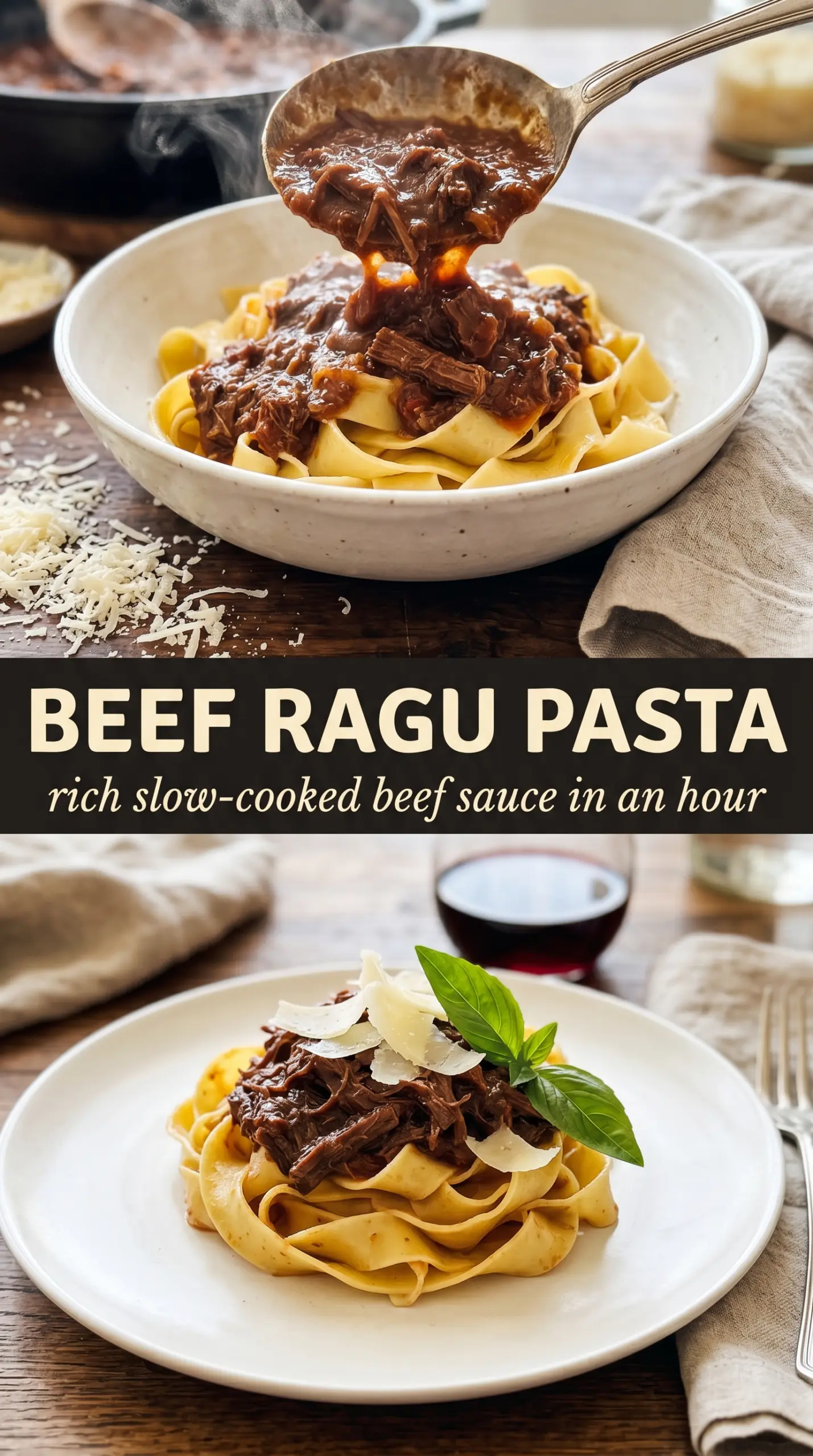
- Ground beef (80/20) — The fat keeps the sauce full and savory. Leaner beef works, but it can taste dry and less rounded unless you add a little extra olive oil. If you swap to very lean beef, don’t skip the browning step; that’s where the flavor starts.
- Onion, carrot, and celery — This is the base that gives ragu its quiet sweetness and depth. Dice them small so they nearly melt into the sauce. Big chunks stay obvious instead of enriching the texture.
- Dry red wine — It sharpens the sauce and pulls up the browned bits from the bottom of the pot. Use something you’d drink, but it doesn’t need to be expensive. If you need to skip it, beef broth plus a teaspoon of red wine vinegar gives some of the same lift, though the finish will be less layered.
- Crushed tomatoes and tomato paste — The crushed tomatoes give the sauce its body, while the paste adds concentrated tomato flavor and helps thicken everything as it simmers. Cooking the paste briefly before adding the liquids keeps the sauce from tasting flat.
- Pappardelle or tagliatelle — Wide noodles hold the meat well and catch the sauce in their folds. Thin pasta can work, but you lose some of that thick, satisfying bite that makes ragu feel complete.
Building the Sauce So It Clings to the Pasta
Browning the Beef Properly
Heat the oil until it shimmers, then add the beef and leave it alone long enough to get real color. If you stir constantly, the meat steams and turns gray, and that’s where bland ragu starts. Break it up only after the first side has browned, then drain off excess fat if the pan looks greasy.
Softening the Vegetables in the Same Pot
The onion, carrot, and celery go into the same pot so they pick up the browned bits left behind by the beef. Cook them until the onion turns translucent and the carrot loses its raw crunch. If the pot is too dry, add a small splash of oil; if the vegetables brown too fast, lower the heat.
Reducing the Wine and Tomatoes
Stir in the garlic and tomato paste for just a minute, then pour in the wine and let it bubble until it drops by about half. That step takes the harsh edge off the wine and starts loosening the fond. Once the tomatoes and seasoning go in, bring the sauce to a gentle simmer and keep the heat low enough that it blips quietly instead of boiling hard.
Finishing the Pasta in the Sauce
Cook the pasta until just shy of al dente, then toss it with the ragu so it finishes in the sauce for a minute or two. That last toss matters because the starch from the pasta helps the sauce cling instead of pooling in the bowl. If the sauce seems too tight, loosen it with a splash of pasta water; if it seems thin, give it one more minute over low heat.
How to Adapt This Beef Ragu When You Need a Different Version
Gluten-Free Dinner With the Same Depth
Use your favorite gluten-free pappardelle or tagliatelle and cook it just to the edge of done, since gluten-free pasta softens fast once it hits sauce. The ragu itself is naturally gluten-free, so the main thing to watch is the pasta texture and the final toss.
Dairy-Free Serving That Still Feels Complete
Skip the parmesan and finish with chopped basil plus a drizzle of good olive oil. You lose the salty dairy finish, so add a little extra seasoning at the table. The sauce still carries all the richness on its own.
Making It Ahead for Better Flavor
This ragu tastes even deeper the next day after the flavors settle together. Cook the sauce fully, cool it, and store the pasta separately so it doesn’t soak up all the liquid. When reheating, loosen the sauce with a splash of water or broth before tossing.
Swapping the Pasta Shape
Wide ribbons are best, but rigatoni or mafaldine will also hold the meat nicely if that’s what you have. Just avoid delicate shapes that can’t support the weight of the sauce. The goal is a noodle that catches the beef, not one that gets buried under it.
Storage and Reheating
- Refrigerator: Store the ragu for up to 4 days. The flavor deepens, but the pasta will soften, so keep sauce and noodles separate if you can.
- Freezer: The sauce freezes well for up to 3 months. Freeze it without the pasta in airtight containers and thaw it overnight in the refrigerator.
- Reheating: Warm the sauce slowly on the stove over low heat with a splash of water or broth. High heat can make it dry out or tighten too fast, and leftover pasta should be tossed in at the end just until heated through.
Answers to the Questions Worth Asking
Beef Ragu Pasta
Ingredients
Equipment
Method
- Heat the olive oil in a large Dutch oven over medium-high heat and add the ground beef. Cook until browned, then drain excess fat and set the beef aside.
- Add the onion, carrots, and celery to the Dutch oven and sauté for 5–6 minutes until softened. Stir until the vegetables look glossy and slightly translucent.
- Add the garlic and tomato paste and cook for 1 minute. Cook while stirring so the paste darkens slightly and smells fragrant.
- Pour in the red wine and simmer for 2 minutes until reduced by half. Keep at a steady simmer until the liquid looks thicker and more concentrated.
- Return the beef to the pot and add the crushed tomatoes, Italian seasoning, and bay leaf, then bring to a simmer. You should see active bubbling across the surface.
- Reduce the heat to low and simmer for 30 minutes until the sauce is thick and rich. Remove the bay leaf, then season with salt and pepper to taste.
- Cook the pappardelle or tagliatelle pasta according to package directions. Drain when tender and steaming-hot.
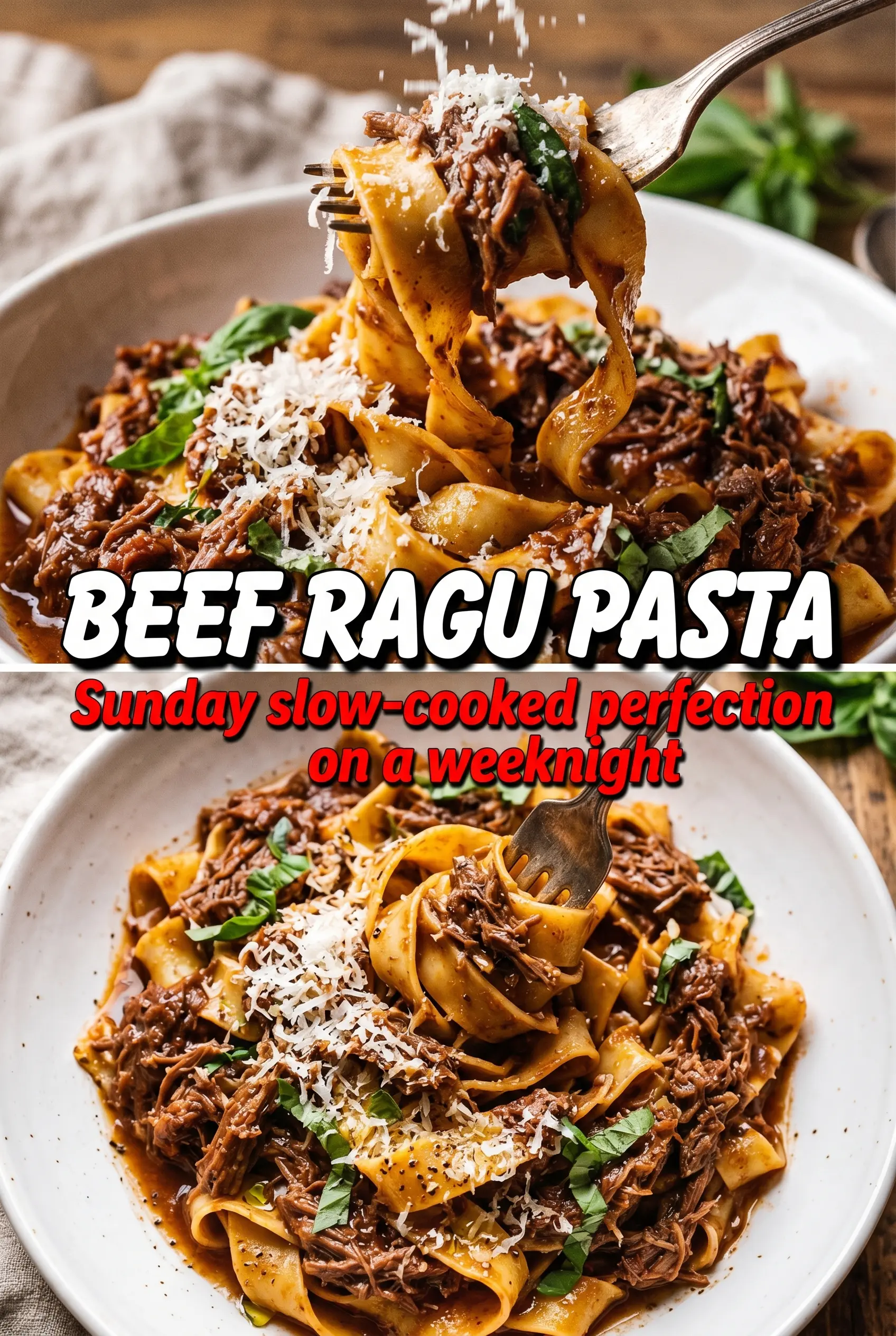
- Toss the pasta with the ragu until the noodles are well coated. Serve immediately, topped with fresh basil and generous parmesan.