Ground beef and rice skillet dinners earn their place because they hit that sweet spot between comforting and practical: savory beef, tender rice, and a tomato-kissed broth all cook in one pan without turning into a mushy mess. The rice comes out fluffy instead of sticky, and the beef stays seasoned all the way through, so every bite tastes like it was built on purpose.
The trick is starting with enough browning to give the skillet real flavor, then adding the rice only after the aromatics and seasoning have had a minute to wake up. Once the broth goes in, the lid stays put and the heat drops low. That steady simmer is what lets the rice cook evenly without scorching the bottom before the grains are tender.
Below, you’ll find the exact timing that keeps the rice from going gummy, plus a few swaps that still give you a solid weeknight dinner when your fridge isn’t cooperating.
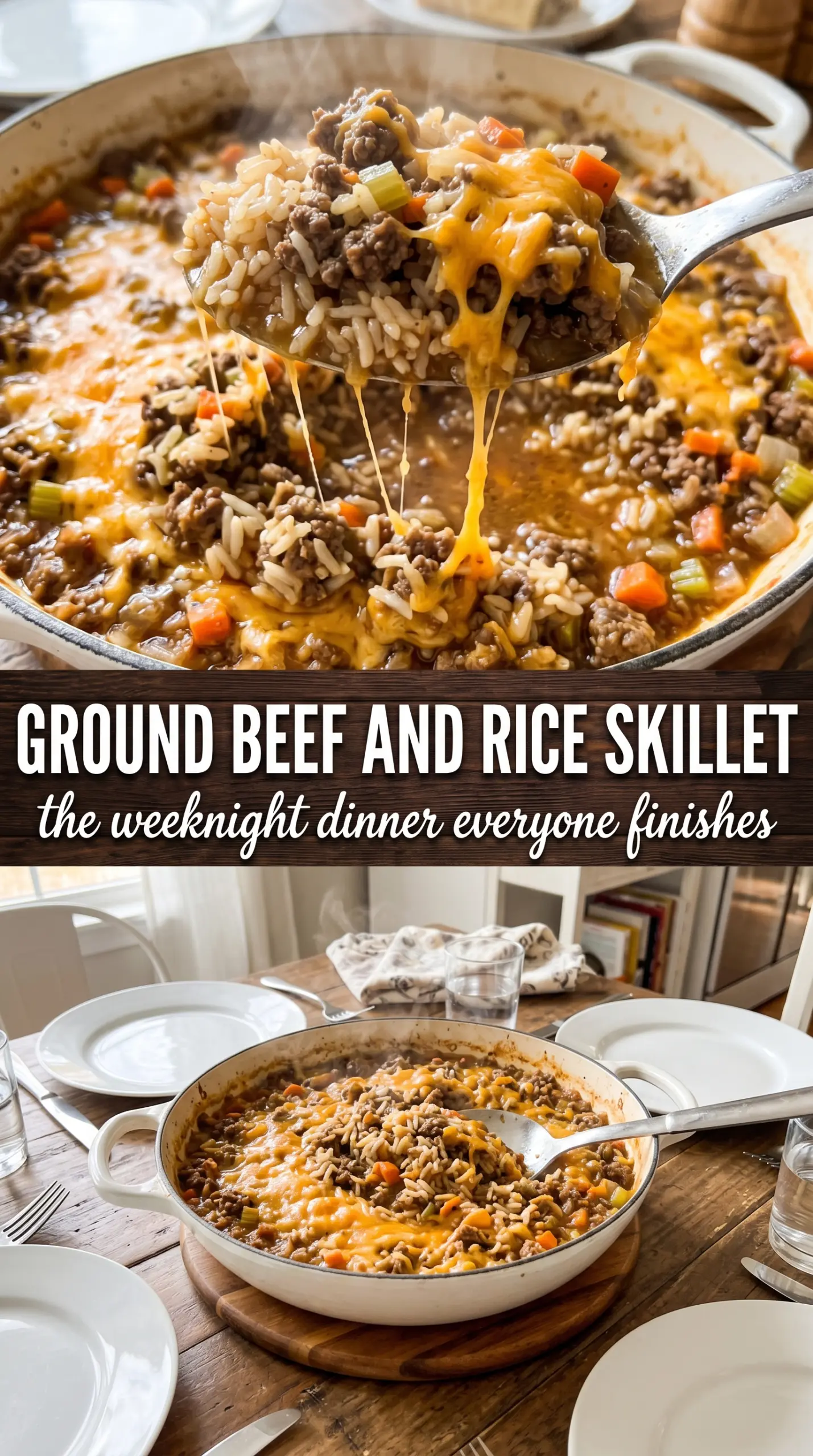
The rice cooked up fluffy, not mushy, and the beef had so much flavor from the onions and Worcestershire. I added the cheddar at the end like you said and it melted right into the skillet.
Save this ground beef and rice skillet for the nights when you want one pan, tender rice, and a skillet full of savory tomato broth.
The Part That Keeps the Rice Fluffy Instead of Gummy
The biggest mistake in a beef and rice skillet is treating it like a dump-and-stir dinner. Rice needs enough liquid to cook through, but it also needs a calm simmer and a tight lid so the steam can do its job. If the heat stays too high, the bottom dries out before the center is tender, and the whole pan starts tasting uneven.
Brown the beef with the onion and bell pepper first, then drain off excess fat before the rice goes in. That keeps the finished skillet from feeling greasy and gives the broth room to season the grains instead of just slicking the pan. The diced tomatoes add moisture and a little acidity, which helps the whole dish taste fuller than plain beef and rice.
- Long-grain white rice — This is the right rice for a skillet like this because it stays separate and fluffy. Short-grain rice turns softer and clumpier, which changes the texture of the dish.
- Beef broth — This does more than add salt. It seasons the rice from the inside, and water can’t replace that depth.
- Diced tomatoes — Use the can as written, juice and all. That liquid is part of the cooking balance, and draining it can leave you short on moisture.
- Worcestershire sauce — A small amount gives the skillet a meaty backbone. If you skip it, the dish still works, but it tastes flatter.
What Each Ingredient Is Actually Doing in This Recipe
- Primary ingredient (the star) — Quality matters most. Choose the best you can find.
- Cooking medium (oil, butter, or broth) — This carries flavors and prevents dryness.
- Seasonings (salt, pepper, spices, herbs) — Layer flavors so nothing overpowers. Build depth gradually.
- Aromatics (garlic, onion, herbs) — Cook with fat to bloom flavors. Become the foundation.
- Supporting ingredients — Complement the main ingredient without overpowering it.
- Sauce or liquid (if applicable) — Brings flavors together. Balance richness with acid.
- Acid (lemon, vinegar, wine, or other) — Brightens and prevents flat-tasting results.
- Final finish (garnish, glaze, or sauce) — Prevents one-dimensional taste and adds visual appeal.
Building the Skillet So Every Grain Cooks Evenly
Browning the Beef and Vegetables
Cook the ground beef with the diced onion and bell pepper over medium-high heat until the beef is no longer pink and the onion softens at the edges. You want some browning on the meat, not a pale steam-cooked look, because that browned fond becomes part of the sauce. If a lot of fat pools in the pan, drain it off before moving on or the finished rice can taste heavy.
Waking Up the Seasoning
Stir in the garlic, garlic powder, onion powder, Worcestershire, salt, and pepper and cook for about a minute. This short step matters because dry spices need heat and fat to bloom, and raw garlic needs just enough time to lose its sharp edge. If the garlic starts browning hard, the pan is too hot and the flavor will turn bitter, so pull the skillet back for a moment.
Cooking the Rice in the Broth
Add the uncooked rice, diced tomatoes, and beef broth, then bring the skillet to a boil before lowering the heat. Once it simmers, cover it and leave it alone for 20 minutes. Lifting the lid too often lets steam escape, and steam is what cooks the top layer of rice evenly.
Finishing with Cheese and Herbs
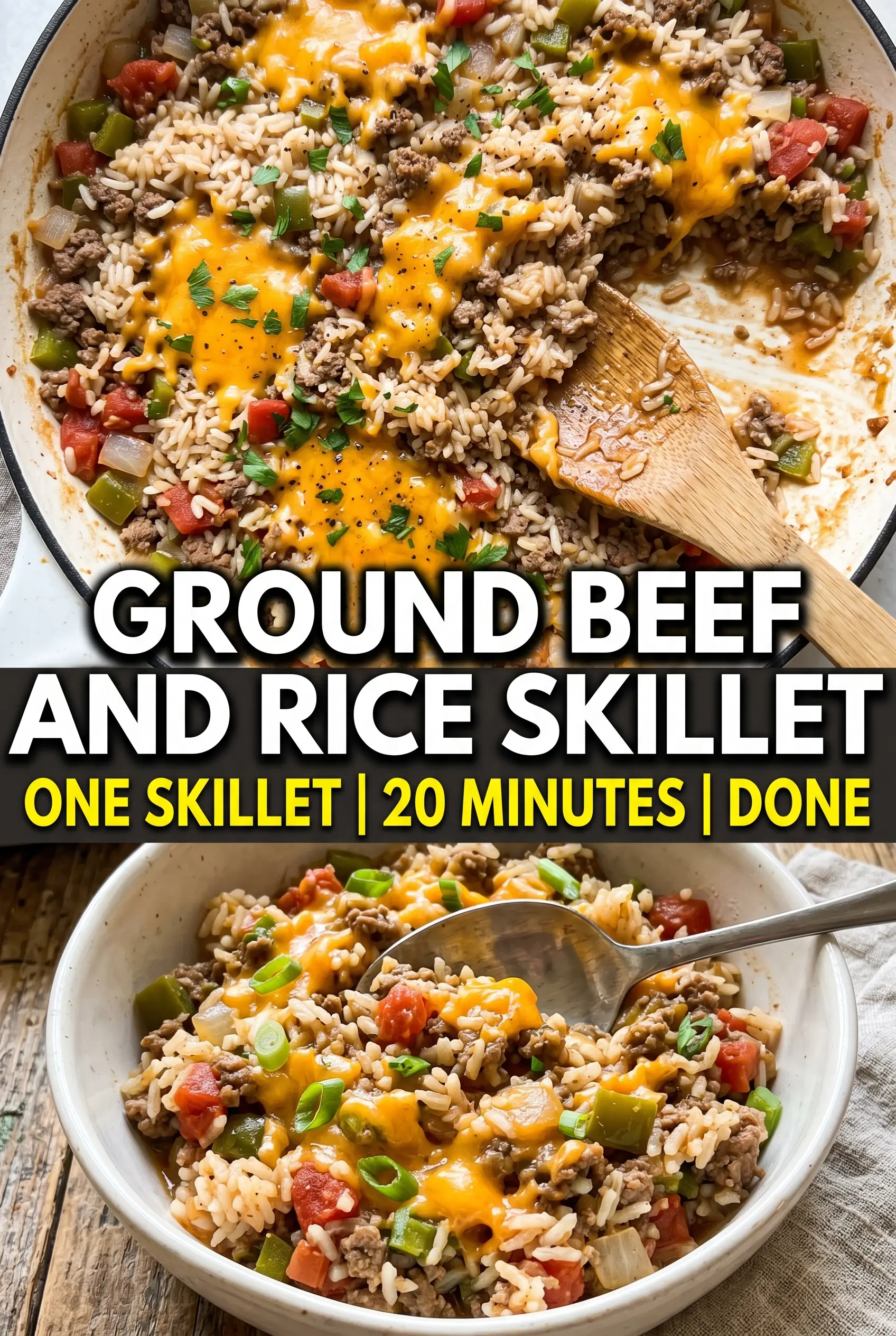
When the liquid is absorbed and the rice is tender, fluff it with a fork and taste for salt. If the pan still looks wet, give it another minute or two off the heat with the lid on rather than cranking the burner up. Add the cheddar, cover just until melted, and finish with parsley so the top stays creamy and the last bite tastes fresh instead of heavy.
How to Adapt This Skillet When Dinner Needs to Bend
Make it dairy-free
Leave off the cheddar or use a dairy-free shred if that fits your kitchen. The skillet already has plenty of body from the beef, tomatoes, and broth, so you won’t lose the main structure of the dish.
Swap in ground turkey
Ground turkey works, but it needs a little help because it has less fat and a milder flavor. Keep the Worcestershire and spices as written, and don’t skip the onion and bell pepper since they carry more of the savory note when the meat is leaner.
Use brown rice only if you adjust the timing
Brown rice needs more liquid and a longer simmer than this recipe gives it, so the timing won’t work as written. If you want to use it, expect a longer cook and add broth as needed; otherwise, stick with long-grain white rice for the texture this skillet was built around.
Stretch it with beans
Stir in a drained can of black beans or kidney beans near the end if you want a heartier pan with more servings. Add them after the rice has cooked so they warm through without turning the whole skillet muddy.
Storage and Reheating
- Refrigerator: Store in an airtight container for up to 4 days. The rice will firm up a bit as it sits, but the flavor holds well.
- Freezer: It freezes well. Cool completely, portion into containers, and freeze for up to 2 months.
- Reheating: Reheat gently on the stovetop or in the microwave with a splash of broth or water. The common mistake is blasting it dry, which turns the rice tough before the center warms through.
Answers to the Questions Worth Asking
Ground Beef and Rice Skillet
Ingredients
Equipment
Method
- Heat a large cast iron skillet over medium-high heat and cook the ground beef with the diced onion and diced green bell pepper until browned, about 6-8 minutes; drain excess fat (or leave only a thin coating). Visual cue: beef should be no longer pink and vegetables should be softened.
- Stir in the minced garlic, garlic powder, onion powder, Worcestershire sauce, salt, and pepper, then cook for 1 minute over medium-high heat, stirring constantly. Visual cue: the garlic should smell fragrant without browning.
- Add the long-grain white rice, diced tomatoes, and beef broth, then bring everything to a boil over high heat, about 3-5 minutes. Visual cue: you should see bubbling across the surface of the skillet.
- Reduce heat to low, cover, and cook for 20 minutes until the rice is tender and the liquid is absorbed. Visual cue: rice grains should look plump and broth should be mostly gone.
- Fluff the mixture with a fork and adjust seasoning with more salt and pepper if needed. Visual cue: the rice should look separated and evenly mixed with the beef.
- Sprinkle shredded cheddar over the top, cover the skillet for 1 minute until melted, then garnish with fresh parsley. Visual cue: cheddar should be glossy and fully melted.