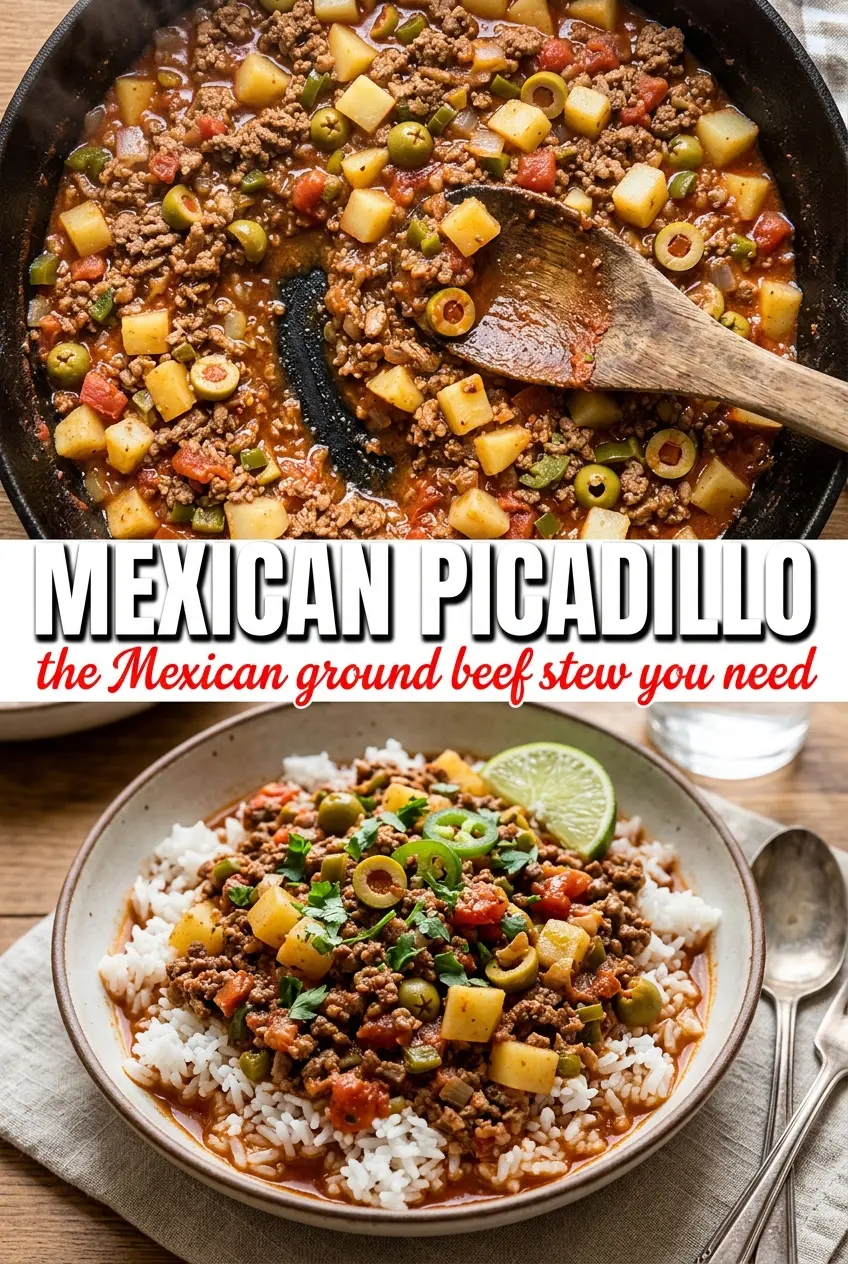
Mexican picadillo is the kind of skillet dinner that settles into a regular rotation fast. The beef turns savory and rich, the potatoes soak up the tomato broth, and the olives and capers cut through everything with briny little pops that keep each bite moving. Served over rice, it eats like a complete meal without feeling heavy or fussy.
What makes this version work is the balance between browning and simmering. The beef needs enough color to build depth, but the potatoes need a gentle simmer so they hold their shape instead of breaking down into the sauce. The tomatoes, broth, cumin, chili powder, and oregano make a loose braise, not a thick gravy, which is exactly why the olives and capers stand out instead of disappearing.
Below you’ll find the small details that matter most: how to keep the potatoes tender, when to add the briny ingredients so they stay bright, and what to swap if you’re working with what’s already in the pantry.
The potatoes stayed tender without turning mushy, and the olives with capers gave it that salty bite I was hoping for. I served it over rice and the sauce soaked in beautifully.
Love the briny olives, tender potatoes, and savory tomato broth in this Mexican picadillo? Save it to Pinterest for an easy ground beef dinner that reheats well and tastes even better the next day.
The Trick to Keeping the Potatoes Tender, Not Falling Apart
Picadillo lives or dies by the potato texture. Dice them small enough to cook through in the simmer, but not so small that they disappear into the sauce. Yukon golds are the right choice here because they hold their shape and still turn creamy at the edges, which gives the dish body without making it starchy.
The other place people lose this dish is the liquid. You want enough broth to cook the potatoes and create a saucy base, but not so much that the pan turns soupy. Once the cover comes on, keep the heat at a gentle simmer. A hard boil breaks down the potatoes too fast and leaves you with a muddy texture instead of distinct pieces of beef, potato, and tomato.
What the Olives and Capers Are Doing Here
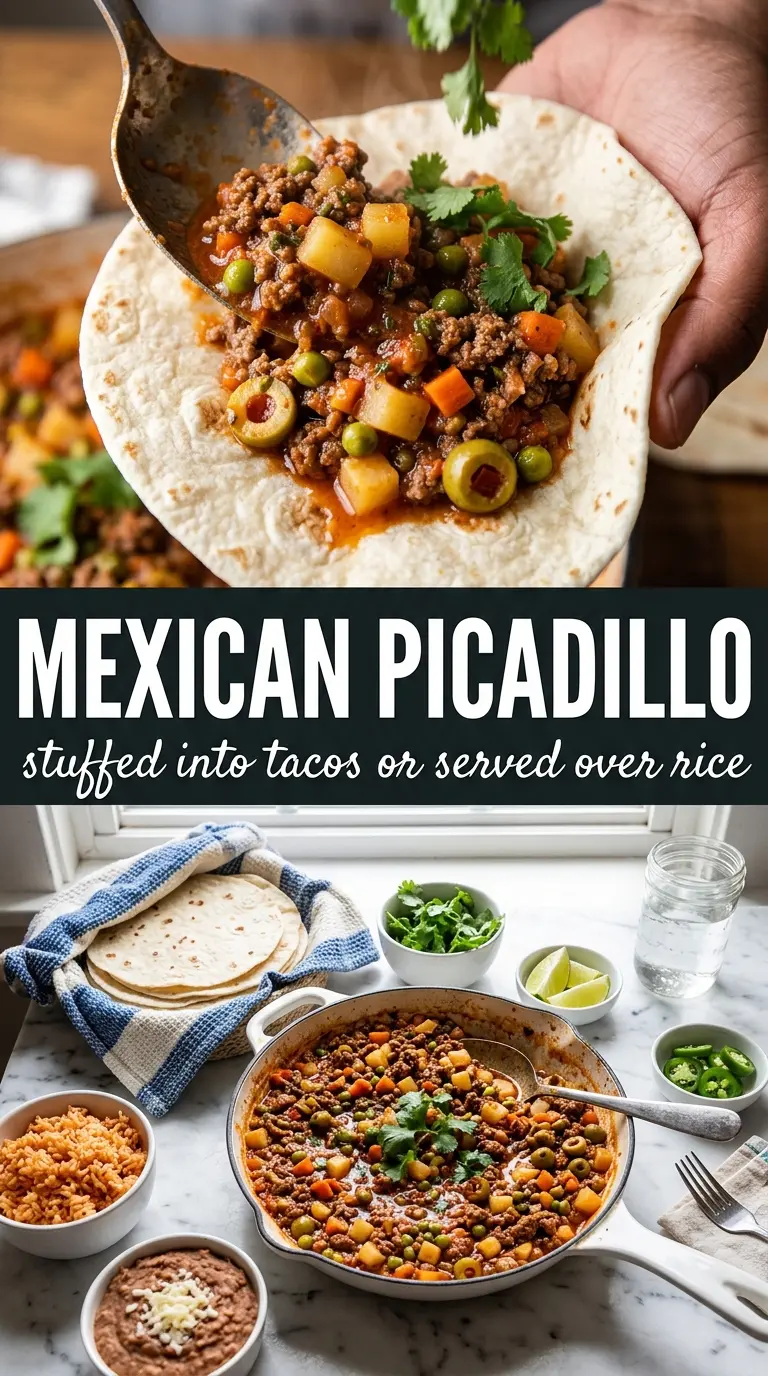
- Ground beef — Use beef with enough fat to brown well, but drain the excess after cooking so the finished dish doesn’t taste greasy. If you use very lean beef, add a touch more oil at the start or the pan can dry out before the aromatics soften.
- Yukon gold potatoes — These hold their shape better than russets and give you soft edges without turning grainy. Russets will work in a pinch, but they break down faster and make the sauce thicker and less defined.
- Roma tomatoes — Fresh tomatoes keep the broth bright and a little loose. Canned diced tomatoes are the best backup when tomatoes aren’t great, and they often give you a more consistent result than watery out-of-season fresh ones.
- Green olives and capers — These are the salty, briny accents that keep picadillo from tasting flat. Add them near the end so they stay punchy; if they simmer too long, their flavor spreads out and the dish loses that sharp finish.
- Cumin, chili powder, and oregano — This is the backbone of the seasoning. Toasting them briefly in the beef drippings wakes them up, and that minute in the pan matters more than adding more spice later.
Building the Skillet So the Sauce Stays Savory
Brown the Beef First
Start with a hot skillet and give the ground beef time to take on color before you stir too much. You want browned bits on the bottom of the pan, not gray crumbles steaming in their own moisture. If there’s a lot of fat left after browning, drain it off, but leave enough behind to cook the onion and bloom the spices.
Wake Up the Onion and Spices
Once the onion goes in, cook it until it softens and turns translucent at the edges. Garlic and dried spices only need about a minute in the hot pan; any longer and the garlic can scorch, which gives the whole dish a bitter edge. This is the point where the kitchen starts smelling like dinner instead of just browned meat.
Simmer Until the Potatoes Yield
After the tomatoes, potatoes, and broth go in, bring the pan to a boil, then lower it to a steady simmer and cover it. The potatoes are done when a knife slips in easily and the sauce has thickened just enough to coat a spoon. If the liquid evaporates too fast before the potatoes are tender, add a small splash of broth and keep going on medium-low rather than cranking up the heat.
Finish With the Briny Ingredients
Stir in the olives and capers only in the last few minutes. They need just enough heat to warm through and season the broth, not enough to lose their bite. Taste at the end before serving; the olives and capers bring salt, so the final adjustment is often more about pepper or a pinch of salt than anything else.
Three Ways to Bend This Picadillo Without Breaking It
Make it dairy-free and naturally gluten-free
This recipe already lands in both camps as written, which is part of why it’s such a reliable weeknight dinner. Just serve it with rice or warm corn tortillas and check that your broth is gluten-free if you’re using packaged stock.
Swap in ground turkey or ground chicken
Lean poultry works, but it needs a little help or the dish can taste flat. Add an extra tablespoon of oil at the start and keep the seasoning full, since turkey and chicken don’t bring the same rich background flavor as beef.
Add carrots or peas for a sweeter edge
A handful of diced carrots can go in with the potatoes, and peas should wait until the very end. Carrots lean the dish a little sweeter and more rustic, while peas add color without changing the texture much.
Storage and Reheating
- Refrigerator: Store in an airtight container for up to 4 days. The potatoes absorb more broth as it sits, so the texture gets a little thicker and deeper the next day.
- Freezer: It freezes well for up to 2 months. Cool it completely first, then freeze in portioned containers; thaw overnight in the fridge before reheating.
- Reheating: Warm gently on the stovetop over medium-low with a splash of broth or water. High heat can make the beef dry and the potatoes break down, especially after the dish has been chilled.