Parmesan meatloaf lands with a deeper, saltier savor than the plain version most people grew up with, and the free-form loaf gives you more of the best part: a browned, cheesy crust on top and along the edges. The slices hold together cleanly, but they’re still tender, with enough garlic, parsley, and Parmesan running through the middle that every bite tastes seasoned all the way through.
The trick here is keeping the mixture just combined. Overworking ground beef turns the loaf dense, and that’s the fastest way to lose the soft texture that makes meatloaf worth making. The other detail that matters is the garlic butter brush. It doesn’t just add flavor; it helps the Parmesan on top melt into a golden finish instead of drying out in the oven.
Below, I’ve included the small timing and mixing choices that keep this loaf juicy, plus a few ways to adapt it without losing that cheesy, Italian-American feel.
The Parmesan melted into the loaf instead of just sitting on top, and the garlic butter kept the edges from drying out. I sliced it after 10 minutes and it held together perfectly.
Love the golden Parmesan crust and garlic butter finish? Save this Parmesan Meatloaf for an easy dinner that slices cleanly and tastes even better the next day.
The Reason This Loaf Stays Tender Instead of Dense
Meatloaf gets heavy when the meat is packed too tightly or the pan shape traps moisture without giving the top a chance to brown. A free-form loaf solves both problems. Hot air moves around the sides, the Parmesan on top melts into a thin crust, and the edges pick up color before the center overcooks.
The milk and eggs are there for more than binding. They keep the breadcrumbs hydrated so the loaf bakes up soft instead of crumbly. If the mixture feels wet before it goes in the oven, that’s normal. Breadcrumbs keep absorbing as it rests and bakes, which is why this loaf slices well after a 10-minute rest.
What the Parmesan, Breadcrumbs, and Garlic Are Each Doing
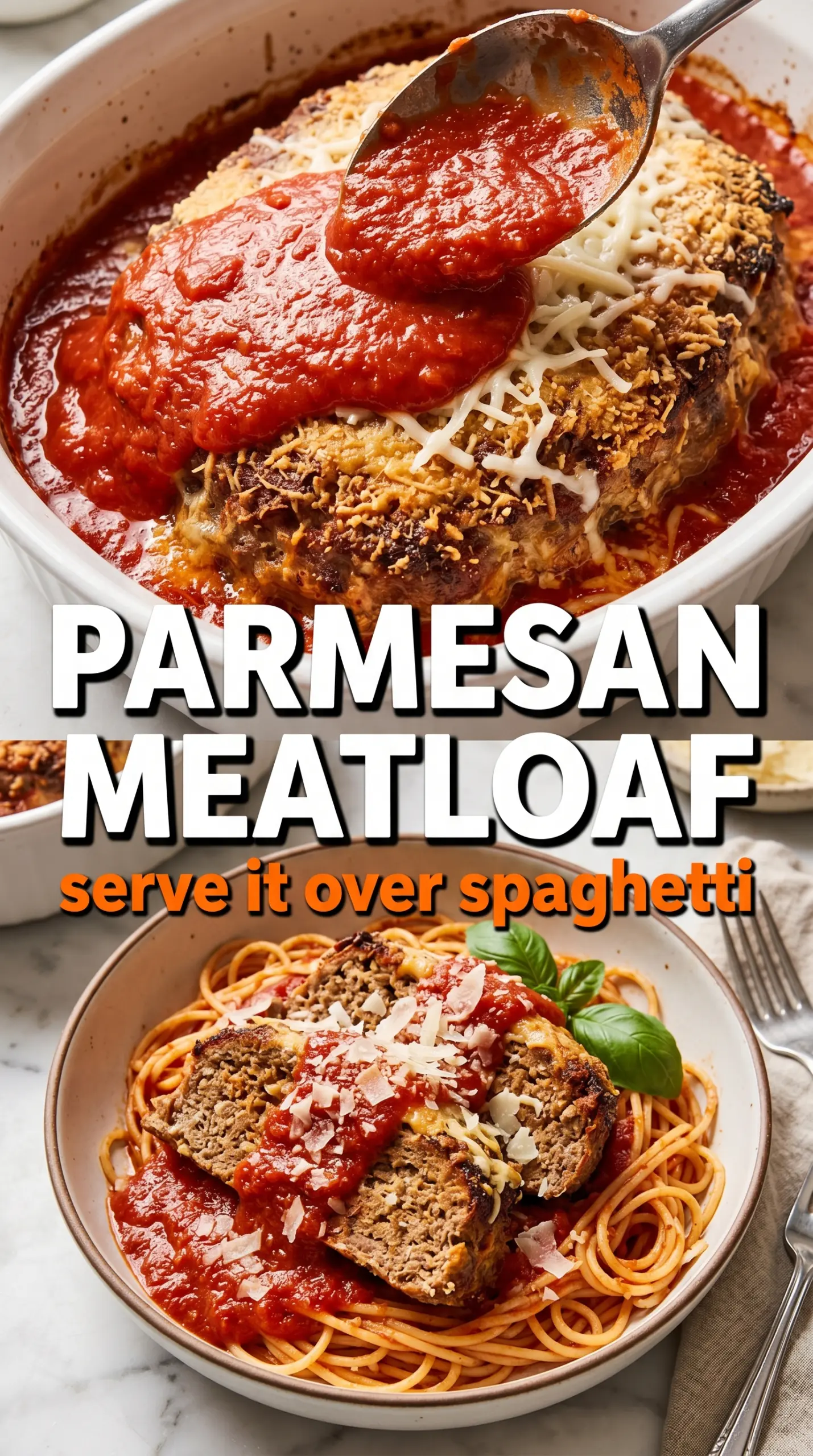
- Parmesan cheese — This does two jobs: it seasons the meat throughout and helps form that browned, savory top. Freshly grated Parmesan melts better and tastes sharper than the pre-shredded canister kind, which often contains anti-caking agents.
- Italian breadcrumbs — These soften the loaf and keep it from turning mealy. Plain breadcrumbs work in a pinch, but Italian-style crumbs add built-in seasoning and better texture.
- Whole milk — The fat content helps the loaf stay rich and tender. Lower-fat milk works, but the finished texture is a little less plush.
- Garlic butter brush — This is what gives the top its glossy, finished look. Brush half on early so the Parmesan starts to melt, then add the rest near the end so the garlic stays fragrant instead of tasting scorched.
- Worcestershire sauce — It adds a deep savory note that keeps the loaf from tasting flat. There isn’t a perfect substitute, but a small splash of soy sauce will bring similar salt and umami if that’s what you have.
Building the Loaf So the Center Cooks Through Without Drying Out
Mixing Without Packing the Meat
Combine everything with your hands just until the ingredients are evenly distributed. The mixture should look cohesive but still loose enough that it doesn’t fight back when you shape it. If you squeeze and knead it like bread dough, the finished loaf turns tight and rubbery. Stop as soon as the breadcrumbs disappear into the beef.
Shaping for Maximum Browning
Form the mixture into a free-form loaf on a parchment-lined baking sheet. Keep the shape even from end to end so the ends don’t dry out before the center reaches temperature. A loaf that’s too tall takes longer to cook and can crack down the middle before the top gets the color you want. Aim for a compact oval, not a thick brick.
Finishing with Cheese and Garlic Butter
Press the extra Parmesan over the top, then brush on half the garlic butter before it goes into the oven. That first brush helps the cheese melt into the surface instead of sliding off. At the 40-minute mark, add the remaining butter so the garlic stays bright and the top turns glossy instead of dusty. Bake until the center reaches 160°F, then rest it before slicing or the juices will run out onto the cutting board.
How to Adapt This Parmesan Meatloaf Without Losing the Good Part
Make It Gluten-Free With a Clean Slice
Swap the Italian breadcrumbs for certified gluten-free breadcrumbs or crushed gluten-free crackers. The texture stays close to the original, though crackers can make the loaf a little firmer. Add them gradually if your mixture already feels tight, since gluten-free crumbs can absorb a bit differently.
Use Ground Turkey for a Lighter Loaf
Ground turkey works well here, but it needs the extra moisture from the milk and garlic butter or it can bake up lean and dry. Use turkey that isn’t extra-lean if you can, and check the temperature a little earlier. The flavor stays cheesy and savory, though it won’t have the same richness as beef.
Add Heat Without Changing the Structure
A pinch of red pepper flakes in the meat mixture gives the loaf a little warmth without taking over. It’s an easy upgrade if you like the Parmesan-garlic combination but want more backbone. Keep the amount modest so the garlic butter topping still tastes like the main event.
Storage and Reheating
- Refrigerator: Store slices in an airtight container for up to 4 days. The Parmesan flavor gets even more pronounced after a night in the fridge.
- Freezer: This freezes well. Wrap individual slices tightly and freeze for up to 2 months, then thaw in the refrigerator before reheating.
- Reheating: Warm slices covered in a 325°F oven with a splash of water or broth in the pan to keep them from drying out. The microwave works for a quick lunch, but use lower power and short bursts so the edges don’t turn tough.
Questions I Get Asked About This Recipe
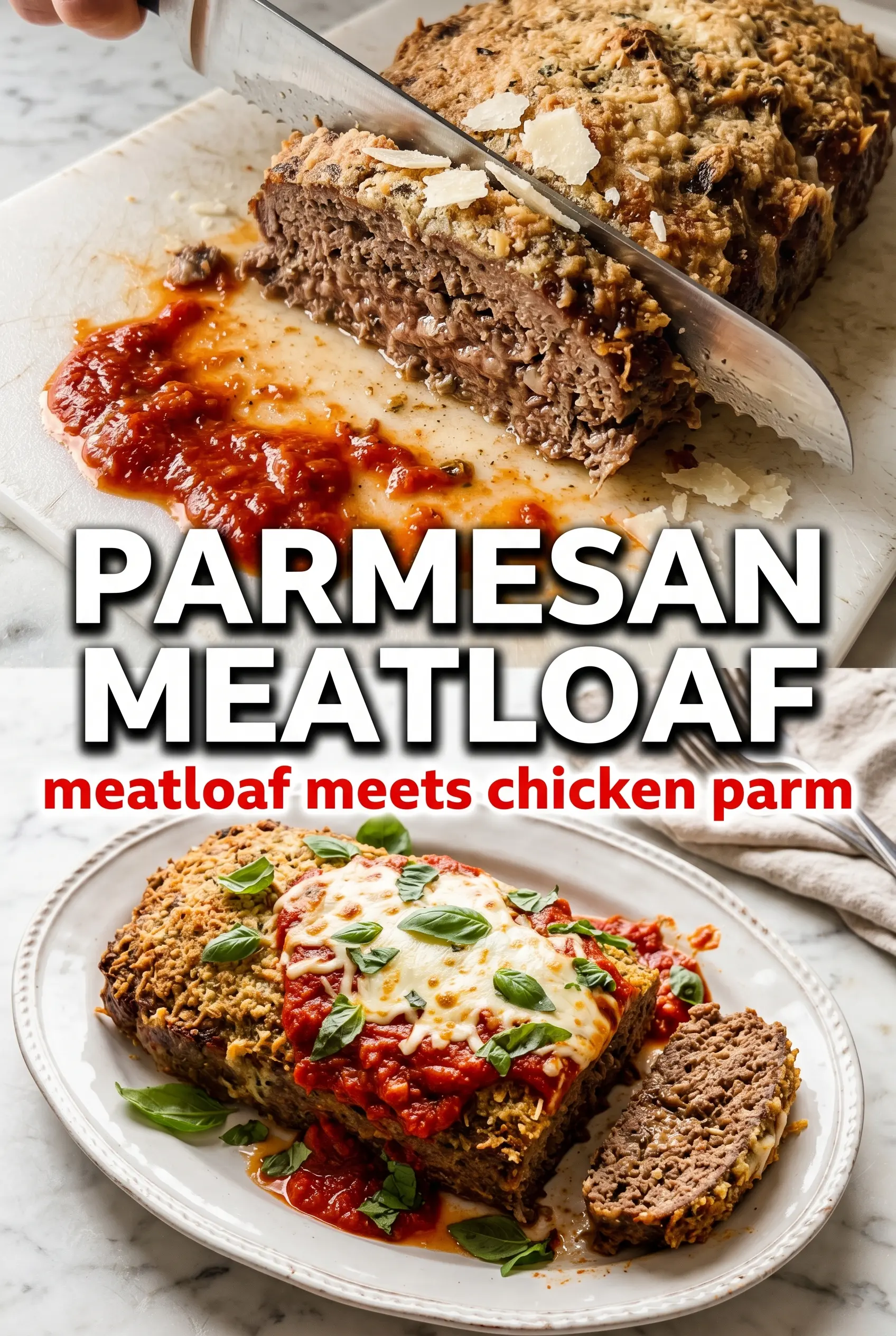
Parmesan Meatloaf
Ingredients
Equipment
Method
- Preheat the oven to 350°F and line a baking sheet with parchment for easy release and even browning.
- Combine ground beef, grated parmesan (plus extra for top), Italian breadcrumbs, eggs, whole milk, minced garlic, chopped parsley, Italian seasoning, Worcestershire sauce, and salt and black pepper until just mixed.
- Shape the mixture into a free-form loaf on the lined baking sheet so more surface area can brown with the parmesan.
- Press extra parmesan on top and brush with half the garlic butter for a cheesy, golden crust.
- Bake 55–65 minutes total until the internal temperature reaches 160°F, adding a second brush at the 40-minute mark.
- At the 40-minute mark, brush with the remaining garlic butter so the loaf finishes glossy and fragrant.
- Rest the meatloaf 10 minutes before slicing to help it hold together while the parmesan sets.
- Slice and garnish with extra fresh parsley for a bright finish.