Plump pasta shells, tender ground beef, and a cheddar cream sauce come together in the Instant Pot with the kind of comfort that lands on the table fast and still tastes like you paid attention. The shells hold onto the sauce instead of letting it slide off, and the beef gives every bite a hearty, savory base. It’s the sort of dinner that disappears quietly because everyone is too busy going back for one more spoonful.
The trick here is using just enough liquid for the pasta to cook without turning the whole pot soupy, then finishing with cream and cheddar after the pressure cooking is done. That keeps the sauce smooth instead of grainy and lets the cheese melt into the broth the way it should. Browning the beef first matters too; it builds flavor before the pasta ever goes in, which is what keeps this from tasting flat.
Below, I’m walking through the small details that make this recipe work in a pressure cooker, plus the swaps I’d use when I want to change it up without losing that creamy, cozy finish.
The shells cooked up tender but not mushy, and the cheddar sauce coated everything instead of turning gluey. I followed the quick release exactly and it came out perfect.
Save this Instant Pot Creamy Shells and Beef for a fast one-pot dinner with tender pasta, browned beef, and a smooth cheddar finish.
The One Step That Keeps the Sauce From Turning Starchy
Pressure cooker pasta can go wrong when there’s too much liquid, too much stirring after the cook, or not enough fat left in the pot to carry the cheese. Shells release starch as they cook, and that’s helpful up to a point; it thickens the sauce and helps everything cling together. But if the broth is excessive, the starch has nowhere to go and you end up with a thin, cloudy sauce instead of something creamy.
The other common problem is dumping the cheese in while the pot is still boiling hard. High heat can make cheddar seize and turn grainy. Let the pressure drop, stir in the cream first, then add the cheese off the heat so it melts into a smooth sauce instead of separating.
- Quick release matters here — it stops the shells from overcooking. Natural release keeps pasta cooking in the residual heat, which is how you end up with soft, broken shells.
- Heavy cream finishes the texture — half-and-half can work, but the sauce will be looser and a little less rich.
- Sharp cheddar brings the flavor — mild cheddar melts fine, but it tastes flatter. Shred it yourself if you can, since pre-shredded cheese carries anti-caking agents that can make the sauce a little less silky.
What Each Ingredient Is Actually Doing in the Pot
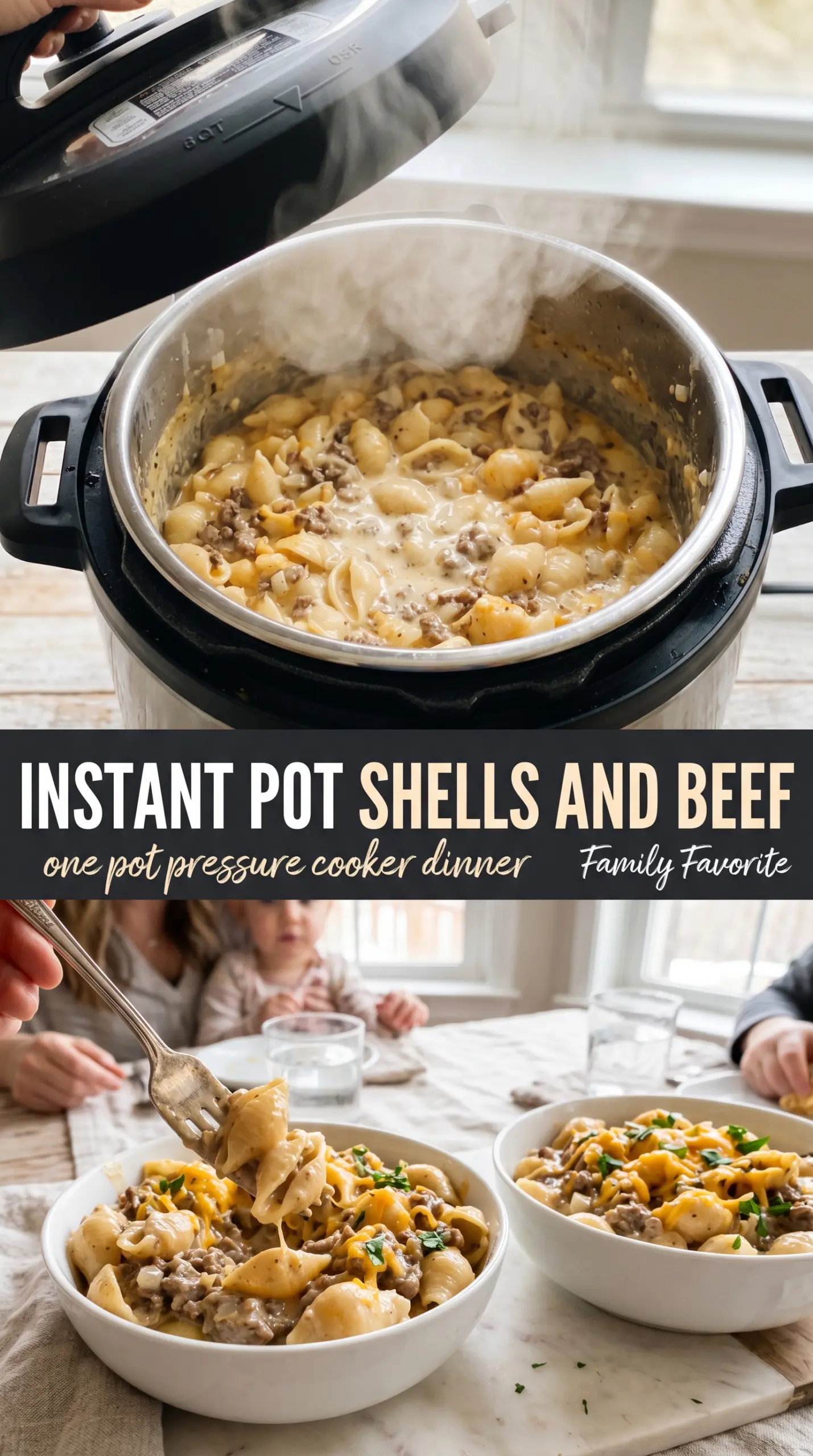
- Ground beef — This is the backbone of the dish. An 80/20 blend gives the best flavor, but leaner beef works if you drain it well after browning.
- Onion and garlic — They build the savory base before pressure cooking starts. Don’t skip the sauté step, because raw aromatics added straight to the pot taste duller and less rounded.
- Medium shell pasta — Shells are ideal because they trap the sauce inside and outside each piece. Smaller shapes can overcook faster; larger shells may need a little more liquid and time.
- Diced tomatoes — They add acidity and keep the cream sauce from tasting heavy. Use the liquid in the can; it helps the pasta cook and deepens the sauce.
- Beef broth — This is where the pasta gets its cooking liquid and extra flavor. Water will work in a pinch, but the sauce will taste thinner and less savory.
- Heavy cream and sharp cheddar — These are the finish. Heavy cream gives body, and cheddar gives the sauce its familiar, melty pull. Add both after pressure cooking so they stay smooth.
Building the Sauce After the Pressure Comes Off
Browning the Beef First
Cook the ground beef with the diced onion until the meat has lost its pink color and the onion is soft and starting to turn translucent. If there’s a lot of grease in the pot, drain it off before adding the garlic. Garlic only needs about 30 seconds in the hot pan; any longer and it can turn harsh and bitter, which carries through the whole dish.
Cooking the Shells Under Pressure
Once the pasta, tomatoes, broth, and seasonings are in, stir well and scrape the bottom of the pot so nothing sticks. Seal the lid and cook on high pressure for 5 minutes. If your shells are a little uneven in size, that’s fine, but don’t leave any pasta clumped above the liquid line or those pieces will stay hard.
Finishing With Cream and Cheese
Quick release the pressure carefully, then stir in the heavy cream before adding the cheddar. The sauce should look loose at first; it tightens as the cheese melts and the pasta rests for a couple of minutes. If it still looks thin, give it that short rest instead of turning the heat back on, because the sauce thickens as the starch settles and the cheese emulsifies.
Swap in ground turkey for a lighter version
Ground turkey works well if you want a leaner dish, but it needs the onion, garlic, and cheddar to carry more of the flavor. Use a little extra olive oil for the sauté if the turkey is very lean, and expect a softer, less beefy finish.
Make it gluten-free with a sturdy pasta swap
Use a gluten-free shell pasta that holds its shape well under pressure, not a delicate rice blend that turns soft fast. Keep the cook time the same only if the package says it can handle it; some gluten-free pastas need a shorter pressure window and a fast release to stay intact.
Add vegetables without watering down the sauce
Frozen peas, chopped spinach, or diced bell pepper fit in well, but add tender vegetables at the end so they don’t overcook. If you want mushrooms or zucchini, sauté them with the onion first so they lose moisture before the pressure step.
Storage and Reheating
- Refrigerator: Store for up to 4 days in an airtight container. The sauce will thicken as it chills, and the pasta will absorb some of the liquid.
- Freezer: It freezes, but the creamy sauce can separate a little after thawing. For the best texture, freeze in portions and reheat gently with a splash of broth or cream.
- Reheating: Warm it on the stovetop over low heat or in the microwave at medium power, stirring often. High heat is what breaks the sauce and turns the pasta mushy, so add a spoonful of liquid before reheating if it looks tight.
Questions I Get Asked About This Recipe
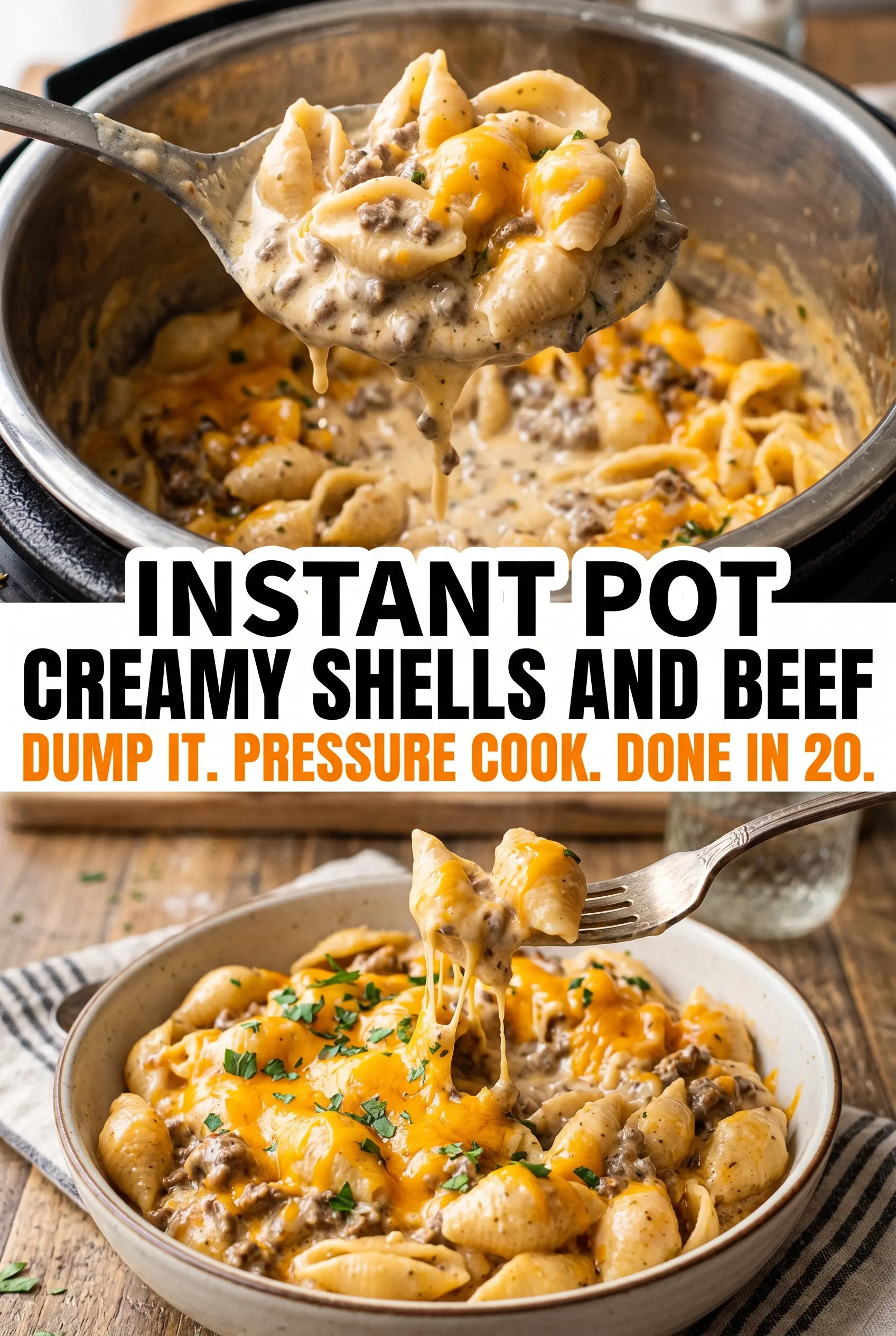
Instant Pot Creamy Shells and Beef
Ingredients
Equipment
Method
- Set the Instant Pot to Sauté and brown the ground beef with diced onion until the meat is no longer pink, about 5 minutes. Drain excess fat.
- Stir in the minced garlic and cook for 30 seconds. Look for a fragrant aroma without browning.
- Add the uncooked medium shell pasta, diced tomatoes, beef broth, Italian seasoning, smoked paprika, salt, and pepper, then stir well to combine. Scrape the bottom so nothing sticks.
- Seal the lid and cook on High Pressure for 5 minutes. The valve should come to pressure before counting the cook time.
- Carefully quick release the pressure and open the lid. You should hear the pressure release stop and the pin drop.
- Stir in the heavy cream and shredded sharp cheddar until the sauce is smooth and creamy. Continue stirring until no cheese streaks remain.
- Let the pasta sit for 2 minutes to thicken. The sauce should look slightly thicker and cling to the shells.
- Garnish with fresh parsley and serve immediately. Top as desired with extra shredded cheese if you want.