Golden pork schnitzel has a way of disappearing the second it hits the table. The crust should be light, crisp, and full of tiny browned ridges that shatter when you cut into it, while the pork underneath stays tender and juicy from the quick fry. A squeeze of lemon at the end wakes everything up and keeps the whole dish from feeling heavy.
The trick is getting the cutlets thin enough before they ever meet the oil. Once pork loin is pounded to an even 1/4-inch thickness, it cooks fast enough to stay moist while the breadcrumb coating turns deeply golden. I also like to season the breadcrumbs, not just the meat, because the crust is where most of the flavor lands. The shallow fry matters too — enough oil to crisp every edge, but not so much that the schnitzel starts to swim and soften.
Below, you’ll find the timing cues that keep the coating intact, the small details that make the crust crisp instead of greasy, and a few useful swaps for when you need to work with what’s already in the kitchen.
The breadcrumb crust stayed crisp all the way to the last bite, and the lemon at the end made the pork taste brighter instead of greasy. I followed the frying time exactly and got that deep golden color without overcooking the meat.
Crispy pork schnitzel with lemon and parsley is one to pin for the nights when you want a shatteringly crunchy cutlet and almost no cleanup.
The Coating Fails When the Pan Is Wrong, Not the Breadcrumbs
Pork schnitzel only gets that brittle, even crust when the oil is hot enough before the meat goes in. If the pan is still warming up, the breading drinks oil and turns sandy instead of crisp. If the heat is too high, the breadcrumbs brown before the pork has time to cook through, which leaves you with a dark shell and dry meat.
Medium-high heat and a shallow layer of oil give you the sweet spot. You want the oil shimmering, not smoking, and the schnitzel should sizzle the second it touches the pan. That fast, lively fry is what keeps the crust attached and gives the cutlet its signature lift from the pan.
- Thin-cut pork loin chops — Pork loin is lean and mild, which is exactly why it works here. Pound it to an even 1/4 inch so the meat cooks in the same window that the crust turns golden.
- Fine breadcrumbs — Fine crumbs cling better than coarse ones and give the classic uniform crust. Panko works if you want a bigger crunch, but the finish will be more jagged and airy than traditional schnitzel.
- Egg and milk — The egg is the glue, and the milk loosens it just enough to coat the pork without creating thick clumps. If you skip the milk, the egg layer can get too heavy and pull the breadcrumbs off in patches.
- Oil for shallow frying — Use a neutral oil with a higher smoke point, like vegetable or canola. Olive oil is not the best choice here because it can smoke before the coating browns properly.
What Each Ingredient Is Actually Doing in This Pork Dish
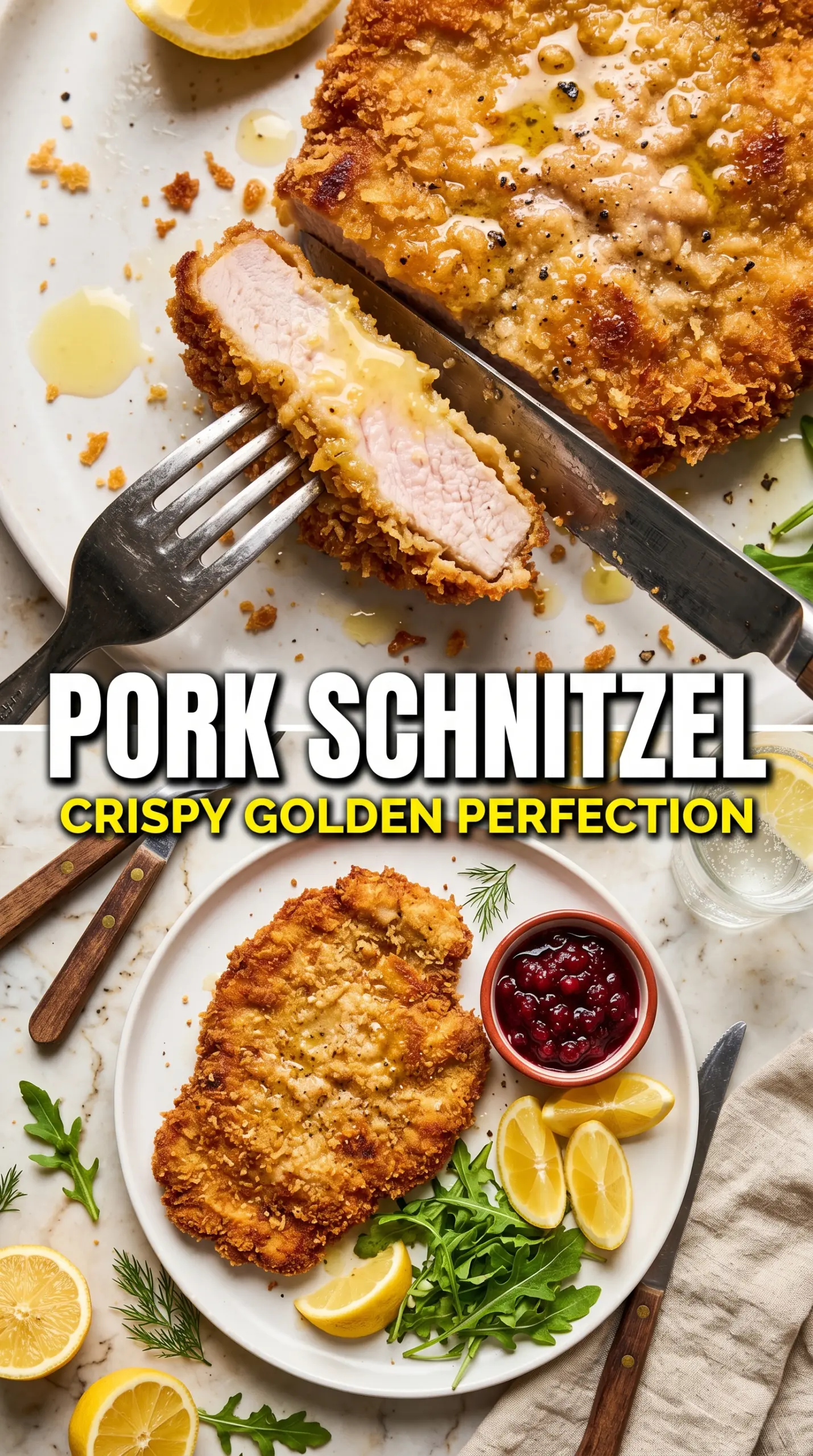
- Pork (cut properly for the method) — Pat dry so it browns instead of steams. Even thickness ensures uniform cooking.
- Oil or butter (the browning medium) — High-heat oil essential for proper searing. Creates pan flavor.
- Seasonings (salt, pepper, spices) — Build flavor boldly. Pork carries the entire profile.
- Aromatics (garlic, onion, herbs) — Cook with fat to bloom flavors. Become the foundation.
- Sauce or liquid (broth, cream, or glaze) — This keeps lean pork from drying. Balance richness with acid.
- Vegetables (if using) — Layer by cooking time so everything finishes together.
- Acid (vinegar, wine, or citrus) — This brightens sauce and prevents heavy flavor.
- Proper doneness (145°F with slight pink center) — Pork is safe here and stays juicy. Higher temps dry it out.
Building a Cutlet That Fries Crispy Instead of Greasy
Seasoning the Pork First
Salt the pounded cutlets before they go into flour so the meat itself tastes seasoned, not just the crust. A light, even coating of pepper helps too, but don’t bury the pork under so much seasoning that it clumps under the breading. If the cutlets look wet after pounding, blot them dry with paper towels first; excess surface moisture makes the flour paste up.
The Three-Dish Dredge
Set up the flour, egg mixture, and breadcrumbs in a line so each cutlet moves cleanly from one dish to the next. Shake off the extra flour before the egg, then let the egg drip briefly before the crumbs. Press the breadcrumbs on firmly with your hands so the coating bonds to the pork; loose crumbs fall off in the pan and leave bare spots.
Frying in a Shallow Layer of Oil
Use enough oil to come about 1/4 inch up the side of the skillet. When the schnitzel hits the pan, it should sizzle steadily but not violently. Fry for 2 to 3 minutes per side until the crust is deep golden and the pork feels firm when pressed lightly with tongs. If the crust is darkening too fast, lower the heat right away; if it barely colors, give the oil another minute before the next batch.
The Lemon-and-Parsley Finish
Drain the schnitzel briefly on paper towels, then serve it right away. The crust softens as it sits, so this is not a dish to hold for long. Lemon wedges and parsley cut through the richness and make each bite taste brighter, which is exactly what fried cutlets need.
How to Adapt Pork Schnitzel When You Need a Different Pantry Path
Gluten-Free Schnitzel
Swap the all-purpose flour for a gluten-free flour blend and use certified gluten-free breadcrumbs. The crust will still crisp up nicely, but it may brown a little faster, so keep the heat moderate and watch the first batch closely.
Extra-Crunch Panko Version
Use panko in place of the fine breadcrumbs for a lighter, louder crunch. The crust will be less compact and a little more rustic, which is great if you like visible crumb texture on the outside of the cutlet.
Lighter Pork Cutlets
If you only have pork chops with a little more fat around the edge, trim the thick exterior fat before pounding. The schnitzel will still fry up crisp, but trimming keeps the edges from curling too much in the pan.
Storage and Reheating
- Refrigerator: Store leftovers for up to 3 days. The crust will soften in the fridge, but the flavor holds up well.
- Freezer: Freeze cooked schnitzel in a single layer, then wrap tightly once solid. It freezes well, though the coating won’t be quite as crisp after thawing.
- Reheating: Reheat on a wire rack in a 375°F oven until hot and re-crisped, about 10 to 12 minutes. Skip the microwave if you want the crust to stay crunchy, because steam is what turns it limp.
Answers to the Questions Worth Asking
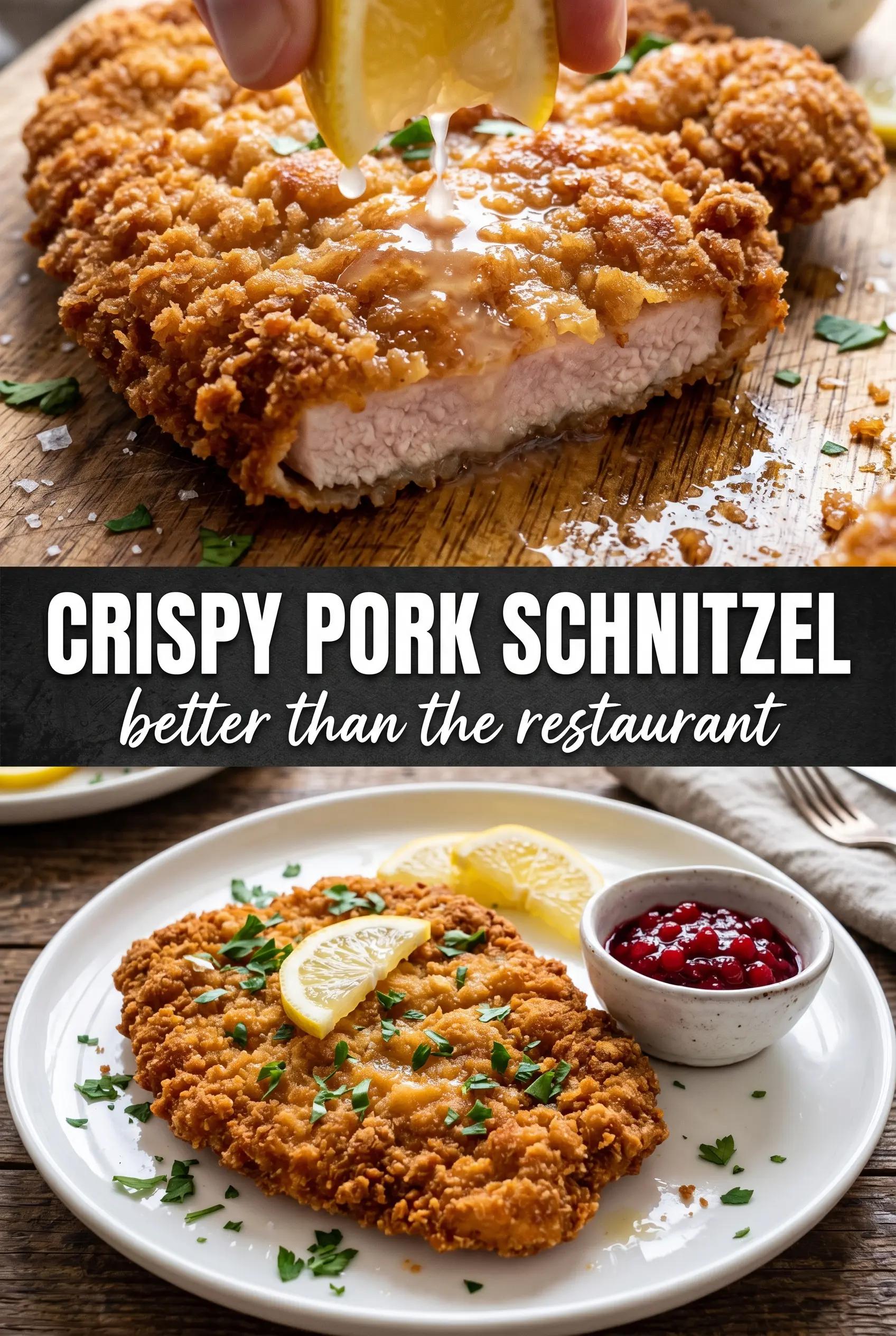
Pork Schnitzel
Ingredients
Equipment
Method
- Season the pounded pork cutlets generously with salt and pepper. Visual cue: the surface looks evenly speckled.
- Set up three shallow dishes with all-purpose flour, beaten eggs mixed with milk, and fine breadcrumbs mixed with garlic powder and salt. Visual cue: each station is separate and ready for dredging.
- Dredge each cutlet in flour, then dip in the egg mixture, then coat in breadcrumbs, pressing firmly for an even crust. Visual cue: the breadcrumbs cling in a uniform layer with no bare spots.
- Heat 1/4 inch of oil in a large skillet over medium-high heat until shimmering. Visual cue: the oil looks glossy and produces light ripples.
- Fry the schnitzels 2–3 minutes per side until deep golden brown, working in batches and not crowding the pan. Visual cue: the crust turns sharply browned and sounds a little crisp as it fries.
- Drain the schnitzels briefly on paper towels, then serve immediately. Visual cue: the crust stays crisp rather than steaming.
- Serve with lemon wedges and fresh parsley. Visual cue: lemon is ready to be squeezed over the top.