
Mexican beef and rice soup lands in that sweet spot between comforting and practical. The broth turns a deep tomato red, the rice cooks right in the pot, and every spoonful brings together savory beef, sweet corn, and the gentle heat from green chiles. It eats like a full meal, not a starter, which is exactly why it ends up back on the table when dinner needs to happen without a lot of fuss.
The trick here is building flavor in layers instead of dumping everything in at once and hoping the broth carries the dish. Browning the beef with the onion gives you a base with real depth, and the tomatoes, Rotel, and chiles make the broth bright without tasting flat. Long-grain white rice works best because it stays fluffy instead of turning the pot starchy and heavy.
Below, I’ll walk through the detail that keeps the rice tender, the ingredient swaps that still make sense, and the one thing to watch if you plan on leftovers.
The rice stayed tender without getting mushy, and the broth had way more flavor than I expected from such a simple ingredient list. I finished mine with lime and cotija, and it tasted like something simmered all afternoon.
Save this Mexican beef and rice soup for the nights when you want a one-pot dinner with a rich tomato broth and fluffy rice.
The Part That Keeps the Rice Tender Instead of Sticky
The biggest mistake in beef and rice soup is letting the rice simmer too long in a pot that’s still aggressively boiling. Rice keeps absorbing liquid as it sits, which means the texture can go from fluffy to swollen and heavy fast. This recipe avoids that by bringing the broth to a boil first, then dropping the heat once the rice goes in so it cooks at a gentler pace.
Another thing that helps is using long-grain white rice instead of a short-grain variety. Long-grain rice holds its shape better, so the soup stays brothy rather than turning into a thick rice stew. If the pot looks a little looser than you expect before the rice goes in, that’s fine; the grains will take up plenty of liquid as they cook.
What Each Ingredient Is Actually Doing in the Pot
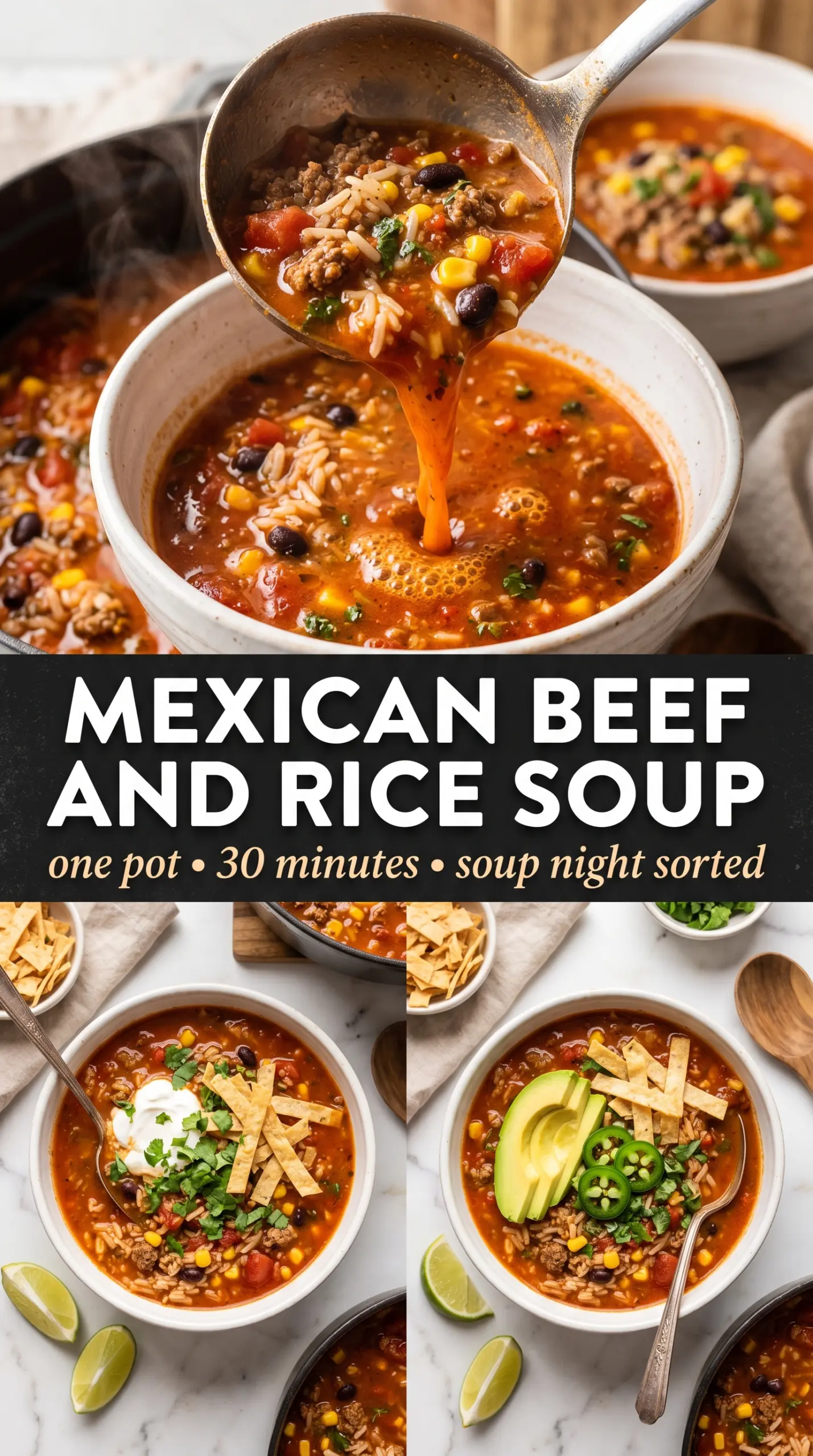
- Ground beef — This gives the soup its backbone and enough fat to carry the spices. I use a regular 80/20 or 85/15 blend and drain the excess after browning; that leaves flavor without making the broth greasy.
- Rotel and diced tomatoes — These build the tomato base and bring acidity, body, and a little heat. Rotel adds more punch than plain diced tomatoes, so if you swap it out, add a pinch more chili powder and a bit of chopped jalapeño or extra green chiles.
- Green chiles — They don’t make the soup spicy-hot; they give it that unmistakable Southwest depth. Canned diced green chiles are the easy, dependable choice here.
- Long-grain white rice — This is the ingredient that changes the texture of the whole soup. Don’t replace it with instant rice unless you’re willing to shorten the simmer time a lot, and avoid brown rice unless you extend the cook time and add more broth.
- Beef broth — Use a broth you’d actually drink on its own, because it’s the liquid the rice cooks in and the seasoning base for the entire pot. If yours is low-sodium, that’s ideal; you can season at the end instead of fighting a salty soup.
- Cilantro, lime, cotija, and jalapeño — These finish the soup with brightness, salt, and fresh heat. The broth tastes fuller once a squeeze of lime hits it, and cotija adds a nice salty crumble that melts just enough in the bowl.
Building the Soup So the Broth Stays Bright and the Rice Cooks Evenly
Browning the Beef and Onion
Cook the ground beef and diced onion together over medium-high heat until the meat is browned and the onion has softened and picked up some color. If there’s a lot of fat in the pan, drain it off before you add the garlic, because too much grease can make the soup taste dull. The garlic only needs about 30 seconds; once it smells fragrant, move on before it starts to burn.
Layering the Tomato Base
Stir in the diced tomatoes, Rotel, green chiles, corn, cumin, chili powder, salt, and pepper until everything looks evenly coated. This is where the soup starts to smell like dinner instead of a pot of separate ingredients. If the spice mixture looks dry or clumpy, that usually means the heat is too high; lower it and let the tomatoes loosen everything.
Cooking the Rice Without Overdoing It
Pour in the beef broth and bring the soup to a full boil before adding the rice. Once the rice goes in, reduce the heat to medium, cover the pot, and let it cook until the grains are tender and the liquid has thickened a bit, about 18 to 20 minutes. If the soup is still simmering hard, the rice on the bottom can go soft before the rest is ready, so keep the heat controlled.
Finishing in the Bowl
Taste the soup after the rice is cooked and adjust the salt, pepper, or cumin if needed. The broth should taste savory and rounded, not flat or overly sharp. Serve it hot with cilantro, lime, cotija, and sliced jalapeño so each bowl can be finished the way you like it.
Three Ways to Bend This Soup Without Breaking It
Make It Leaner With Ground Turkey
Ground turkey works if you want a lighter soup, but it needs a little help because it doesn’t bring the same richness as beef. Brown it well, season it generously, and don’t skip the onion and garlic. The soup will taste cleaner and a bit less robust, so the lime and cotija at the end matter even more.
Make It Dairy-Free and Still Finish Strong
This soup is naturally dairy-free as written if you skip the cotija on top. The broth still has plenty of body from the tomatoes, beef, and rice, so you won’t miss a creamy ingredient. Add extra cilantro and a bigger squeeze of lime at the table to keep the finish bright.
Turn Up the Heat
For a spicier version, add chopped jalapeño with the onion or stir in a pinch of cayenne with the spices. That gives the heat time to bloom in the broth instead of sitting on top. If you want smoke as well as heat, a little chipotle powder fits in naturally.
How to Stretch It for a Bigger Pot
You can add another cup of broth and an extra handful of rice if you need more servings, but give the pot a little extra simmer time and taste again at the end. The rice keeps soaking up liquid, so the soup gets thicker as it sits. If you’re feeding a crowd, stop when the rice is just tender and let the pot rest covered for a few minutes before serving.
Storage and Reheating
- Refrigerator: Store leftovers for up to 4 days. The rice will continue to absorb broth, so expect the soup to thicken.
- Freezer: It freezes, but the rice softens more after thawing. For best texture, freeze the soup before adding rice and cook fresh rice when you reheat it.
- Reheating: Warm it gently on the stovetop over medium-low heat with a splash of broth or water. Don’t boil it hard or the rice can turn mushy and the broth can reduce too much.