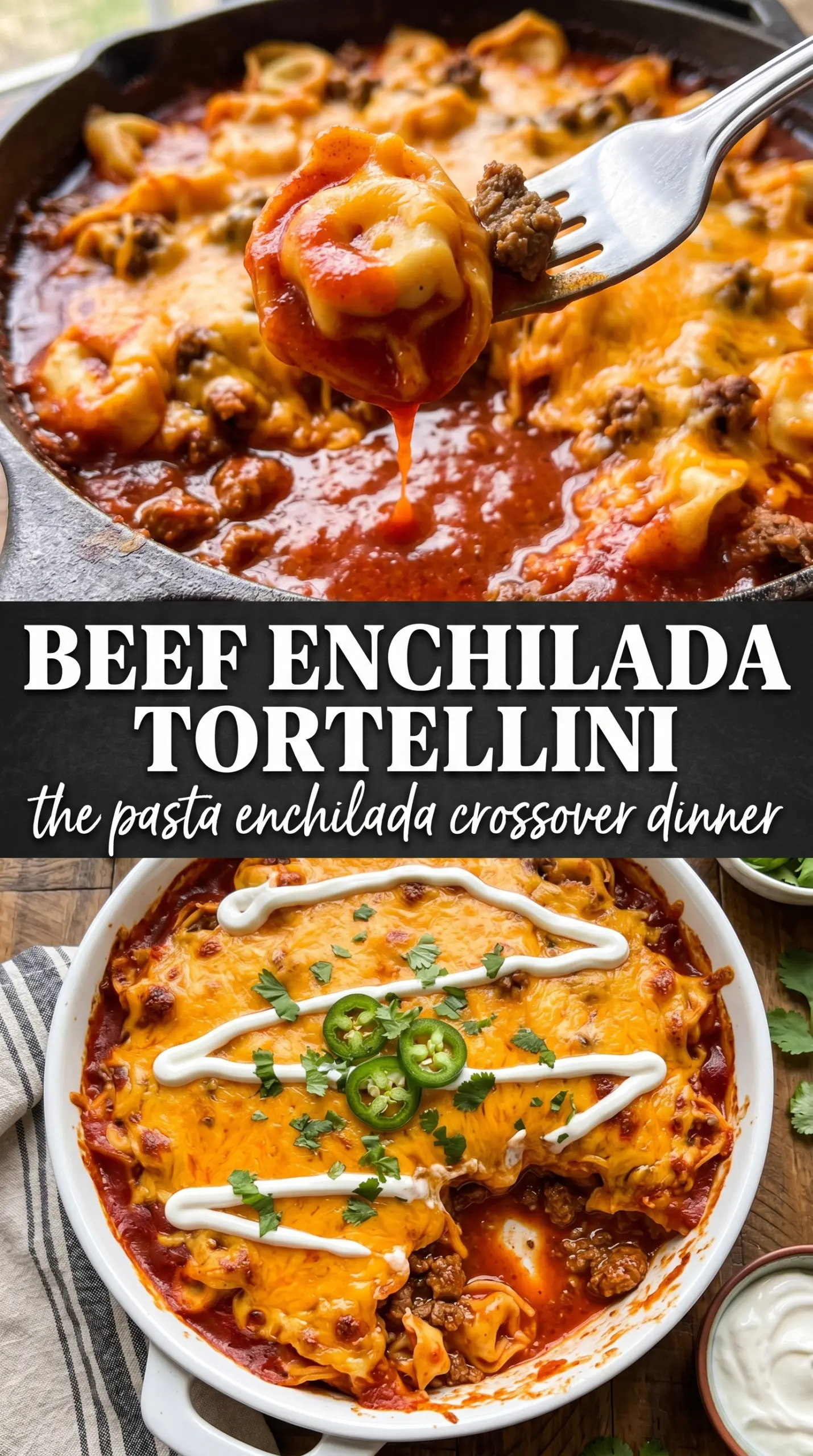
Cheesy beef enchilada tortellini brings all the bold, saucy comfort of an enchilada skillet into one pan with tender pasta, seasoned ground beef, and a blanket of melted Mexican cheese. The tortellini stays plump and cheesy inside while the red enchilada sauce clings to every ridge, so each bite tastes rich without turning heavy or gluey.
What makes this version work is the order of the cooking. The beef and onion build a savory base first, then the enchilada sauce, broth, and Rotel loosen everything into a simmering sauce before the tortellini goes in. That keeps the pasta from overcooking and gives the sauce enough body to coat it instead of disappearing into the skillet.
Below, I’ll show you the one heat step that keeps the cheese smooth, plus a few smart swaps if you want to adjust the spice level or make the skillet stretch a little farther.
The tortellini stayed tender without falling apart, and the sauce thickened just enough to coat everything. I added extra jalapeños on top and my husband went back for seconds before I even sat down.
Save this cheesy beef enchilada tortellini for nights when you want a skillet dinner with bold sauce, melted cheese, and almost no cleanup.
The Step That Keeps the Tortellini From Turning Mushy
The biggest mistake with pasta skillet dinners is letting the noodles sit in liquid too long after they’re tender. Tortellini cooks faster than most dried pasta, and once the filling warms through, it doesn’t need much more time in the sauce. If you boil it hard for too long, the pasta starts to split and the cheese inside can leak into the skillet.
That’s why this recipe works best when the sauce is bubbling before the tortellini goes in, then held at a steady simmer while you stir occasionally. You want the tortellini to finish in the sauce, not before it. The sauce should thicken just enough to coat the pasta by the time the cheese goes on top.
- Ground beef — Use an 85/15 or 90/10 blend for the best balance of flavor and grease. If you use something fattier, drain it well after browning or the skillet will taste oily instead of saucy.
- Rotel tomatoes — These add acidity, heat, and a little texture all at once. Plain diced tomatoes work in a pinch, but you’ll lose the peppery bite that makes the sauce taste finished.
- Red enchilada sauce — This is the backbone of the dish, so choose one you actually like the taste of on its own. If your sauce is thin, simmering with the broth and tortellini will help it tighten up.
- Cheese tortellini — Refrigerated tortellini gives you the fastest, most reliable result because it cooks in minutes and stays tender. Frozen tortellini can work too, but it usually needs a few extra minutes and a little more broth.
What Each Ingredient Is Doing in the Skillet
The onion and garlic build the first layer of flavor right in the beef drippings, which is why the skillet tastes deeper than a sauce dumped over cooked pasta. The cumin and chili powder need that hot fat to bloom for a minute; if you add them too late, they can taste dusty instead of round and savory.
The broth does more than thin the enchilada sauce. It gives the tortellini enough liquid to cook through without forcing you to drown the pan, and it keeps the finished dish from turning stiff once the cheese melts on top. The Mexican cheese blend matters at the end because it melts smoothly and gives you those stretchy, creamy pockets over the pasta.
Building the Skillet Without Breaking the Sauce
Browning the Beef and Onion
Cook the ground beef and onion together in a large deep skillet until the meat is no longer pink and the onion looks soft and translucent. Let the beef pick up a little color; pale beef makes a flatter sauce. Drain off excess fat before you add the garlic and spices, or the enchilada sauce can separate into a greasy layer.
Waking Up the Spices
Stir in the garlic, cumin, chili powder, salt, and pepper and cook just until fragrant, about 30 seconds. The garlic should smell warm, not sharp, and the spices should coat the meat instead of sitting in clumps. If the pan is too hot here, the garlic can scorch fast, so keep it moving.
Simmering the Sauce and Cooking the Tortellini
Pour in the enchilada sauce, beef broth, and Rotel, then bring the mixture to a boil before adding the tortellini. Once the pasta goes in, reduce the heat to a lively simmer and stir every minute or so so nothing sticks to the bottom. The tortellini is done when it’s tender and plump, and the sauce has thickened enough to cling to the pasta instead of pooling around it.
Melting the Cheese on Top
Scatter the shredded Mexican cheese blend over the skillet, cover it, and let the heat melt it for about 2 minutes. Pull the pan off the burner once the cheese looks glossy and fully melted. If you leave it covered too long, the tortellini keeps cooking and the texture goes soft.
How to Adapt This for Different Pan Sizes and Spice Levels
Make It Milder for Kids
Use mild enchilada sauce and choose a Rotel variety with less heat if you can find it. You’ll still get the red, savory base and the cheesy finish, but the jalapeño kick stays in the background instead of taking over the whole skillet.
Make It Gluten-Free
Use gluten-free tortellini if you can find it, and check the labels on the enchilada sauce and broth. The rest of the skillet already fits naturally into a gluten-free dinner, but the pasta and packaged sauce are the places where hidden wheat usually shows up.
Stretch It for a Bigger Crowd
Add an extra half-pound of beef and increase the broth by about 1/2 cup if you need more servings. The sauce should still look thick and glossy before the cheese goes on; if it looks watery, let it simmer uncovered for a few extra minutes so the tortellini doesn’t end up swimming.
Swap in Ground Turkey
Ground turkey works if you want a lighter skillet, but it needs a little help from the spices and onion because it won’t bring as much richness as beef. Keep the cumin, chili powder, and enchilada sauce exactly as written so the dish still tastes bold enough to stand up to the pasta.
Storage and Reheating
- Refrigerator: Store leftovers in an airtight container for up to 3 days. The tortellini softens a little as it sits, but the flavor holds up well.
- Freezer: I don’t recommend freezing this one. Tortellini turns soft and the cheese sauce can get grainy after thawing.
- Reheating: Warm gently in a skillet over low heat with a splash of broth or water. High heat dries out the sauce and makes the pasta burst, so keep the heat low and stir until just hot.
Answers to the Questions Worth Asking
Cheesy Beef Enchilada Tortellini
Ingredients
Equipment
Method
- Brown the ground beef with the diced onion in a large deep skillet, then drain excess fat. Add the garlic, cumin, chili powder, salt, and pepper and stir until fragrant, about 30 seconds, with a clear color shift on the beef.
- Pour in the red enchilada sauce, beef broth, and Rotel tomatoes, then bring the mixture to a boil. Look for steady bubbling across the surface before adding the pasta.
- Add the refrigerated cheese tortellini and cook according to package directions, about 5–7 minutes, stirring occasionally. Keep the sauce at a gentle boil so the tortellini stays submerged and thickens slightly.
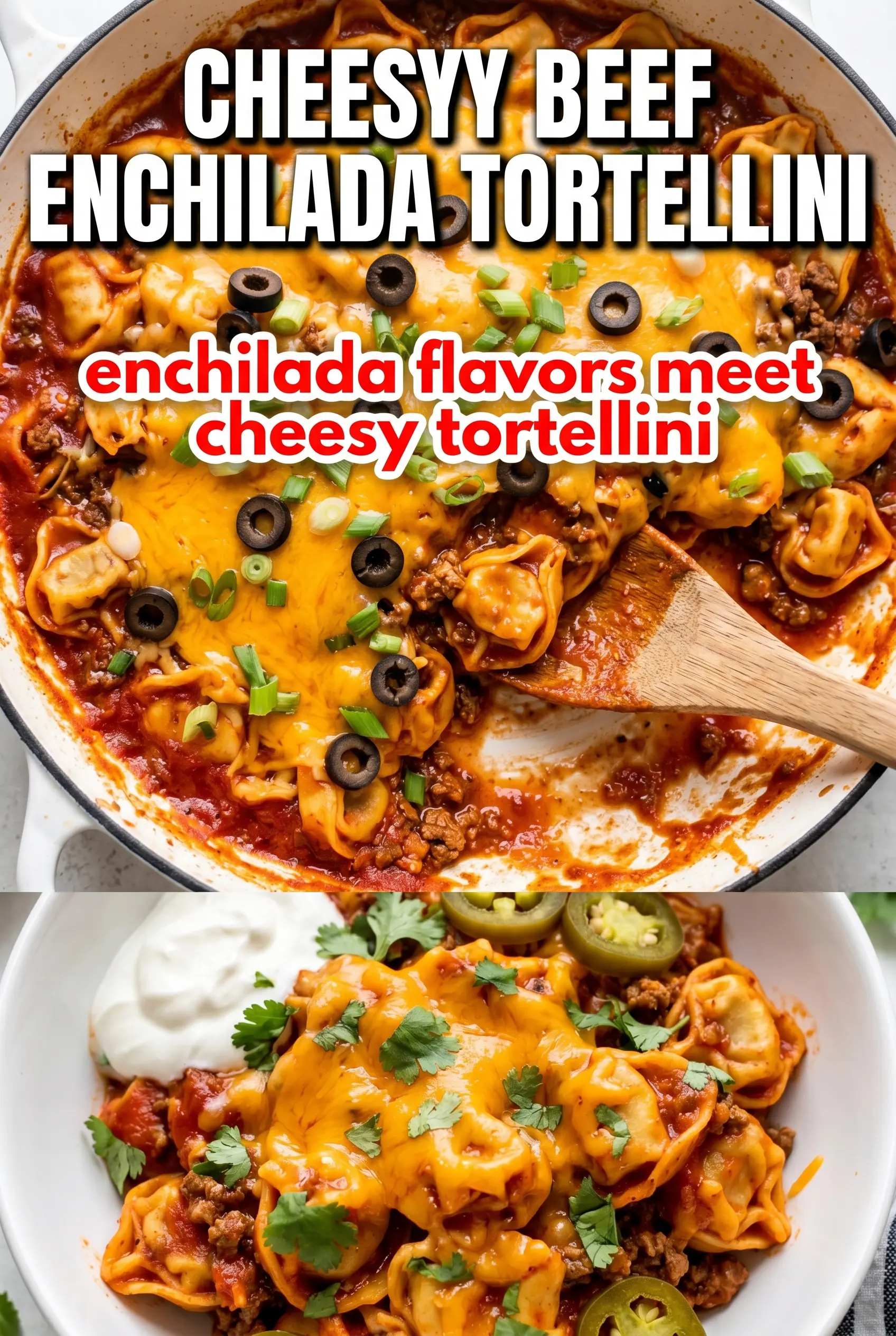
- Top with the shredded Mexican cheese blend, cover, and heat for 2 minutes until melted. You should see the cheese fully slump and turn glossy with some pooling at the edges.
- Garnish with cilantro and jalapeños and serve directly from the skillet. The green herbs and sliced jalapeños should sit fresh over the red and melted cheese.